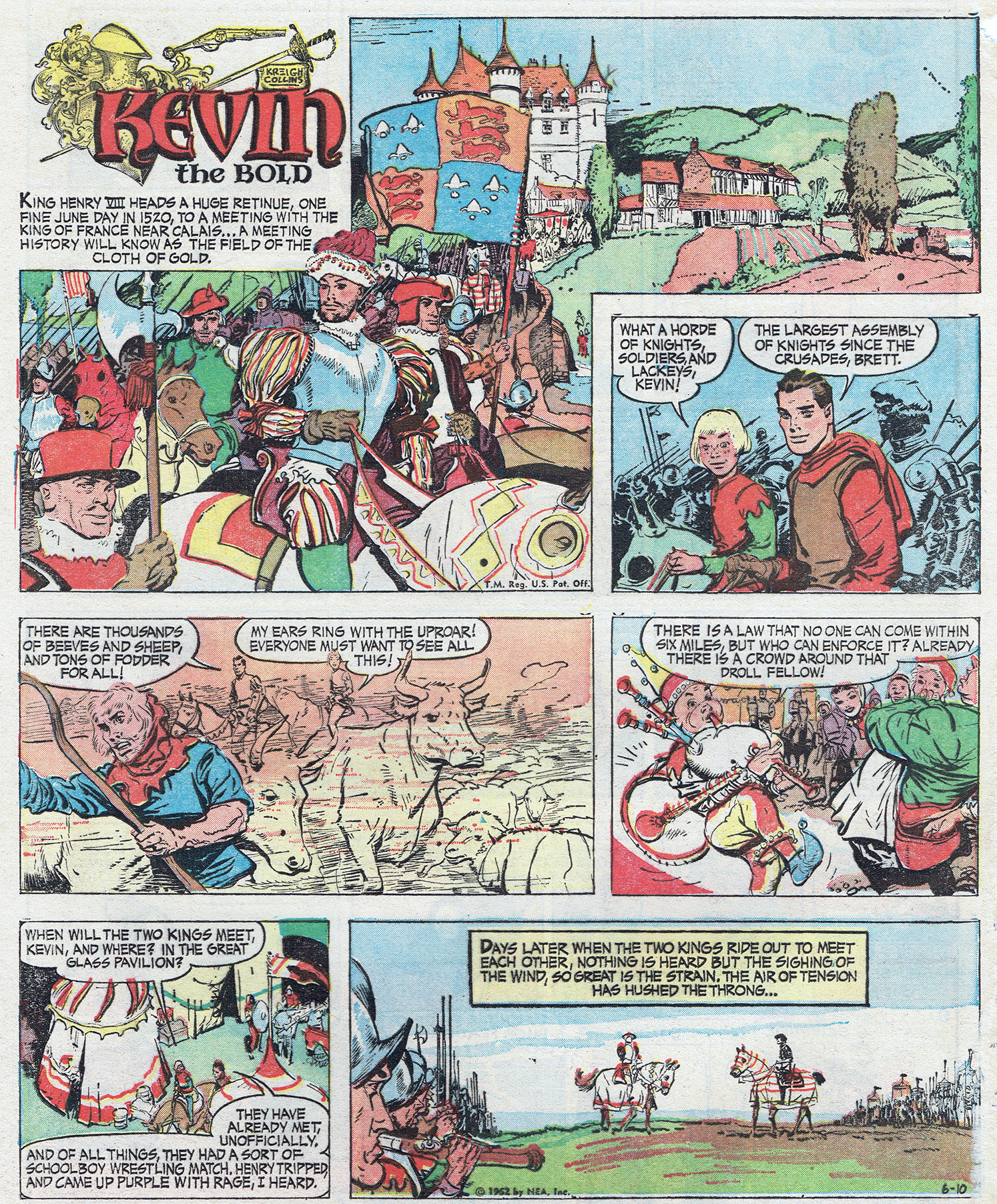
Last week I asked readers if their collections included any “Kevin the Bold” episodes that were missing in mine. This week a sequence starts using comic scans sent to me by my man in Rotterdam, Arnaud, with whom I traded a bunch of other “Kevin” scans (Nogmaals bedankt!). These tabloid comics were originally published starting in June, 1962, and were based on a historical event from 442 years earlier—the June, 1520 summit between England’s King Henry VIII and France’s King Francis I.
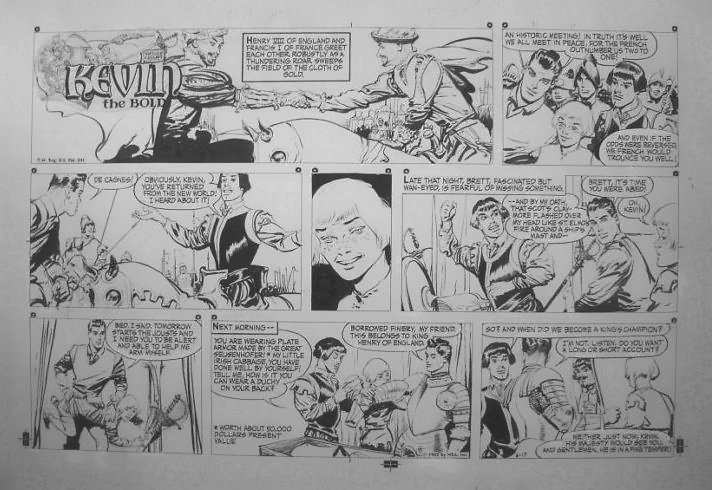
These first few episodes serve as a preamble to the main event, but the June 17 comic shown above is a favorite of mine because I have the original artwork in my collection.
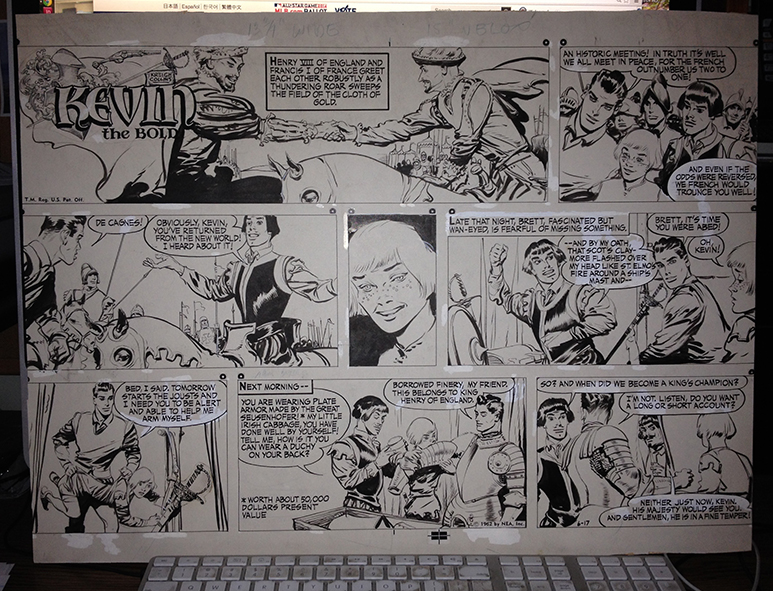
In 2010, when I first found an image of the artwork online, it appeared as shown above. Sadly, by the time I saw it listed for sale four years later, the illustration had been cropped so it would fit in an 18″ x 24″ picture frame (below). It might have been damaged goods, but I bought it anyway (frame not included). One interesting detail is found in the panel in the lower left-hand corner, where Brett is holding Kevin’s sword. The sword is a photostat, pasted onto the original art—apparently as a time saver for the artist.
Another shameless plug!
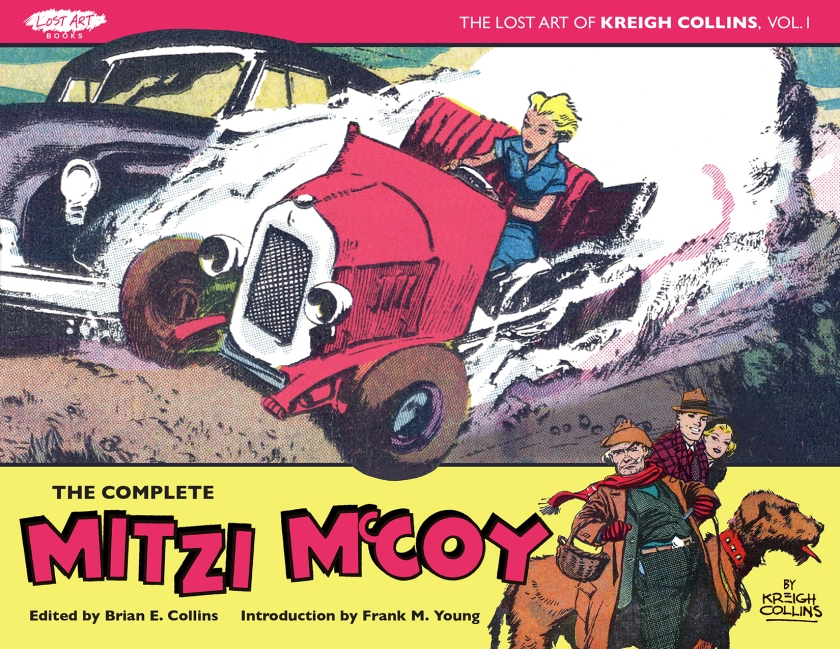
Featuring the complete run of Kreigh Collins’ first NEA comic, “Mitzi McCoy,” The Lost Art of Kreigh Collins, Vol. 1: The Complete Mitzi McCoy is still available! It can be ordered directly from me for $24.95 plus postage (contact me for shipping details at brianedwardcollins1[at]gmail.com).
For more information on the career of Kreigh Collins, visit his page on Facebook.
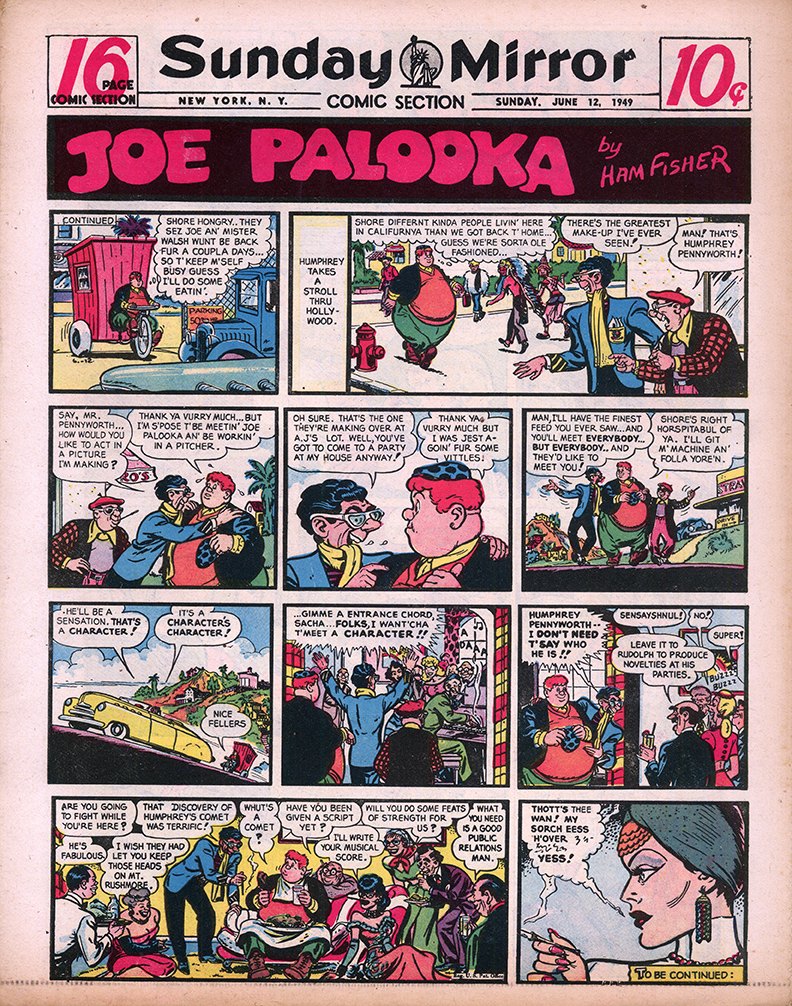
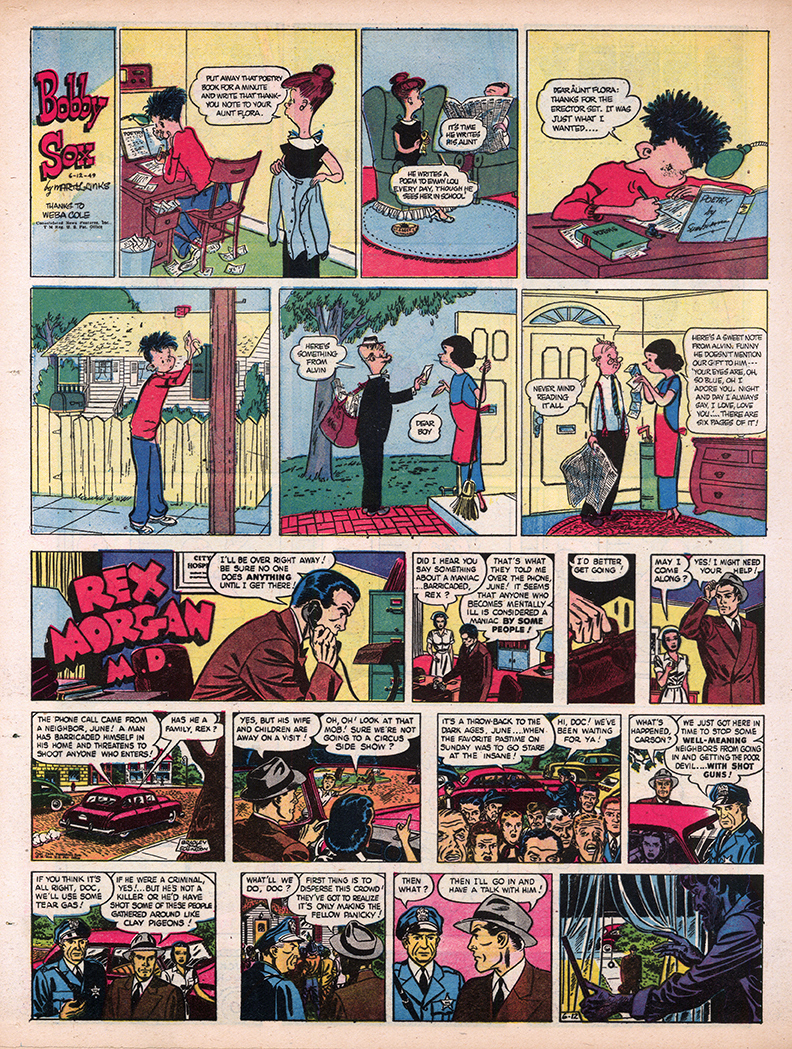
Having recently celebrated a milestone birthday, today I present a 75-year-old comic section from New York Sunday Mirror (no, I’m not that old!).
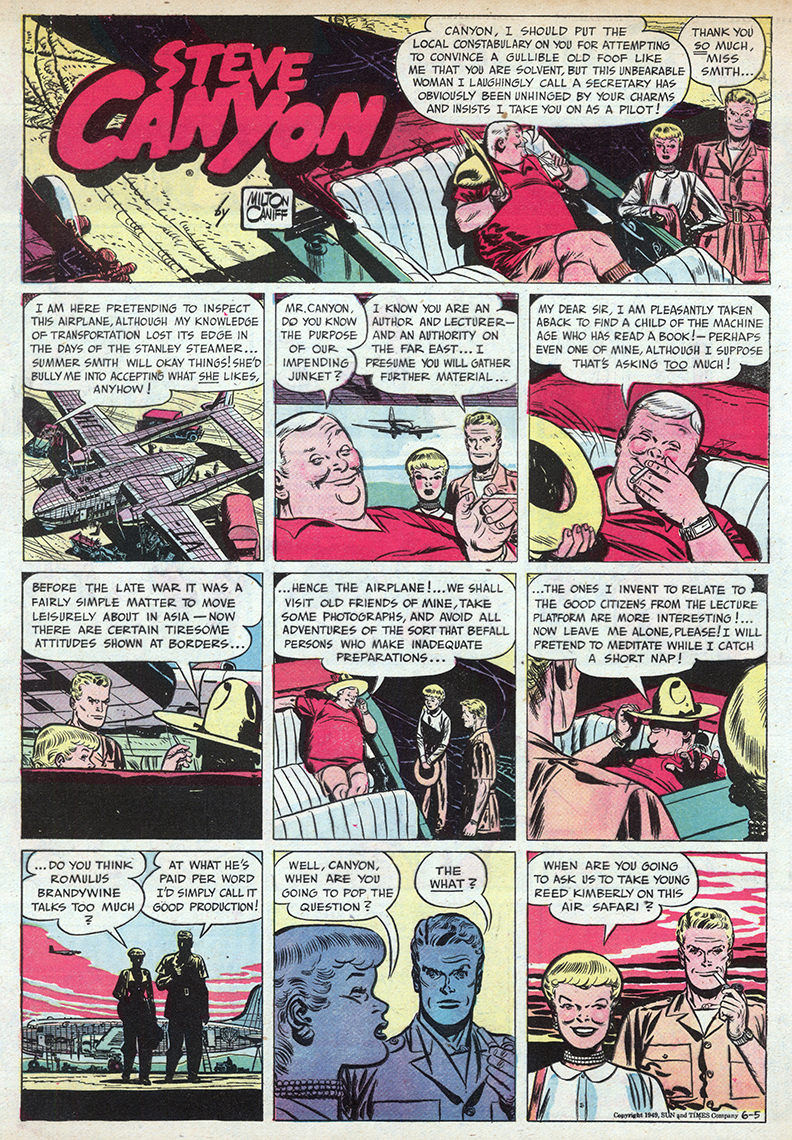
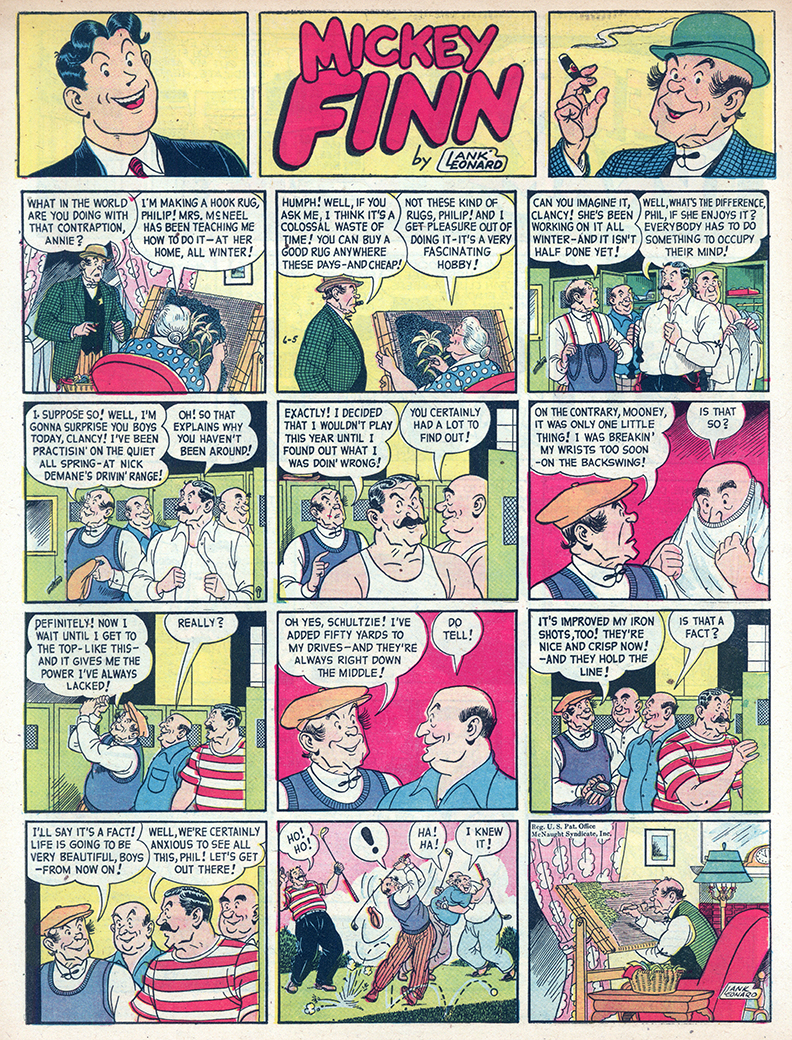
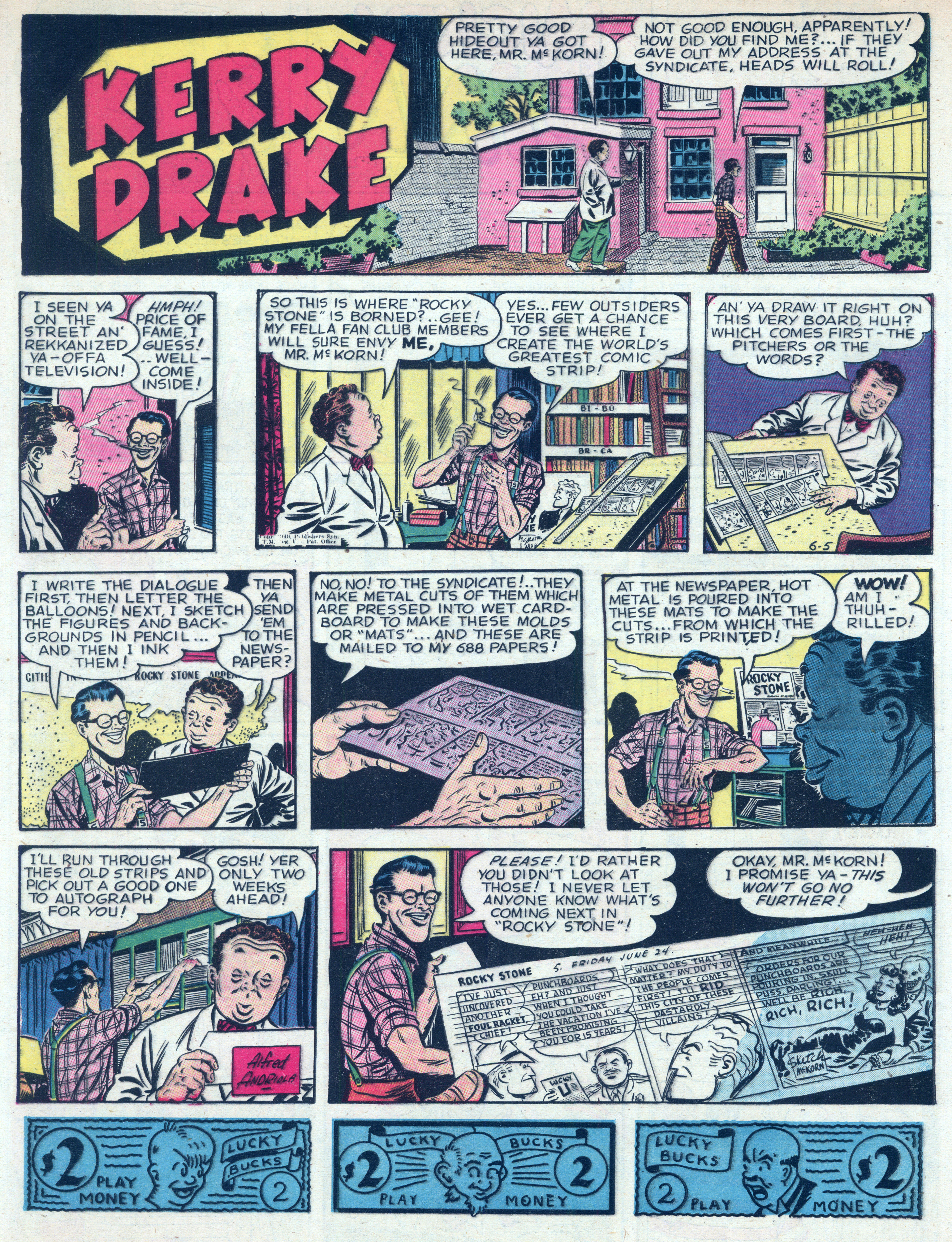
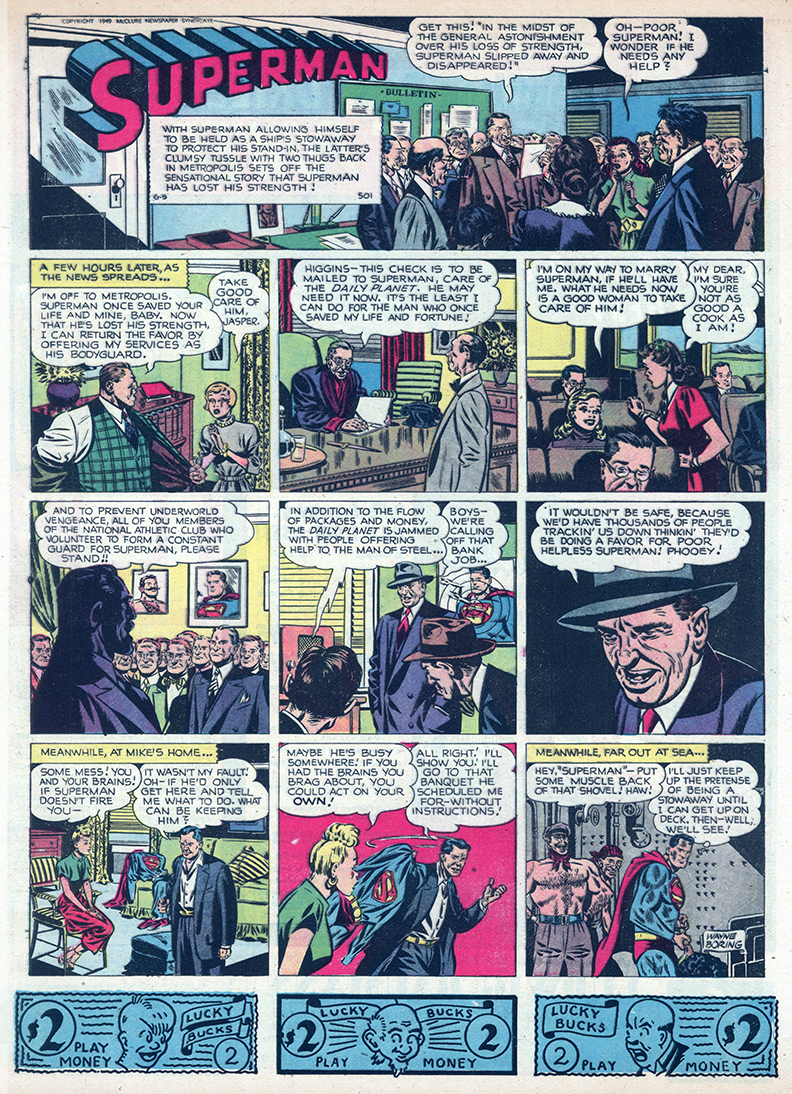
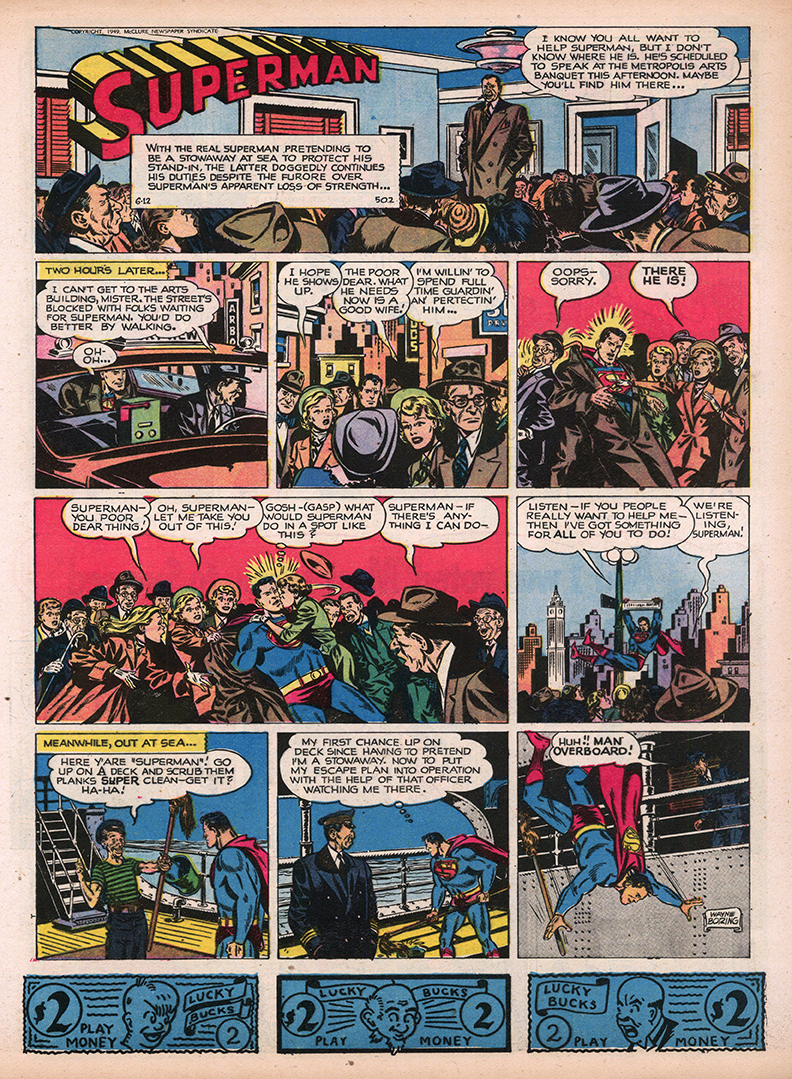
As usual, Ham Fisher’s JOE PALOOKA ran on the front page, followed by Milton Caniff’s STEVE CANYON and MICKEY FINN by Lank Leonard. Next up are KERRY DRAKE (Alfred Andriola/Allen Saunders), SUPERMAN (Wayne Boring), an ad for Ludwig Bauman electric drill (boring in more ways than one), and Frank Miller’s BARNEY BAXTER IN THE AIR.
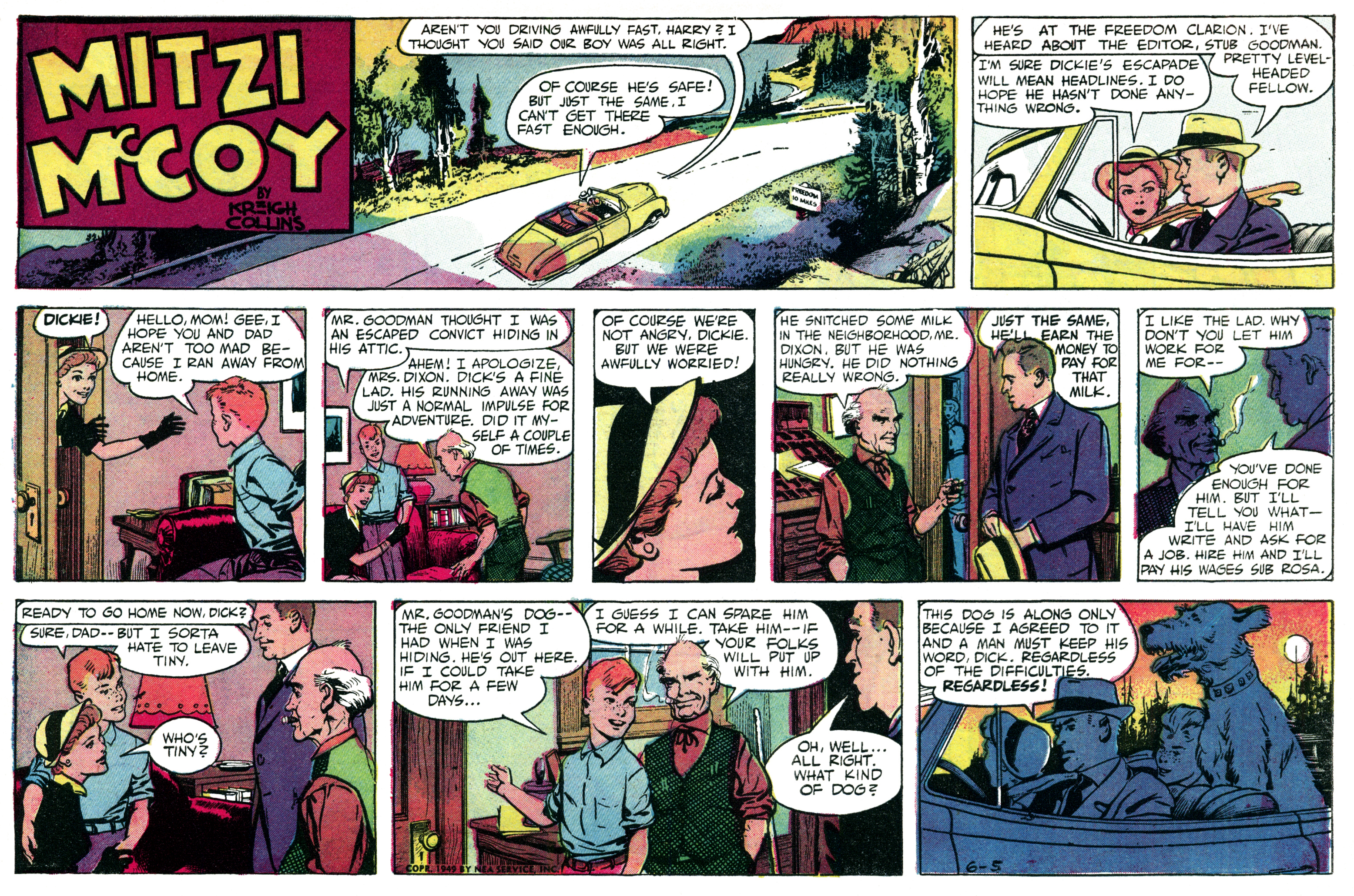
Then it’s the good stuff. No offense to THE FLOP FAMILY by Swan and Marty Links’ BOBBY SOX—I am, of course, referring to Kreigh Collins’ MITZI McCOY.
The June 5, 1949 episode of MITZI McCOY features the reunion between a runaway boy and his parents, and is notable for the absence of Mitzi herself. In lieu of the page from the Sunday Mirror comics section (which MITZI shared with a forgettable ad for Super Suds detrergent) is a version of the episode that I cleaned up for my MITZI McCOY book.
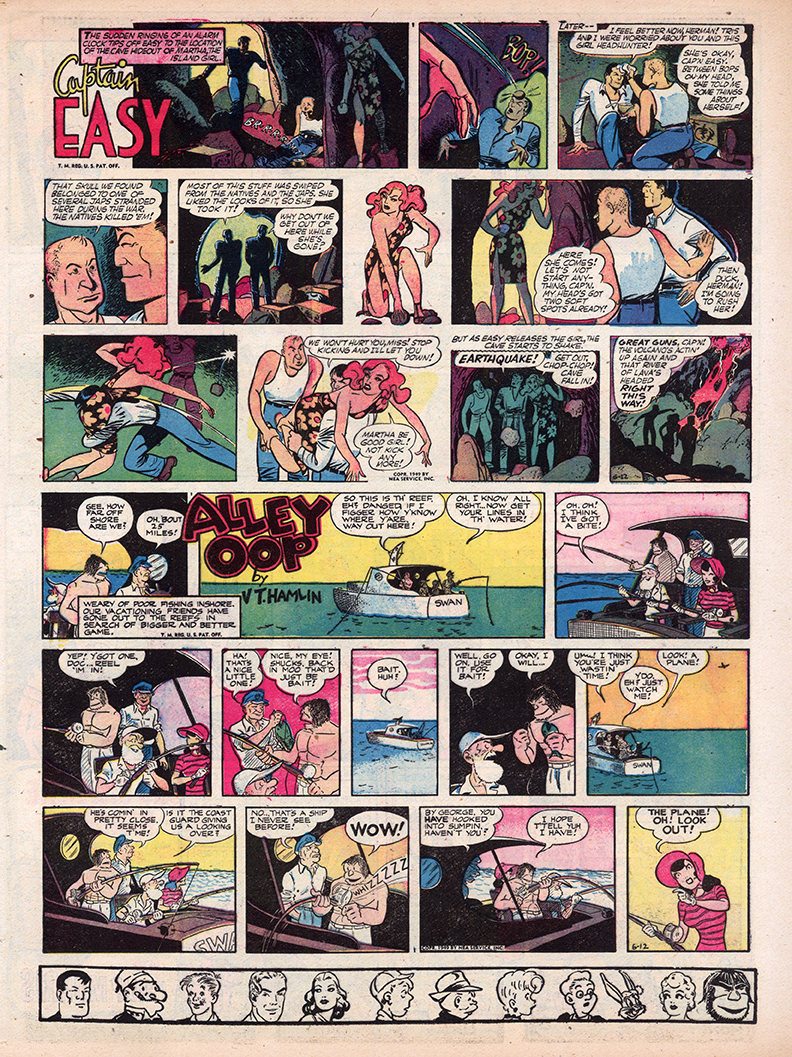
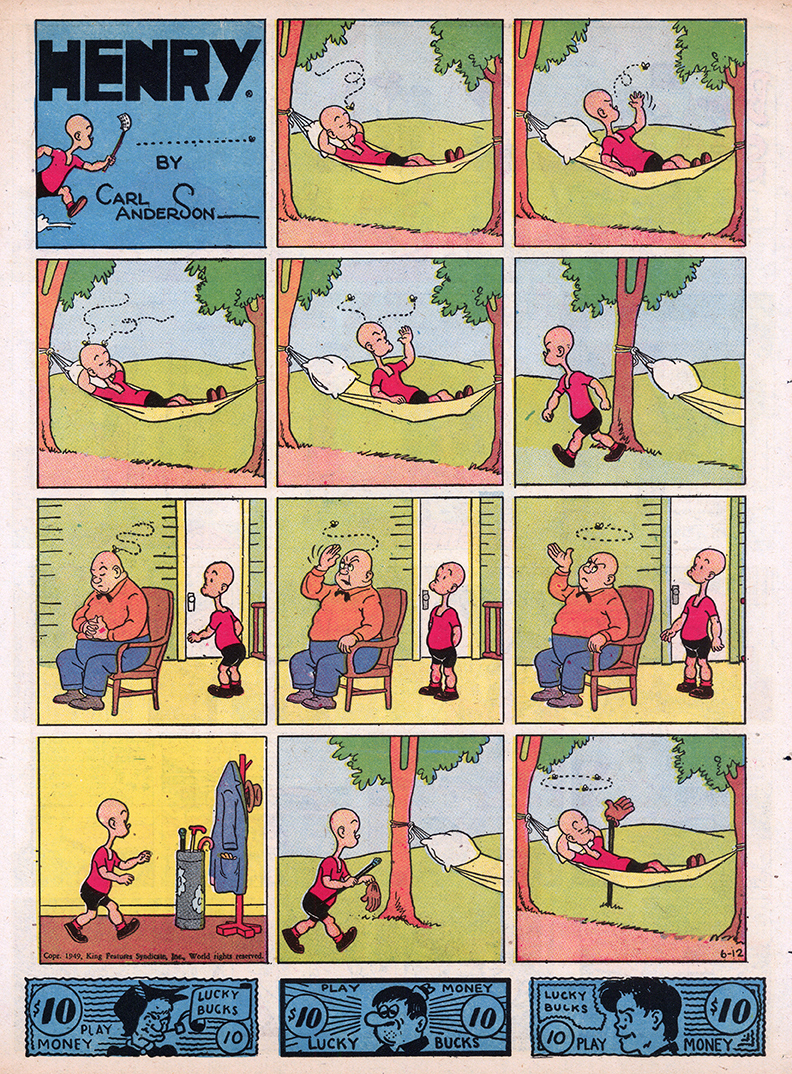
The second half of the comic section starts with a page with Roy Crane’s CAPTAIN EASY, drawn here by Walt Scott, and V.T. Hamlin’s ALLEY OOP, plus HENRY by Carl Anderson. Then it’s REX MORGAN, MD by Bradley and Edgington, BOOTS by Martin, and Merrill Blossar’s FRECKLES AND HIS FRIENDS (plus the topper strip HECTOR). Harry Hanan’s silent comic LOUIE, an ad for Camel cigarettes (I don’t think cancer sticks are advertised in the funnies anymore!), OUT OUR WAY by J.R. Williams, and OUR BOARDING HOUSE follow.
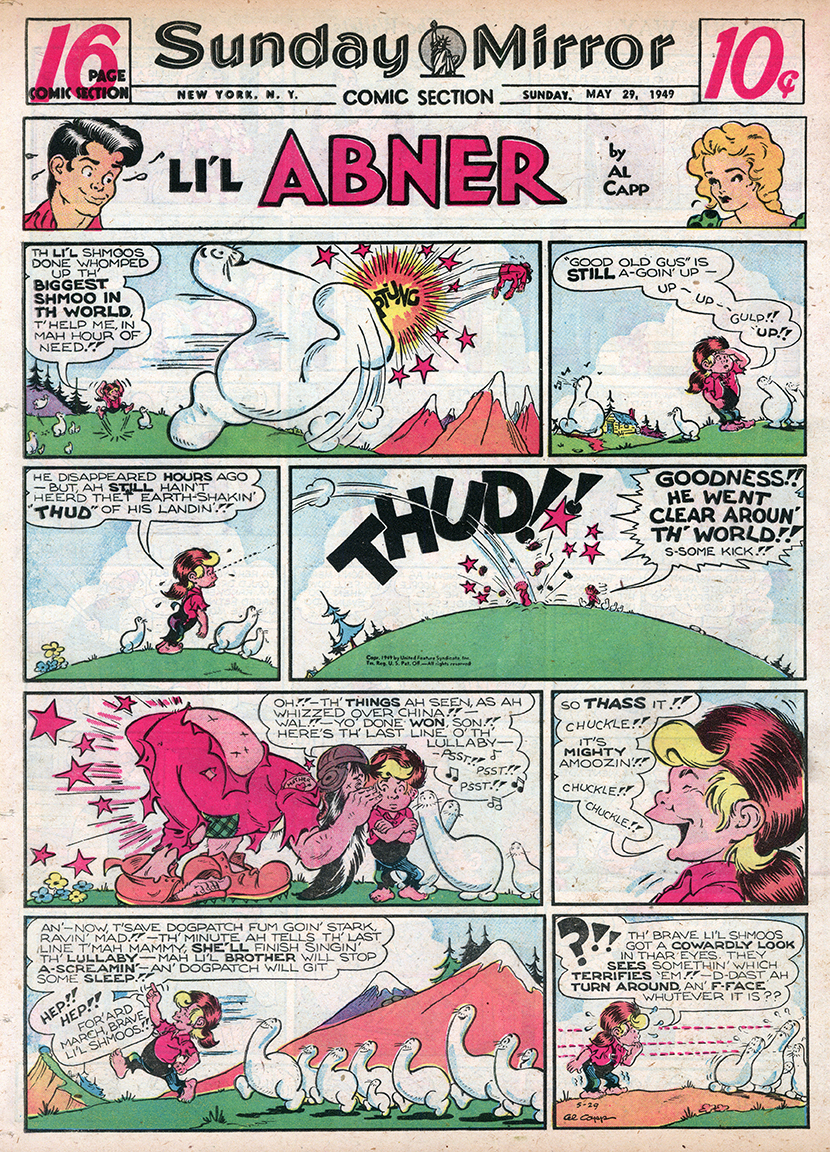
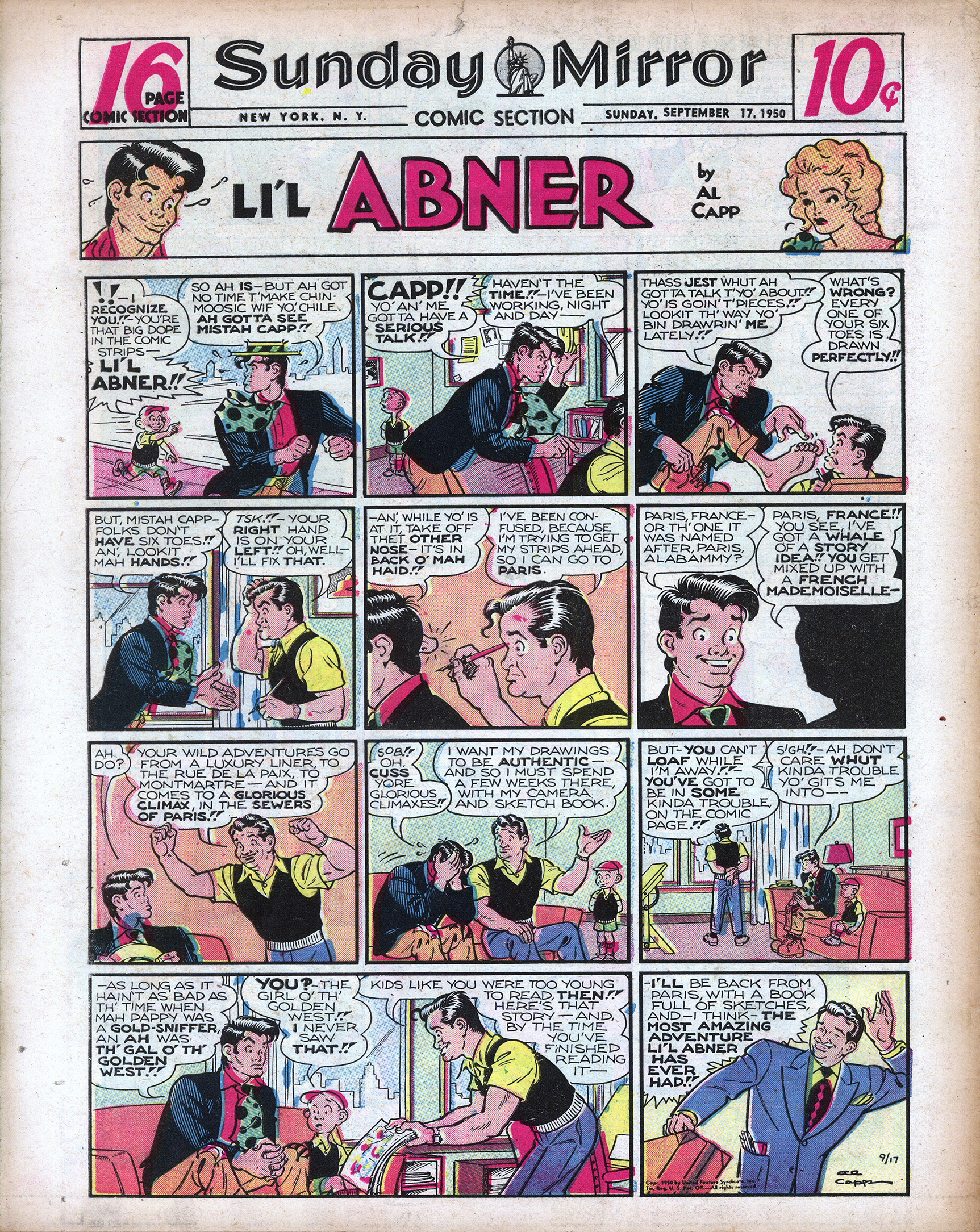
Taking its usual spot on the back cover is LIL’ ABNER by Al Capp.
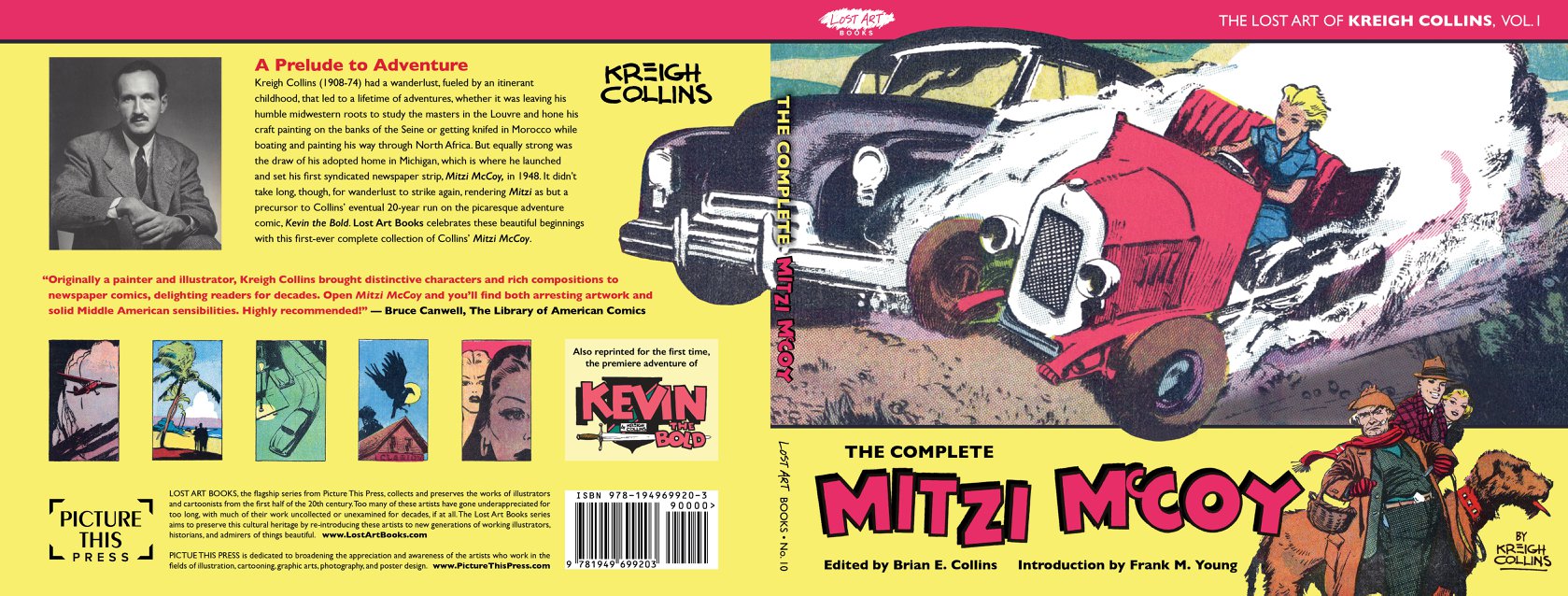
“The Lost Art of Kreigh Collins, the Complete Mitzi McCoy” features the entire run of Kreigh Collins’ first NEA feature.
MITZI McCOY ran from 1948 to 1950 and showcased Kreigh Collins’ skill as an illustrator and storyteller. His picturesque landscapes, lovely character designs, and thrilling action sequences brimmed with detail and charm, and the strip’s ensemble cast rotated in and out of the spotlight taking turns as protagonists in the dozen story arcs collected in this volume. The last story collected in “The Complete Mitzi McCoy” is the narrative bridge that set Collins and his characters off on a new journey, beautifully told for the next couple of decades in the much-lauded adventure strip Kevin the Bold.
The collection includes an introduction by Eisner Award-winning author Frank M. Young, an Afterward by Ithaca College’s Ed Catto, and previously unpublished artwork and photos. Longtime comics artist Butch Guice also provides a new pin-up of the character Mitzi McCoy.
The book is available for $30. For domestic shipping, add $4; for international orders, please add $25 to cover first class shipping. To place an order, leave a comment below or email me at BrianEdwardCollins1[at]gmail.com, and I will give you PayPal or Venmo information. Thank you!
When I was putting together The Lost Art of Kreigh Collins, Vol. 1, The Complete Mitzi McCoy, a late stumbling block was finding replacement comics for the episodes I only had third-page examples of. Ironically, after searching far and wide for several years, I located them in a comic book shop about a dozen miles from my home. The catch was that I had to purchase them as part of complete comic sections. I left the shop with six 16-page New York Sunday Mirror Sunday comic sections and while I spent far more than I hoped, my quest was over. The Mirror carried MITZI for the duration of its run—usually in a half-tabloid format, but occasionally as a full tabloid page. Flipping through it reveals both big name features and comics now forgotten.
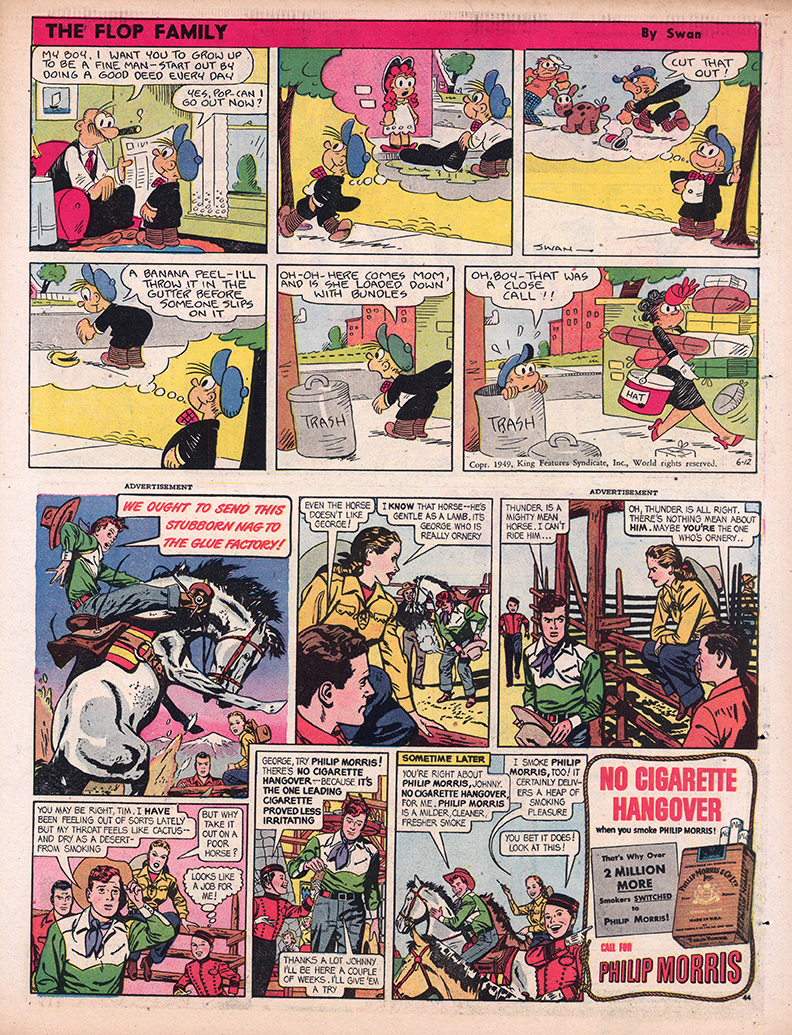
As usual, Ham Fisher’s JOE PALOOKA ran on the front page, followed by Milton Caniff’s STEVE CANYON and MICKEY FINN by Lank Leonard. Next up are HENRY by Carl Anderson, KERRY DRAKE, and SUPERMAN (neither credited, but by Alfred Andriola/Allen Saunders and Stan Kaye/Wayne Boring respectively). Then it was THE FLOP FAMILY by Swan, an advertisement for Philip Morris tobacco, and Frank Miller’s BARNEY BAXTER IN THE AIR.
The Philip Morris ad is interesting, it promotes both cigarettes and pipe tobacco. In the cigarette portion of the ad, Dick is behaving like a dick—due to a sore throat (caused by some other brand of smokes). He is given advice by a character dressed in a bizarre uniform who seems to be a golf course clubhouse attendant (was the illustrator’s reference an organ grinder monkey?), and appears to be about nine years old. Astonishingly, the dapper dandy offers Dick a Philip Morris cigarette, and ultimately, Dick’s love life is back on track. (Perhaps the attendant is an adult but his cigarette habit stunted his growth?)
The pipe tobacco portion of the ad, masquerading as a topper strip, has a character mentioning that he was from the class of ’89. With this newspaper edition dating to 1949, that means the gent was class of 1889 (!). Another character claims she loves the clean, fresh smell of her husband’s pipe. (Could it be that tobacco companies lied to consumers? Egad).
For me, the funny pages’ highlight probably falls into a category I mentioned earlier, “comics now forgotten.” This episode, MITZI McCOY’s 30th, is from the middle of the strip’s fourth story arc, and appears in the half-tabloid format. Half-tabs have small dimensions, but they include the throwaway panel, which full-page tabloid versions do not. It’s a sweet episode where a runaway child is discovered, and is notable for not showing the strip’s titular character. Of personal interest to me is the appearance of the child, Dick. Like many artists, Kreigh Collins used his family as models; for Dick, the model was my father, Erik—Kreigh’s oldest son. Dad was 10 years old when this episode was drawn. Sharing a page with MITZI is an advertisement for Pepsi, a rather saccharine affair with another kid saving the protagonist’s love life.
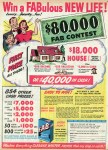
Next up were Harry Hanan’s silent comic LOUIE and an ad for Kellogg’s Corn Flakes (completely devoid of relationship advice from youngsters—how refreshing!). A page with Roy Crane’s CAPTAIN EASY, drawn here by Walt Scott, and V.T. Hamlin’s ALLEY OOP FOLLOWS; opposite these two strips is an ad for Fab detergent. The ad features a cartoonish family looking suspiciously similar to the family from the Corn Flakes ad, and hypes a pretty cool giveaway—a free house!—valued at $18,000 (things have certainly changed in the last 74 years!). then it’s Frank Godwin’s RUSTY RILEY, REX MORGAN, MD by Bradley and Edgington, BOOTS by Martin, and Merrill Blossar’s FRECKLES AND HIS FRIENDS (plus the topper strip HECTOR).
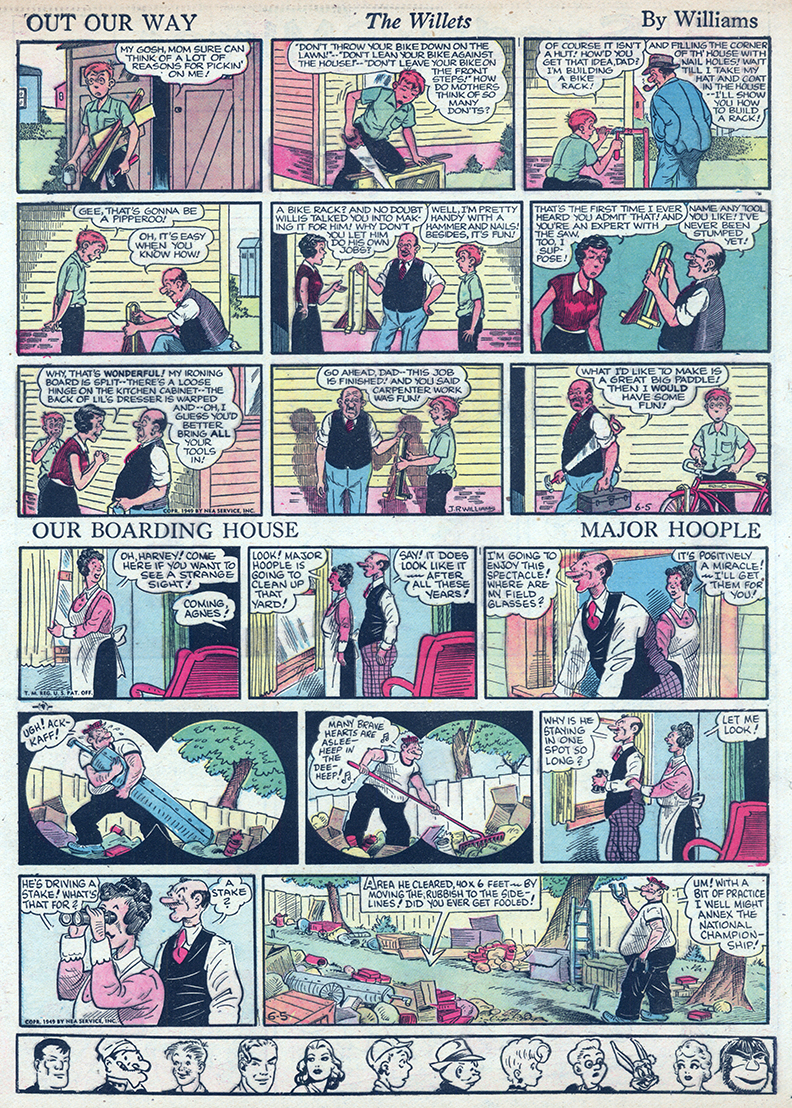
The last full spread in the section features OUT OUR WAY by J.R. Williams, PLUS OUR BOARDING HOUSE.
Taking its usual spot on the back cover is LIL’ ABNER by Al Capp.
Want to See More of Mitzi?
“The Lost Art of Kreigh Collins, the Complete Mitzi McCoy” features the entire run of Kreigh Collins’ first NEA feature.
MITZI McCOY ran from 1948 to 1950 and showcased Kreigh Collins’ skill as an illustrator and storyteller. His picturesque landscapes, lovely character designs, and thrilling action sequences brimmed with detail and charm, and the strip’s ensemble cast rotated in and out of the spotlight taking turns as protagonists in the dozen story arcs collected in this volume. The last story collected in “The Complete Mitzi McCoy” is the narrative bridge that set Collins and his characters off on a new journey, beautifully told for the next couple of decades in the much-lauded adventure strip Kevin the Bold.
The collection includes an introduction by Eisner Award-winning author Frank M. Young, an Afterward by Ithaca College’s Ed Catto, and previously unpublished artwork and photos. Longtime comics artist Butch Guice also provides a new pin-up of the character Mitzi McCoy.
The book is available for $30. For domestic shipping, add $4; for international orders, please add $25 to cover first class shipping. To place an order, leave a comment below or email me at BrianEdwardCollins1[at]gmail.com, and I will give you PayPal or Venmo information. Thank you!
For more information on the career of Kreigh Collins, visit his page on Facebook.
Here is another Sunday Times Mirror section I acquired while putting together The Complete Mitzi McCoy. As usual, Ham Fisher’s “Joe Palooka” leads off, followed by Milt Caniff’s “Steve Canyon” and “Mickey Finn,” by Lank Leonard. Next up is “Kerry Drake,” by Alfred Andriola/Allen Saunders and “Superman” by Wayne Boring (and likely Stan Kaye). Next is Merrill Blossar’s “Freckles and His Friends,” which shares a page with an ad for Colgate Dental Cream (I’ve never heard that term instead of “toothpaste” before), and Frank Miller’s “Barney Baxter in the Air.”
Found in the comics section’s center spread was the half-tab “Mitzi McCoy” episode I was looking for. Lacking an appearance by its titular character, it is one of my favorite episodes nonetheless. Beneath “Mitzi” is a pretty sweet ad for Rinso detergent; facing that is “The Flop Family” by Swan, alongside a Phillip Morris cigarette ad.
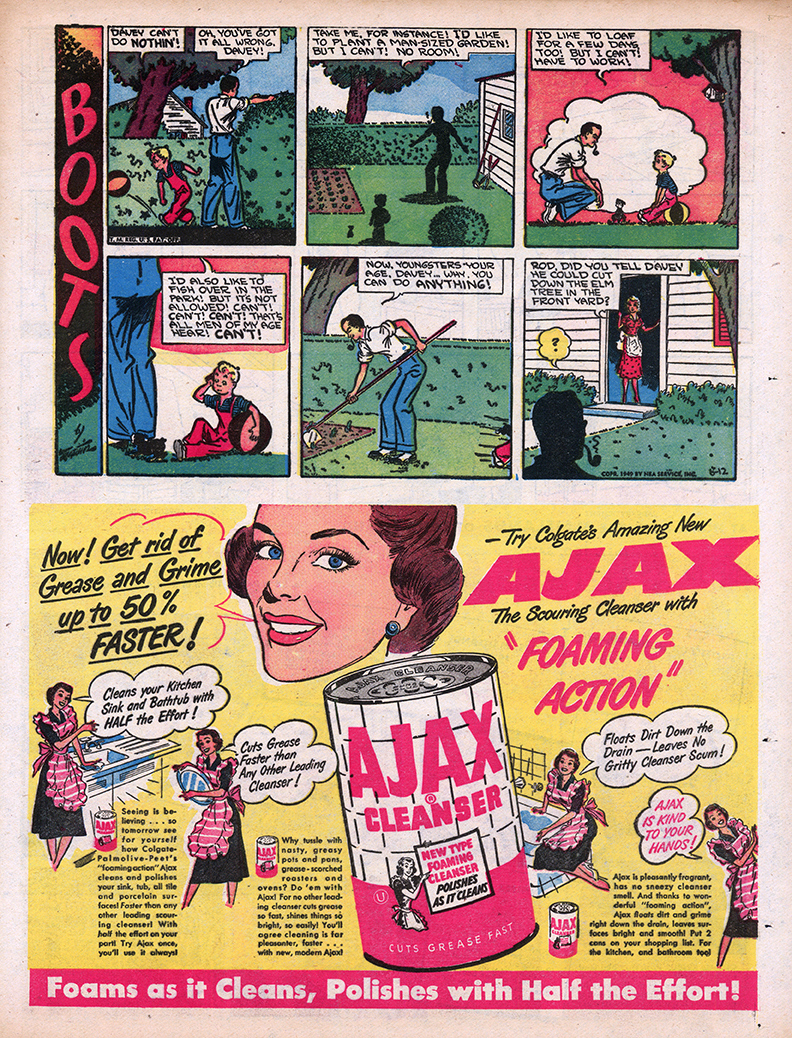
Roy Crane’s “Captain Easy” and V.T. Hamlin’s “Alley Oop” share the next page; by “Henry” by Carl Anderson follows. Next up, “Bobby Sox” by Marty Links, and “Rex Morgan, MD” by Bradley and Edgington. Sharing the page with an ad for Ajax Cleanser is “Boots” by Martin. Harry Hanand’s “Louie” follows, sharing a page with a nicely illustrated Pepsi ad. Then it’s “Out Our Way featuring the Willets,” by J.R. Williams, and “Our Boarding House.”
Taking its usual spot on the back cover is “Lil’ Abner” by Al Capp.
“The Lost Art of Kreigh Collins, the Complete Mitzi McCoy,” features all eleven of its story arcs, plus the transitional sequence where the comic strips morphs into KEVIN THE BOLD.
MITZI McCOY ran from 1948 to 1950 and showcased Kreigh Collins’ skill as an illustrator and storyteller. His picturesque landscapes, lovely character designs, and thrilling action sequences brimmed with detail and charm, and the strip’s ensemble cast rotated in and out of the spotlight taking turns as protagonists in the dozen story arcs collected in this volume. The last story collected in “The Complete Mitzi McCoy” is the narrative bridge that set Collins and his characters off on a new journey, beautifully told for the next couple of decades in the much-lauded adventure strip Kevin the Bold.
The collection includes an introduction by Eisner Award-winning author Frank M. Young, an afterword by Ithaca College’s Ed Catto, and previously unpublished artwork and photos. Longtime comics artist Butch Guice also provides a new pin-up of the character Mitzi McCoy.
The book’s price is $30. For domestic shipping, add $4; for international orders, add $25 for first class shipping. To place an order, leave a comment below or email me at BrianEdwardCollins1[at]gmail.com, and I will give you PayPal or Venmo information.
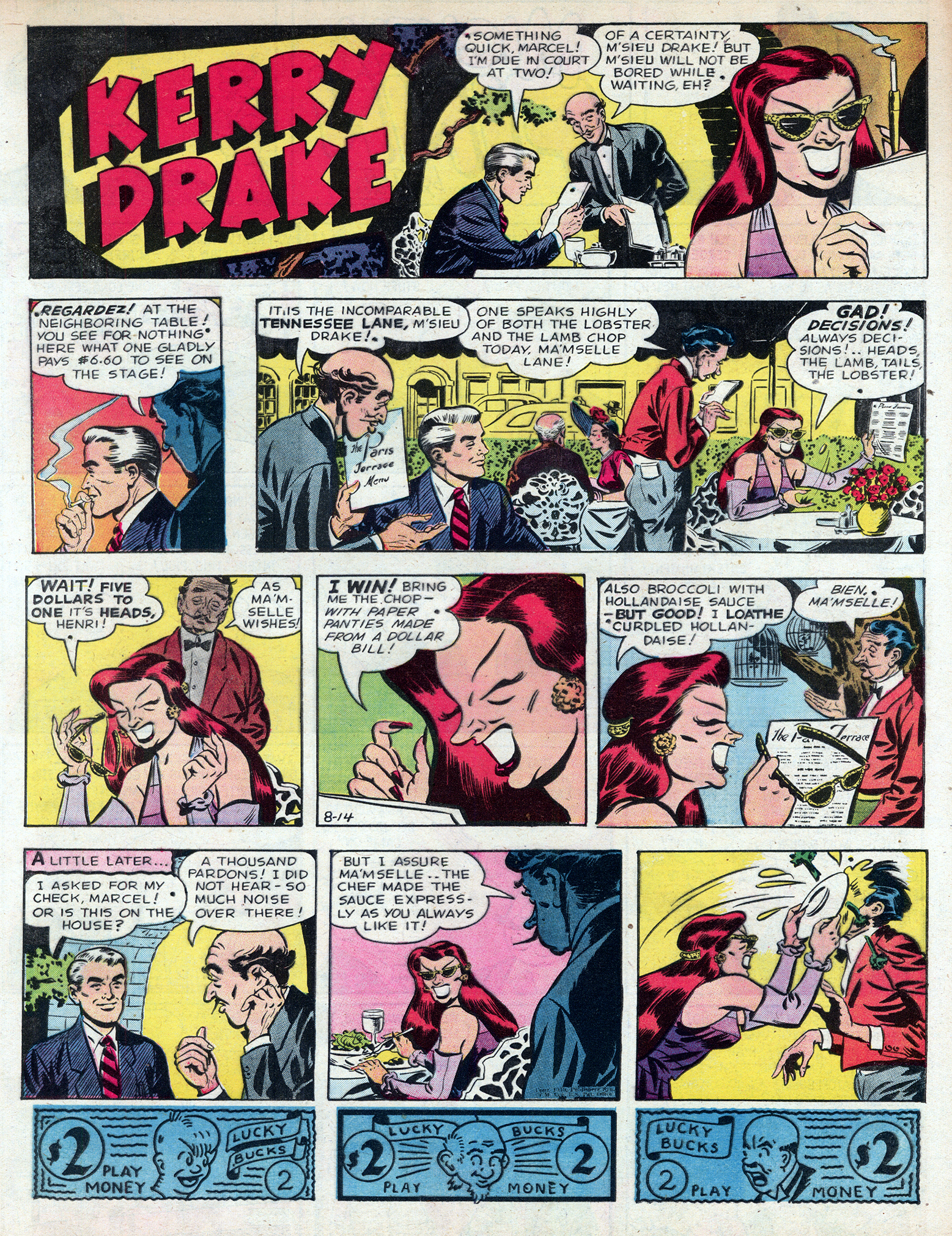
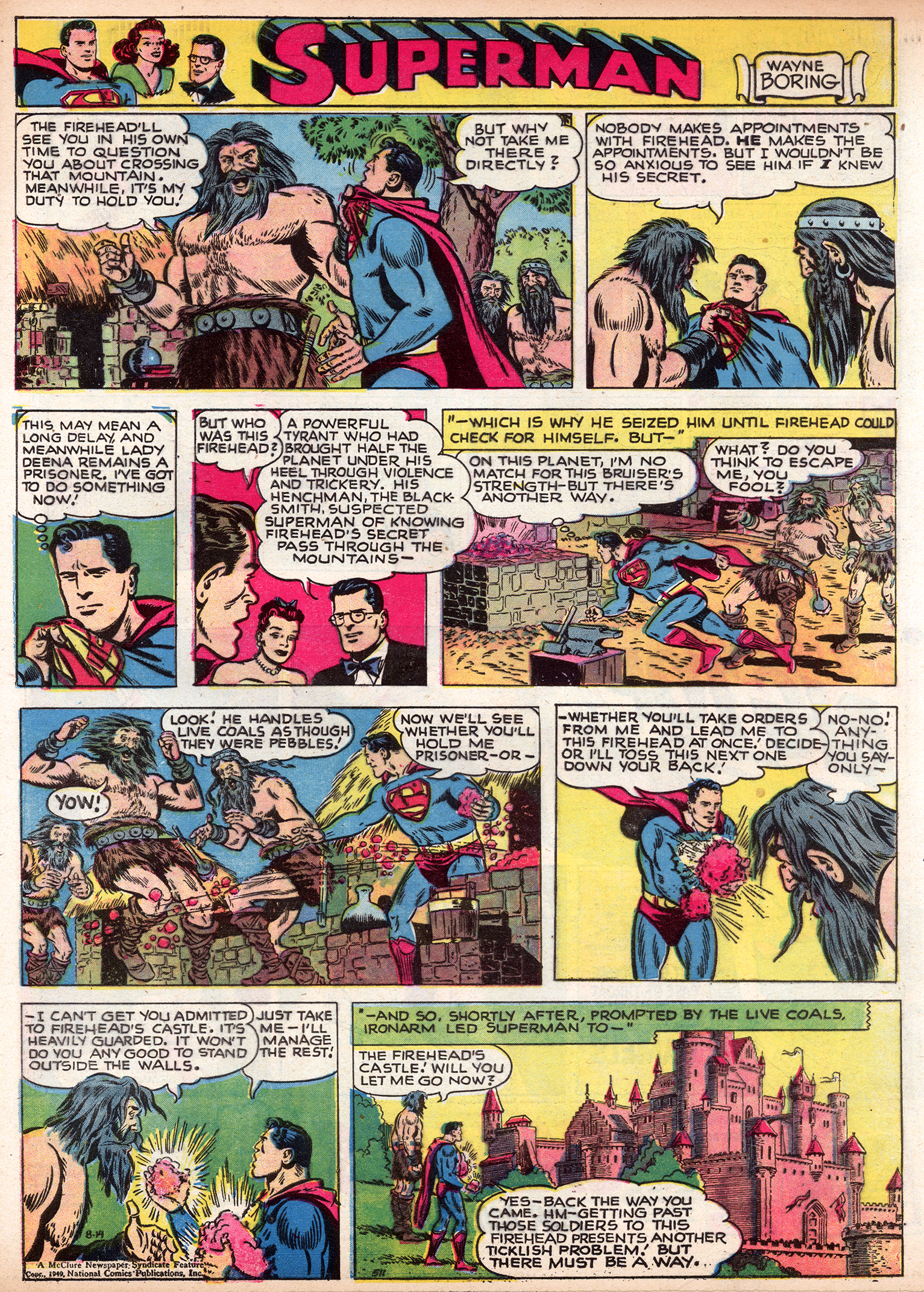
Here is another Sunday Times Mirror section I acquired while putting together The Complete Mitzi McCoy. There are fewer ads than usual—if the Mirror’s ad sales department was slacking off, that just meant more full-page episodes and fewer half-tabloids. As usual, Ham Fisher’s “Joe Palooka” leads off, followed by Milt Caniff’s “Steve Canyon” and “Mickey Finn,” by Lank Leonard. Next up is “Kerry Drake,” by Alfred Andriola/Allen Saunders and Frank Miller’s “Barney Baxter in the Air,” with each page filled out with a few $2 bills of play money. Harry Hanand’s silent comic “Louie,” and “Superman” by Wayne Boring (and likely Stan Kaye) follow.
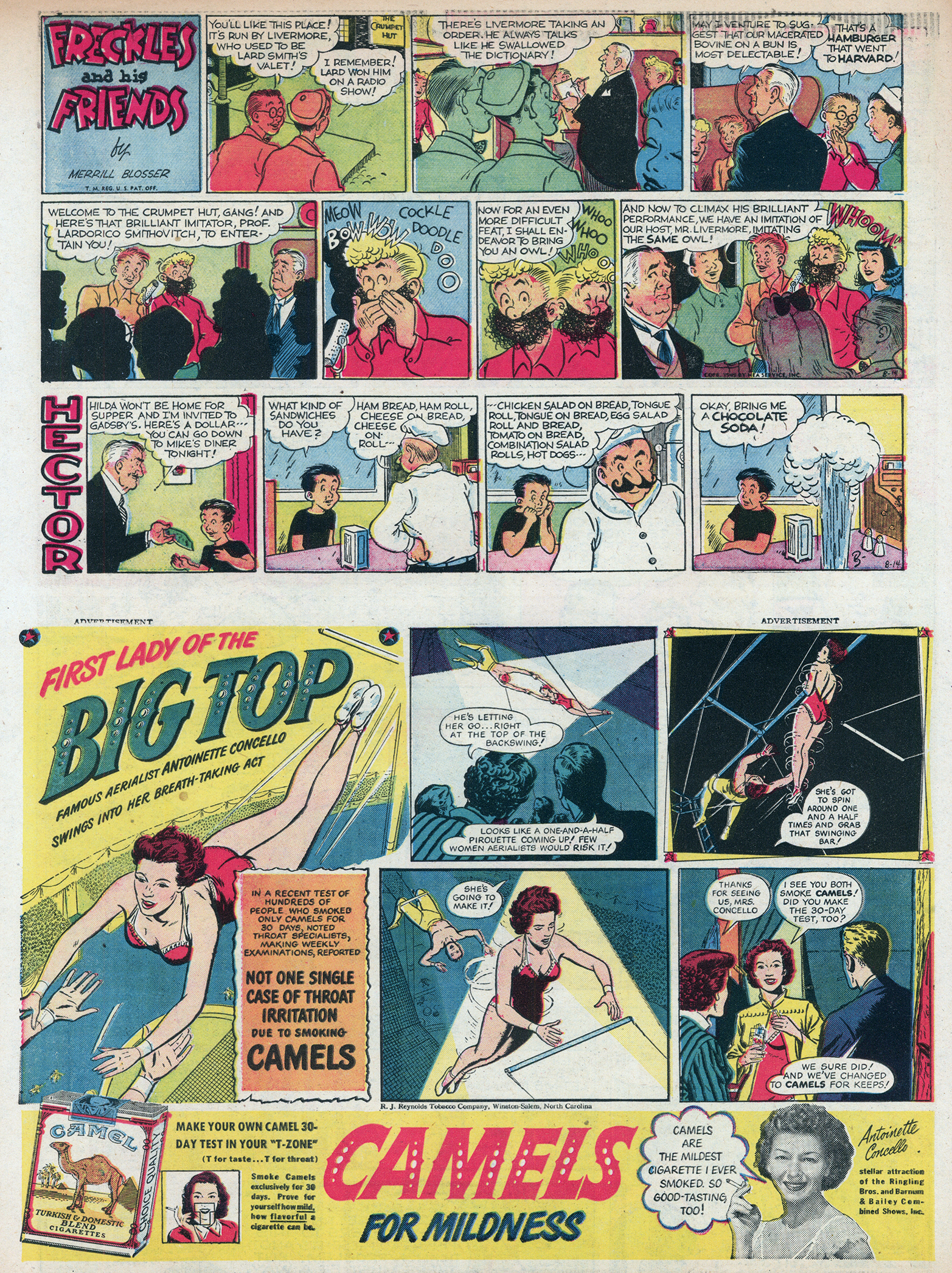
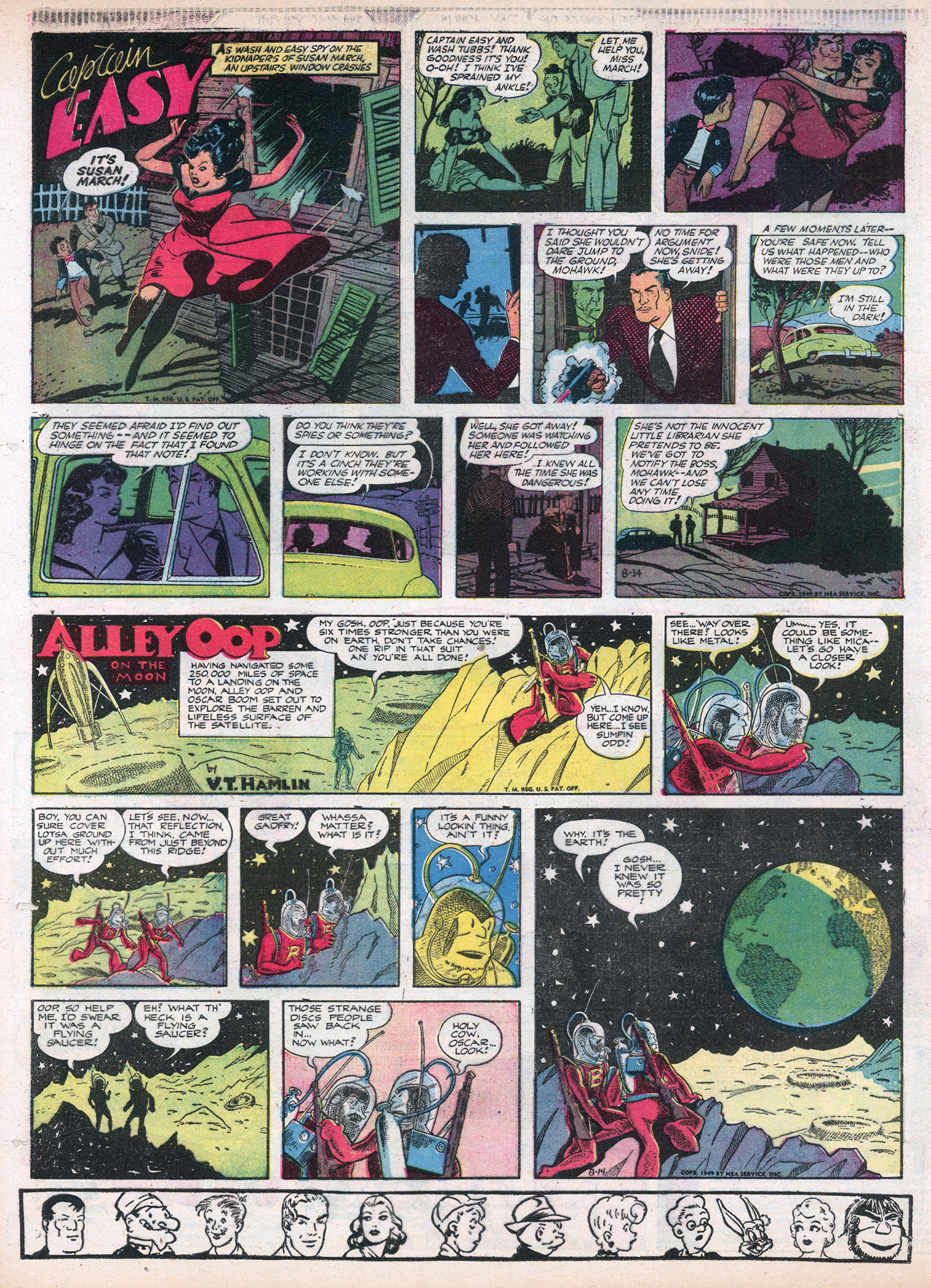
Next, Merrill Blossar’s “Freckles and His Friends” shares a page with an ad for Camel filtered cigarettes—the ad features the then-famous aerialist Antoinette Concello. Ms. Concello offers a testimonial to the mild, good-tasting cancer sticks, but I think she likes them because they soothe her nerves. (I don’t care if she performed over a net, I’d need something at least as strong to calm down after running through that routine!). The facing page features the comic strip that inspired me to plunk down my money for this section—a full page “Mitzi McCoy” episode (a nice change from the usual half-tabloids that ran in the Mirror). This August 14 episode is the penultimate installment of the fifth chapter of “Mitzi” and features the NEA’s typical footer—mugshots of the syndicate’s lead characters.
Next up, “Rex Morgan, MD” by Bradley and Edgington (with a nice, custom footer), and “Boots” by Martin, sharing the page with an ad for Colgate Dental Cream. Sometimes the ads in these old sections are charming, but this one is pretty obnoxious (and typical of the era). Roy Crane’s “Captain Easy” (drawn here by Walt Scott?) and V.T. Hamlin’s “Alley Oop” share the next page, followed by “Henry” by Carl Anderson. While “Captain Easy” and “Alley Oop” get the NEA footer, “Henry” features more play money, this time it’s big money—sawbucks! (I wonder if any kids ever cut these out? If so, then “Mickey Finn,” “Louie,” and “Bobby Sox” paid the price by being on the flip side). Two more split pages follow, “The Flop Family” by Swan with “Bobby Sox” by Marty Links, and “Out Our Way featuring the Willets,” by J.R. Williams, and “Our Boarding House.”
Taking its usual spot on the back cover is “Lil’ Abner” by Al Capp.
“The Lost Art of Kreigh Collins, the Complete Mitzi McCoy,” is available for immediate delivery at a reduced price; it features the entire run of Kreigh Collins’ first NEA feature .
MITZI McCOY ran from 1948 to 1950 and showcased Kreigh Collins’ skill as an illustrator and storyteller. His picturesque landscapes, lovely character designs, and thrilling action sequences brimmed with detail and charm, and the strip’s ensemble cast rotated in and out of the spotlight taking turns as protagonists in the dozen story arcs collected in this volume. The last story collected in “The Complete Mitzi McCoy” is the narrative bridge that set Collins and his characters off on a new journey, beautifully told for the next couple of decades in the much-lauded adventure strip Kevin the Bold.
The collection includes an introduction by Eisner Award-winning author Frank M. Young, an Afterward by Ithaca College’s Ed Catto, and previously unpublished artwork and photos. Longtime comics artist Butch Guice also provides a new pin-up of the character Mitzi McCoy.
The book costs $30only $20! For domestic shipping, add $4; for international orders, add $25 for first class shipping. To place an order, email me at BrianEdwardCollins1[at]gmail.com, and I will give you PayPal or Venmo information.
Presenting a Sunday comic section from the New York Sunday Mirror. Paging through it, I’m struck by the large number of different syndicates represented—by my count, eight.
As usual, Ham Fisher’s “Joe Palooka” (distributed by McNaught Syndicate, Inc.) ran on the front page, followed by Milton Caniff’s “Steve Canyon” (King Features) and “Mickey Finn” by Lank Leonard (McNaught). Next up are “Kerry Drake,” drawn by Alfred Andriola and written by an uncredited Allen Saunders, and “Rex Morgan, MD” by Bradley and Edgington (both distributed by Publishers Syndicate). Harry Hanand’s silent comic “Louie” (Press Features, Inc.) and “Superman,” by either Stan Kaye or Wayne Boring (McLure Newspaper Syndicate) are followed by a half-tab version of “The Flop Family” by Swan (King Features), an advertisement for Ben Gay, and Carl Anderson’s “Henry.”
Because the comics came from different syndicates, they had different dimensions, and in some cases filler was needed at the bottom of a page. Trading cards for “Captain Easy” and “Joe Palooka” were hawked beneath the “Mickey Finn” episode, and tiny bills of play money ran beneath “Henry” ($10) and “Kerry Drake” ($2). “Rex Morgan,” “Louie,” and “Dixie Dugan” had customized footers featuring characters from their strips, and a couple other pages had more generic footers with characters from all of the Mirror‘s lineup.
Next up in the Sunday Mirror section was Kreigh Collins’ “Mitzi McCoy.” Before I bought this section, I owned a couple versions of the September 17 episode, but they were third-page versions—one in color and the other a black and white version from the Saturday edition of the Grand Rapids (Michigan) Press. Despite the awkward spaces added between its frames, I prefer the BW version in large part because the earring Stub finds in the sixth frame is more obvious. (When I first saw this episode I was confused as to what had happened).
When I was putting together my book, The Complete Mitzi McCoy, I was stymied by a half dozen episodes like the one above—I only had third-page versions. Eventually, I found a tabloid example from the Free Press Weekly Prairie Farmer (a newspaper from Winnipeg, Manitoba). As a tabloid, it was missing its throwaway panel—which in this case, was not to be missed. So I splurged an bought the entire Sunday Mirror section.
I think it’s an attractive little panel!
Accompanying Kreigh Collins’ “Mitzi McCoy” (NEA) was Marty Links’ “Bobby Sox,” (about a year before she changed its title to the better-known “Emmy Lou” (distributed by Consolidated News Features).
Most of the remaining comics are more NEA features, Merrill Blossar’s “Freckles and His Friends” (plus the topper “Hector”), Roy Crane’s “Captain Easy,” probably drawn here by Walt Scott, V.T. Hamlin’s “Alley Oop,” “Boots” by Martin, “Out Our Way featuring the Willets,” by J.R. Williams, and “Our Boarding House”. The other strips rounding out the section were McEvoy and Strieber’s “Dixie Dugan” (McNaught), ads for Colgate toothpaste and Philip Morris cigarettes, and “Lil’ Abner” by Al Capp (United Features Syndicate).
Catch Her if You Can!
I’m sorry to report that purchasing a copy of The Lost Art of Kreigh Collins, The Complete Mitzi McCoy, can be a bit of a challenge. I’d heard there were problems with orders placed on my publisher’s website; sadly, I can confirm that this is true (I’m still waiting for the copy I ordered in November <frown emoji>) .
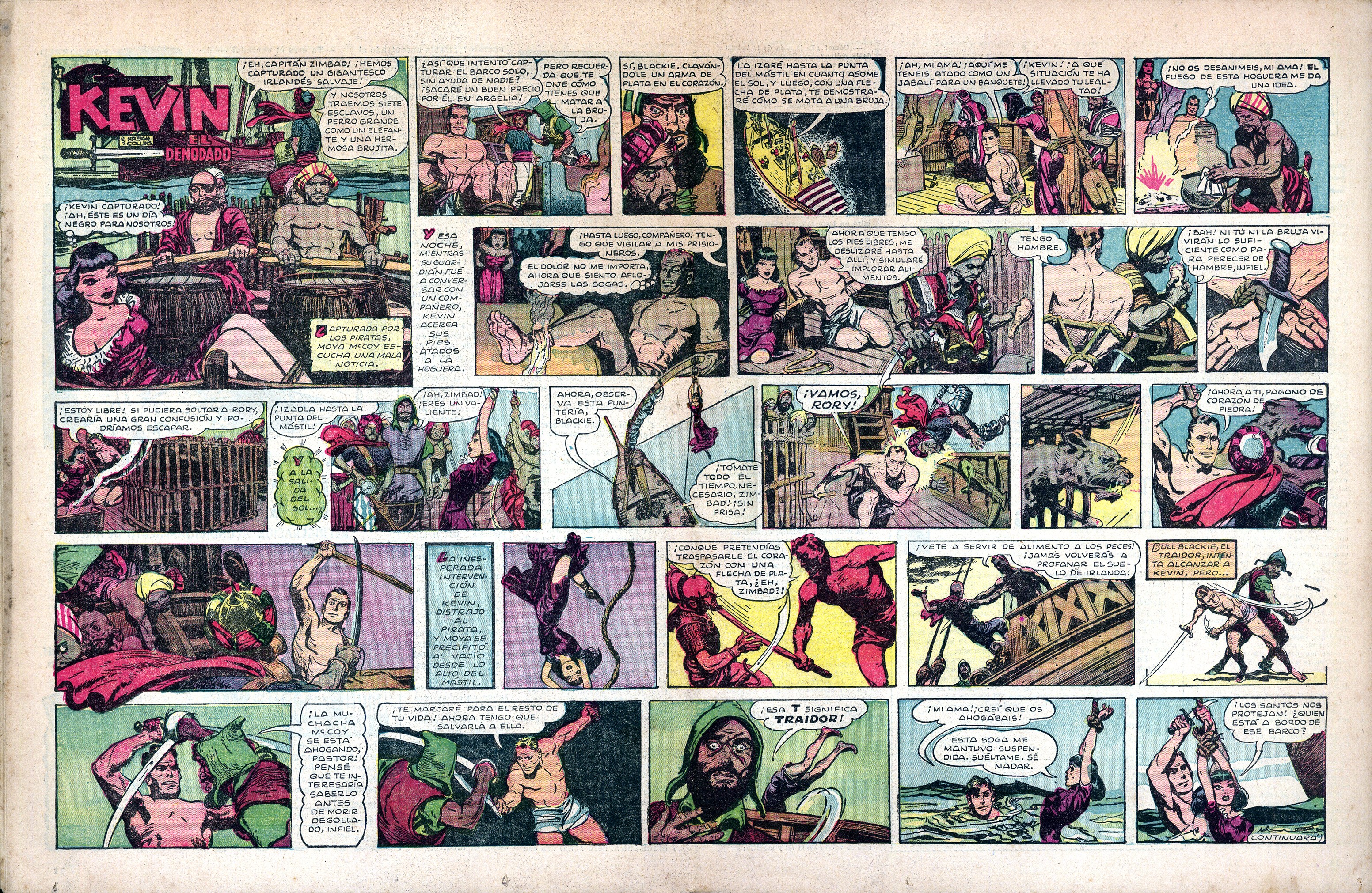
In April 1952, the Argentinian weekly Tit-Bits added “Kevin the Bold” to its lineup. Among other stories and features, Tit-Bits reprinted American comics with Spanish translations. The magazine’s cover art was provided by the comic strips it featured inside (as would be the case with the Menomonee Falls Gazette two decades later).
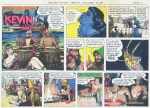
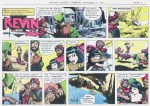
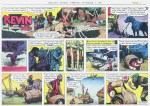
“Kevin el Denodado” ‘s debut, in issue No 2232, was appropriately bold—in addition to landing on the magazine’s cover, its center spread was comprised of the strip’s first three episodes. For the next five issues of Tit-Bits, other comic strips appeared on the cover, and only a single, tabloid version of “Kevin the Bold” appeared inside. For No. 2238, Collins’ comic regained its spot on the cover, and another three-episode spread appeared inside. (Eventually, “Kevin” ‘s appearance on the cover no longer signified a triple-episode spread inside—later issues only had single tabloid episodes. Unlike some other Tit-Bits comics, “Kevin” continued to run in color).
This spread cobbled together the November 19, November 26, and December 3, 1950 episodes (shown in English, below).
As in Issue No. 2232, the front of the magazine featured black and white versions of “Big Ben Bolt,” by John Cullen Murphy (Ben Bolt Campeón), and “Rusty Riley” by Frank Godwin (Rusty Riley, Aprendiz de Jockey).
The back of the issue had Spanish versions of “The Phantom” (by Ray Moore?), “Terry and the Pirates” by Milt Caniff (Terry, el Piloto), and Dr. Nicholas P. Dallis’ “Rex Morgan, MD” (Rex Morgan, Médico).
Lost in Translation
The action featured in the epic “Kevin the Bold” comic above appears near the tail end of my book, “The Lost Art of Kreigh Collins, Vol. 1: The Complete Mitzi McCoy.” The book features all 99 episodes of “Mitzi McCoy” as well as the ensuing 12 “Kevin the Bold” adventures that following the “Mitzi”‘s transition to “Kevin”. While there are no immediate plans to translate the book into Spanish, it’s pretty awesome in its original English, if I do say so myself.
With the Regent dead, Rupert’s obstacle to ascending to Rheinstein’s throne has been removed. However, other events conspire to prevent him from achieving true happiness.
Baroness Vichi is a bitch witch, and of course she resents the virtuous Madeline.
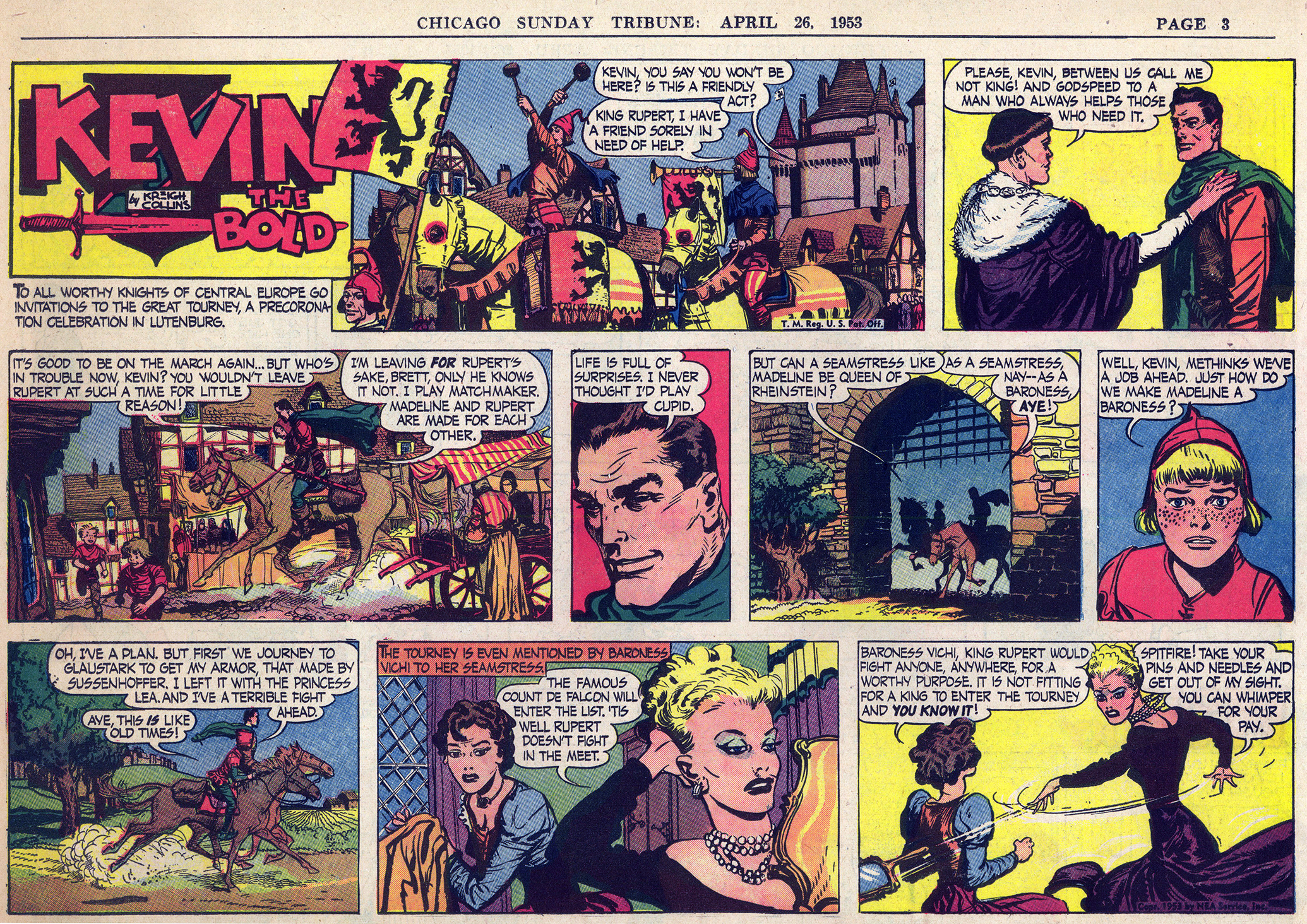
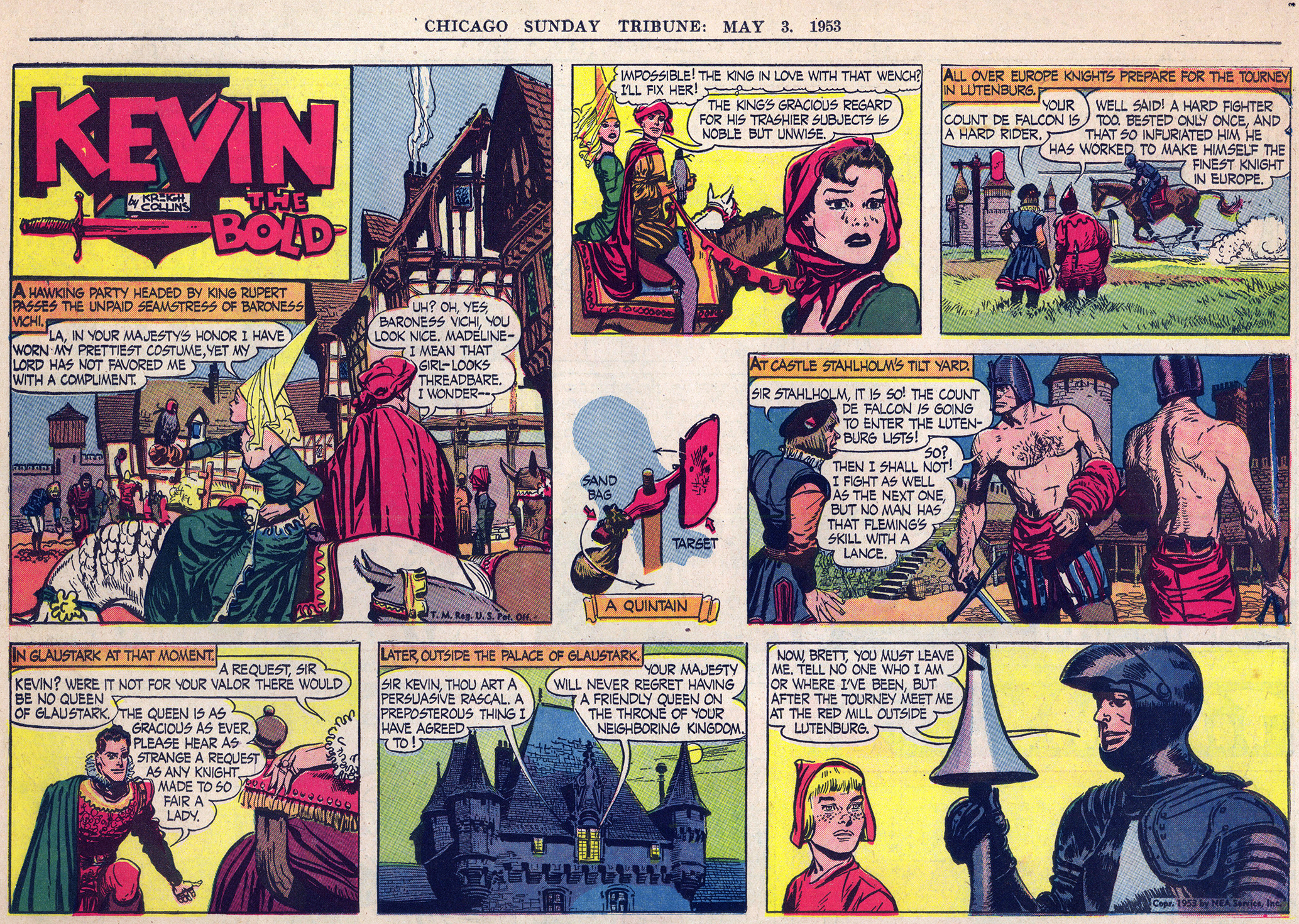
This current story arc, longer by far than any others in the entire run of the comic strip, was a serious attempt by Kreigh Collins to deepen character development in an attempt to increase its overall impact. Also, a couple of significant characters from two previous sequences have cameo roles in the May 3 episode (above): The Count de Falcon, a knight Kevin bested in an earlier tournament appears near the beginning, and toward the end, Kevin asks a favor of a princess he had rescued. (She is now the Queen of Glaustark).
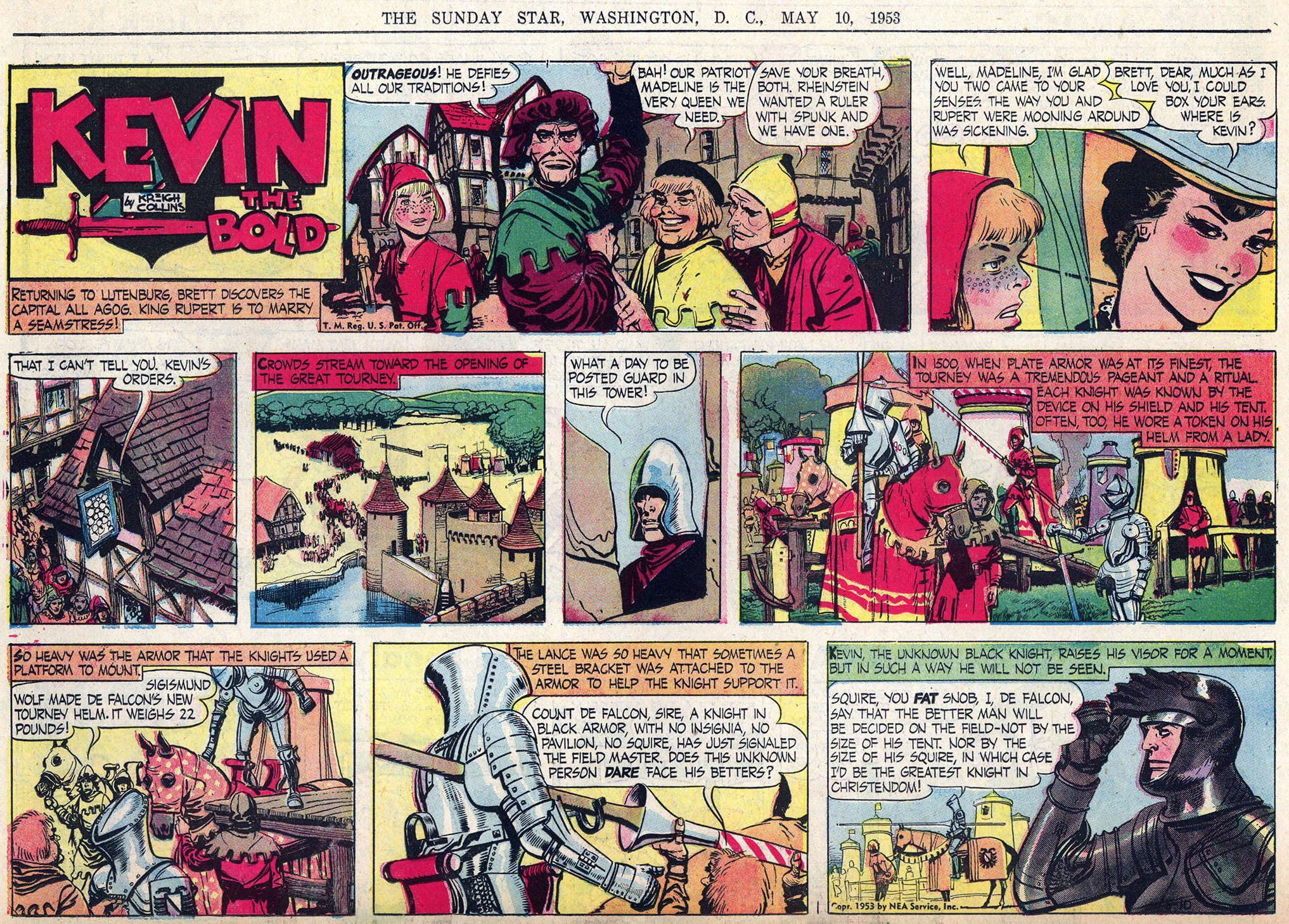
Meanwhile, the tournament nears, and Kevin’s first opponent will be the ruthless Count de Falcon.
The Lost Art of Kreigh Collins, The Complete Mitzi McCoy
Describing “The Lost Art of Kreigh Collins, Vol. 1: The Complete Mitzi McCoy,” Bruce Canwell, of IDW Publishing’s Library of American Comics, had this to say:
Originally a painter and illustrator, artist Kreigh Collins delighted comics readers for a quarter-century with his rich compositions and distinctive characters. Collins’s series Mitzi McCoy has its roots in the small town of Freedom, echoing It’s a Wonderful Life’s Bedford Falls and pre-figuring TV hamlets like Hooterville and Mayberry. Open this collection and delight in Mitzi’s arresting artwork and solid Middle American sensibilities. Highly recommended!
In addition to the complete run of “Mitzi McCoy,” the book contains the first sequence of the comic strip it morphed into, “Kevin the Bold.” There are also never-before published comics and photographs, and the book includes a wonderful introductory essay by Eisner Award-winner Frank M. Young. It is available here.
For more information on the career of Kreigh Collins, visit his page on Facebook.
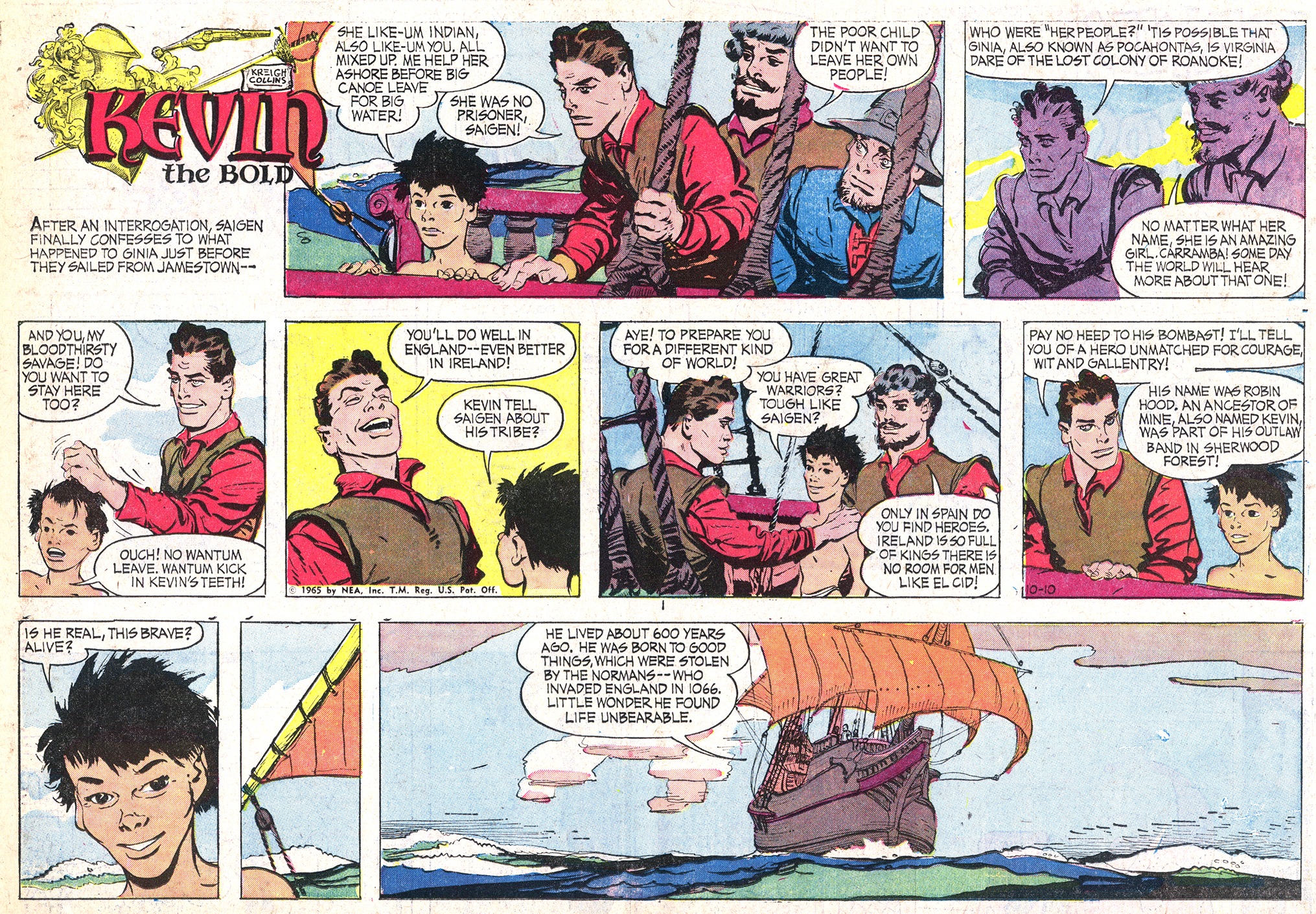
As they sailed away from the New World, Kevin began telling Saigen the story of Robin Hood. While having an adult narrate a story to a youth was a familiar trope for Collins, what was different was the appearance of the comic strip’s logo. A longbow and a quiver of arrows replaced the usual rapier and pistol, Robin Hood’s hat rested on the suit of armor’s helmet, and a chapter heading of sorts, “A Story of Robin Hood” was inscribed at the top.
The October 17, 1965 episode serves as an introduction for the chapter’s new characters.
The only previous time the comic strip’s logo changed was on April 23, 1961. Ten years into its run, the familiar blocky KEVIN logo adorned with a claymore and shield was replaced by a more elegant version featuring new weapons and an uncial-style font more appropriate for an Irishman. In fact, in its final appearance in print, the old logo is half-obscured by an enormous Spanish galleon, a portent of its imminent departure. The new logo coincided with the onset of Jay Heavilin‘s 13-month stint as writer for the comic strip.
Yes, those are balls of cheese being used for ammunition!
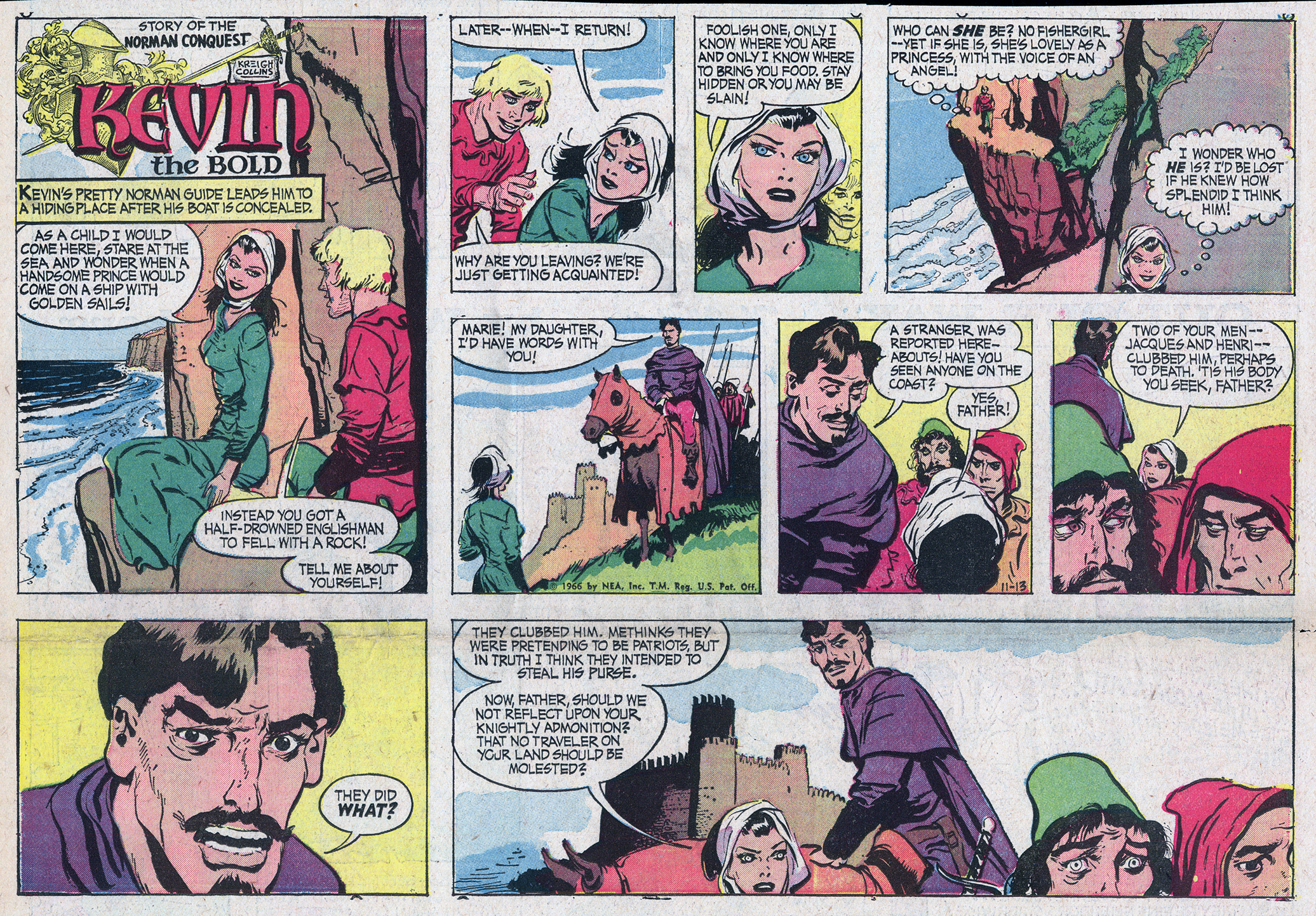
A year later, the logo was modified again, this time just by adding the new chapter’s title, “Story of the Norman Conquest.” While the historical timeline in “Kevin the Bold” can be a bit difficult to follow—the first episode takes place at the end of the 15th century while the final one is dated 1668, about 175 years later—setting the action during the Norman Invasion of Ireland (c. 1170) required a different approach. Here Kevin’s ancestor (also named Kevin) is featured. Making this flashback less confusing to casual readers, the two Kevins appear identical, except for the ancestor being blond.
Another point of departure is the ancestor’s willingness to chase after women, something later-day Kevin eschews. However, the episode that ran two weeks later portrays the two Kevins as essentially the same character.
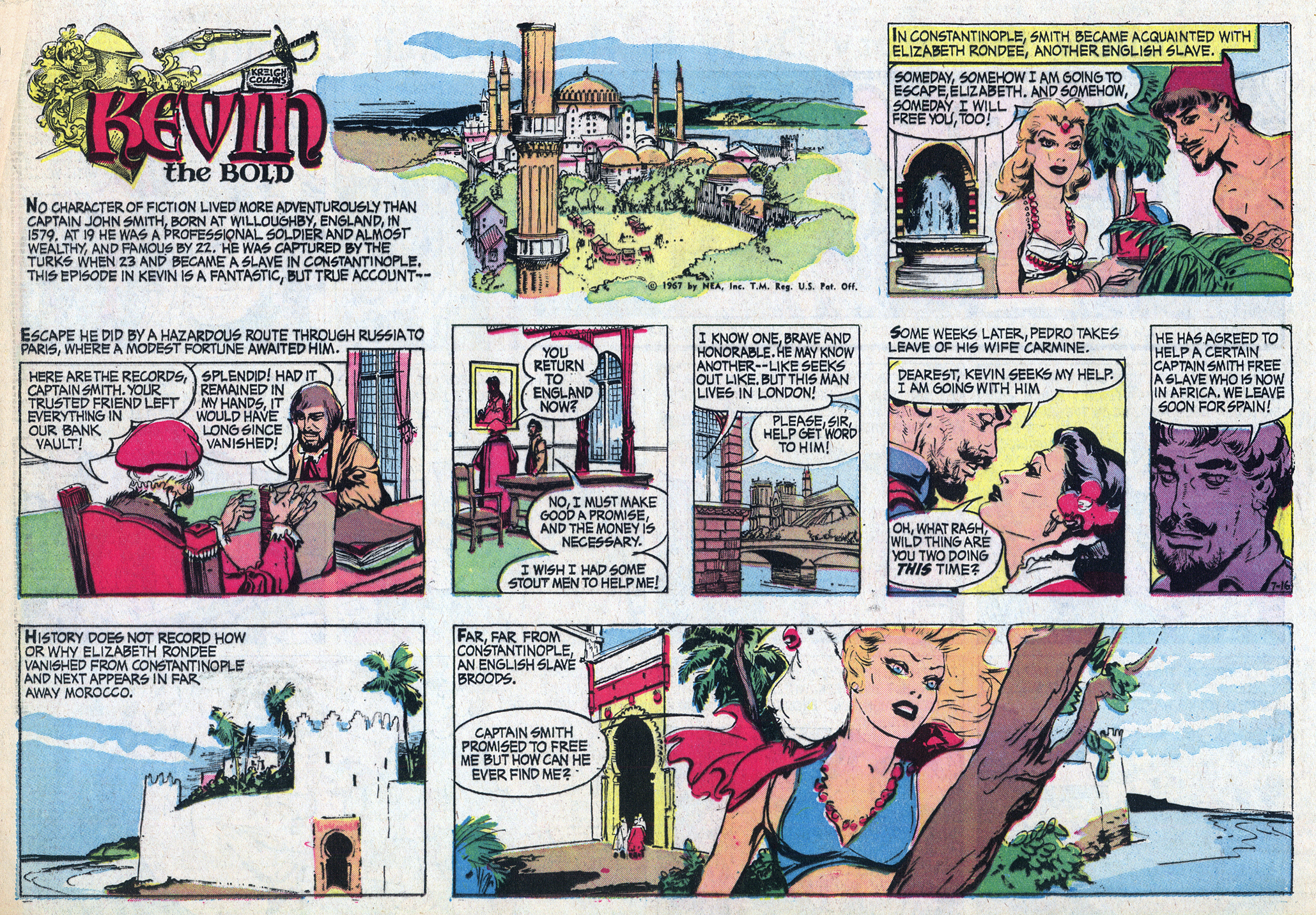
The final time the comic strip’s logo was altered was for one its last sequences, “A True Story of Captain John Smith.” Following this chapter, only four more appeared before the comic strip morphed into Kreigh Collins’ final NEA feature, “Up Anchor!”
Oddly, the July 16 episode introducing the sequence is not labelled as “A True Story of Captain John Smith,” but the 14 comics that follow are. Perhaps adding the title was a late decision made by the NEA, and the fact that it is typeset, rather than hand-lettered, lends credence to the theory.
Another familiar trope is the damselle in distress! Not that I’m complaining, mind you.
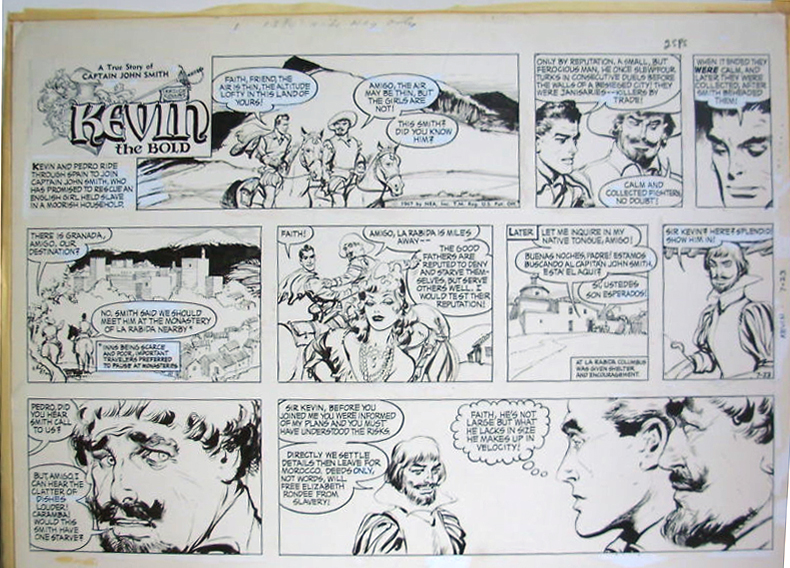
Nearly all the original art for the final three years of KEVIN THE BOLD is found in a collection at Syracuse University. The July 23 episode is an exception. (I found this image online).
How Many Different Logos Were Featured in MITZI McCOY?
That question and more can be answered by picking up a copy of “The Lost Art of Kreigh Collins, Vol. 1: The Complete Mitzi McCoy.” It features a wonderful introductory essay by Eisner Award-winner Frank M. Young and is available here.
For more information on the career of Kreigh Collins, visit his page on Facebook.
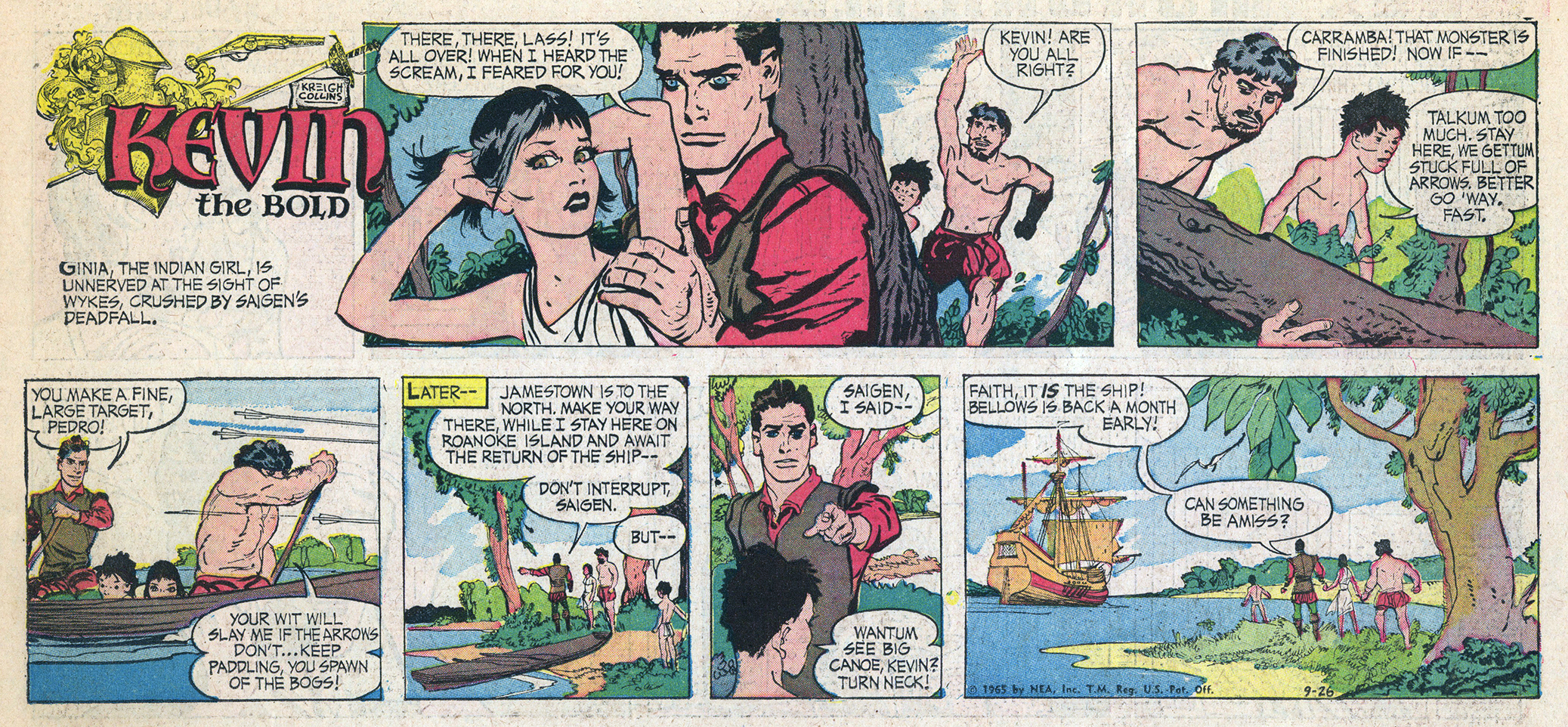
Wykes has been eliminated but there is still danger afoot.
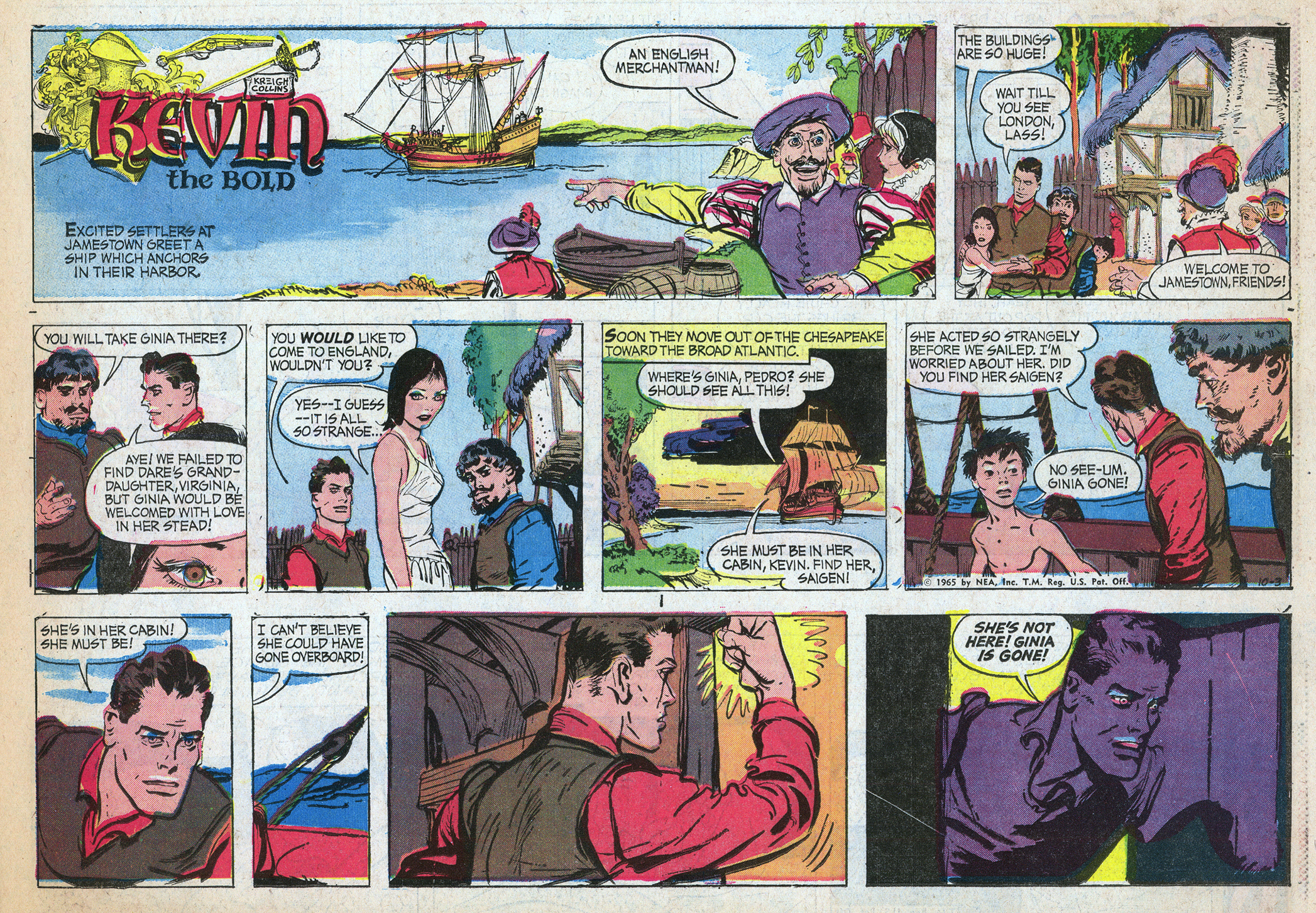
After a quick getaway, some liberty appears to have been taken with the geography involved in this tale. The previous action had taken place around Roanoke Island, North Carolina, and yet now Kevin, et al., find themselves at the Jamestown Settlement, located over 100 miles away in Virginia. Or perhaps they paddled their canoe that far. (It’s possible this action was cut when the comic was reformatted as a one-third page!). At any rate, plans are being made for an ocean crossing, and a return to London.
Saigen admits to abetting Ginia’s escape from the English merchantman, but happily agrees to stay aboard for the voyage across the sea. As a reward, Kevin begins telling the tale of Robin Hood, whose story becomes the next sequence in the comic strip’s narrative. Fittingly, recounting a story to a child is another device used by Collins throughout his cartooning career. It happened several times in “Mitzi McCoy:” the story of the Irish Wolfhound, the Christmas Story, and the McCoy Family Legend (which facilitated the transition of “Mitzi” into “Kevin the Bold”).
For more information on the career of Kreigh Collins, visit his page on Facebook.







































 Kreigh’s Comics