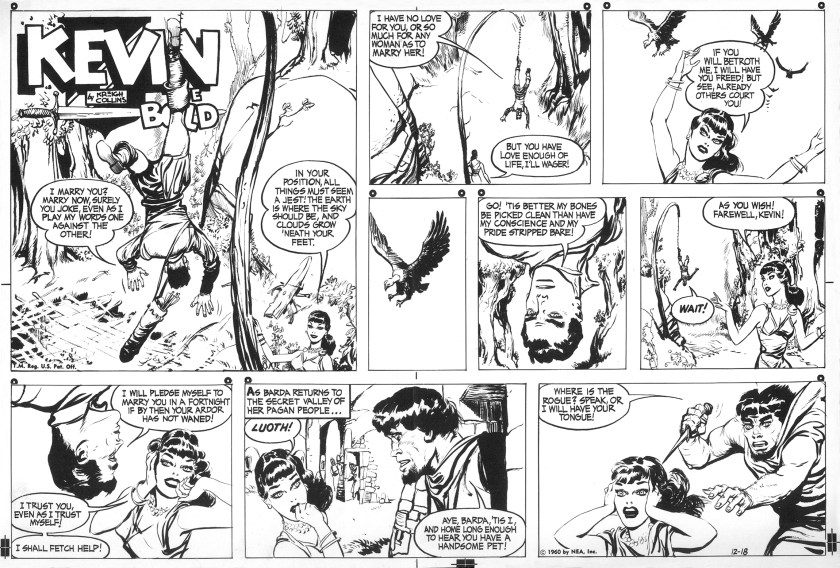
In what could be the worst bachelor party ever, Kevin and Luoth spend the eve of the wedding working hard on a risky and dangerous task.
Following his night of hard labor, Kevin is spent. The panels in the middle tier of the episode above are hysterical—with the first two contrasting the eager bride and the reluctant groom, and the third panel existing somewhere between the screwball and the absurd (and practically begging to be taken out of context). Meanwhile, Kevin faces his moment of truth.
Mascarading as Hercules, Kevin passes one test, but unexpectedly faces another.
Luoth understands that if Barda breaks the engagement, it is mutually beneficial to Kevin and himself. Luoth is willing to take a great risk in order to restore his standing with Barda. Finally, a sudden thunderstorm and some quick thinking allows Kevin to escape his fate as a married man.
For more information on the career of Kreigh Collins, visit his page on Facebook.
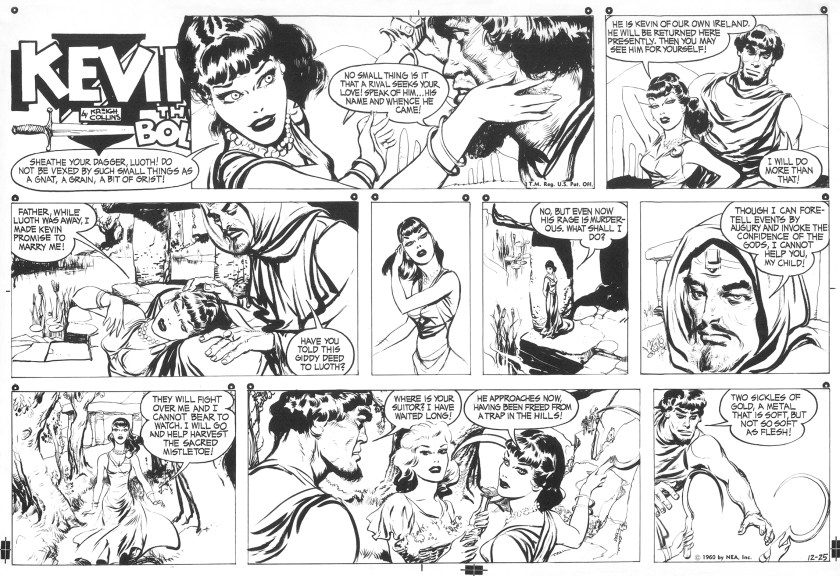
I wish I had some color half-pages from this sequence to intersperse with the black and white art, but the printer proofs really accentuate Collins’ wonderful line work. And As you can see, the third-page versions that ran in many newspapers during this era of Kevin left much to be desired. With these shrunken comics, each panel was cropped, and the lovely “throwaway” was eliminated.
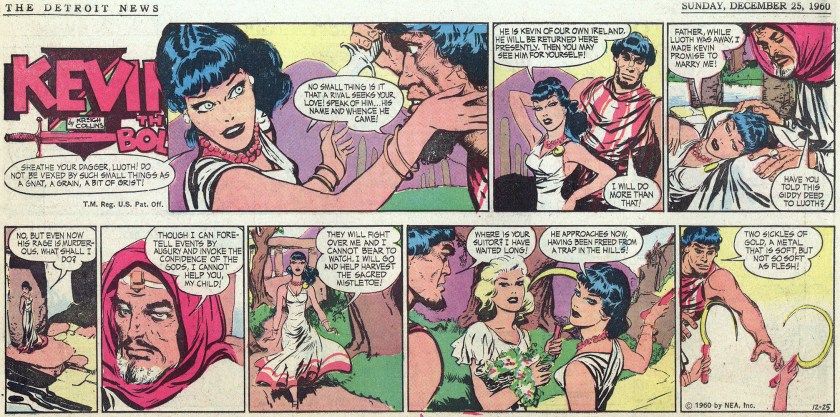
For the time being, Barda is able to calm her erstwhile boyfriend’s anger, but her situation proves too sticky for any further help from her father. Though Kevin will have his hands full dealing with the jealous, jilted Luoth, he is as calm and confident as ever.
Someone please hide those scissors!
Quick thinking and a sudden, unlikely alliance buys Kevin time as he tries to dig his way out of trouble.
For more information on the career of Kreigh Collins, visit his page on Facebook.
Barda has a new muse, and she gives her new toy both freedom and fair warning.
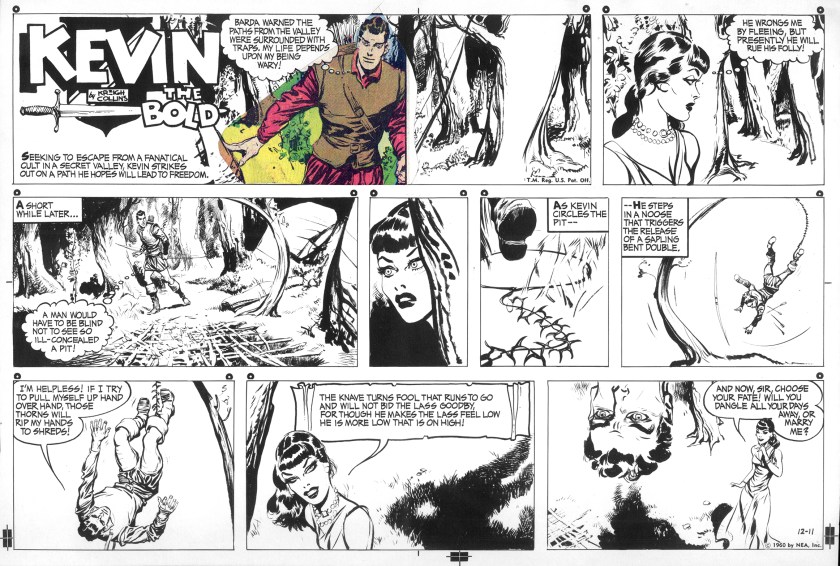
Determined not to make the same mistake twice, Kevin is cautious.
The comic used to patch the hole in this proof reveals the main problem with one-third-page versions—a significant chunk of the opening panel (to the right of Kevin) has been cropped out.
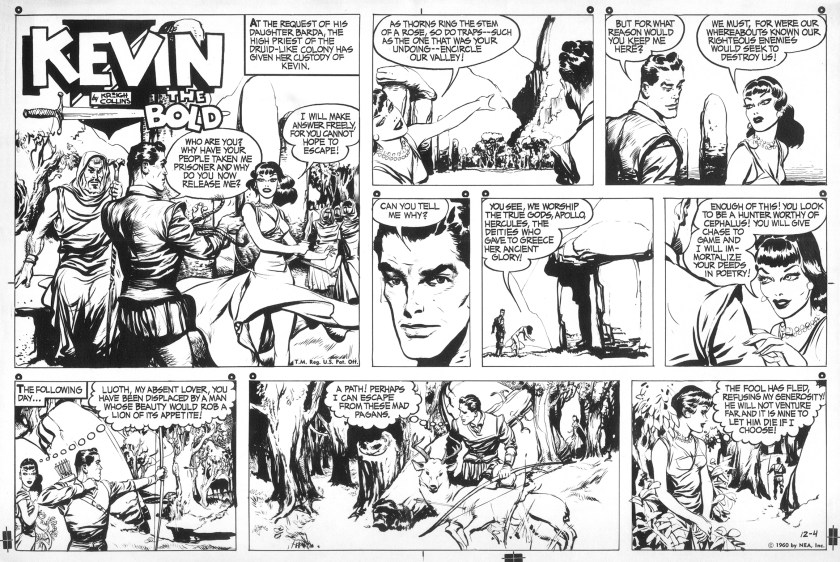
The names of Kreigh Collins’ ancillary characters were generally symbolic. As the child of a druid-inspired cult’s spiritual leader, Barda (“daughter of the earth”) is an appropriate name for a young poetess. Although she seems to relish dominating her love interests, she is not to be confused with Big Barta (a DC comics character with similar proclivities that debuted a decade later).
In the December 11 episode, our poetess riffs on a scene from King Lear (“The knave turns fool that runs…”). Of note, five years down the road Shakespeare would figure even more prominently as inspiration for a “Kevin the Bold” sequence.
Having made Kevin an offer he could not refuse, Barda finds trouble of her own.
The peak years for “Kevin the Bold” were the 1950s, but by mid-1957, the Chicago Tribune, an early champion of the comic, was running inferior one-third page versions of the strip. While other papers continued running the strip as a half-page, like the Detroit News, many soon followed suit with the dreaded one-thirds.
Finding half-page examples of the comic from the late-50s can be difficult, so I am lucky to have numerous syndicate proofs in my collection. These proofs (veloxes?), show the entire half-page comic, and are printed on a nice heavy stock. Kreigh Collins used these to provide color guides to the NEA. He would paint them with watercolors, and these would be used by the NEA as guides while colorizing the comics. Extra copies of the proofs were kept in Collins’ studio, and sometimes these ended up being used like coloring books by either his youngest sons or his grandchildren. In retrospect, it’s a real shame, but at the time it probably seemed like a “grand” idea (to use a word that reminds me of Gramma Collins). While some of these proofs were colored or painted on, others suffered a worse fate, as the aspiring artists attempted collages, apparently, cutting holes in the proofs with scissors.
The following sequence, which ran from November of 1960 to January of ’61, has 11 episodes. I have cleaned up one that was painted on (our young artist hadn’t gotten very far with the November 27 episode—for once a short attention span proved beneficial), and I used some one-third page comics to patch up two others.
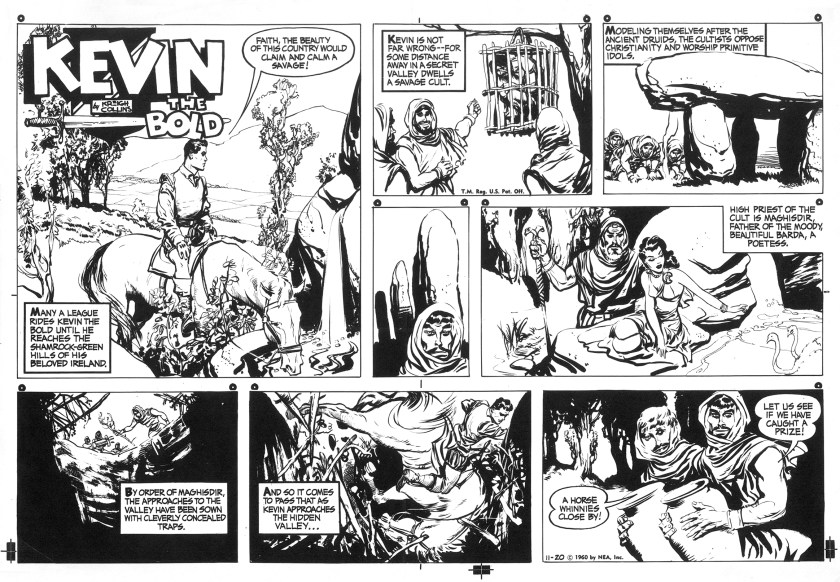
Despite these flaws, the sequence itself is wonderful. It contains all of the strip’s classic elements: beautiful scenery, a gorgeous young woman (smitten with Kevin, naturally), mystery, and action, plus a nice feat of engineering. It begins with Kevin taking a needed break from his adventures; he has returned alone to Ireland.
After falling into the trap, Kevin’s captors comment on his size and strength, comparing him to one of the ancient gods they worship. Despite his appearance, a perplexed Kevin is released to Barda, the daughter of the cult’s leader.
For more information on the career of Kreigh Collins, visit his page on Facebook.
Artists and illustrators often have models pose for them — Kreigh Collins frequently enlisted his family with the task. Occasionally, a special situation would call for a hired model, and such was a case for an early “Kevin the Bold” sequence. Getting a help wanted ad on the front page of the local paper was helpful, and the Grand Rapids Herald provided some nice promotion for Collins’ year-old comic.
The “special man” needed to be of a specific stature, as he would be donning a centuries-old suit of armor recently donated to the Grand Rapids Public Museum. Since historical authenticity was important to Collins, having a live model for reference would be very useful, as knights in armor were a staple of his comic strip.
The newspaper page was trimmed so that no publication date showed, but an article on the page had some information that placed it in late July of 1951. The NEA’s production schedule required comics to be inked two to three months ahead of their publication date, and with this sequence appearing in September, the timing of the newspaper article made sense.
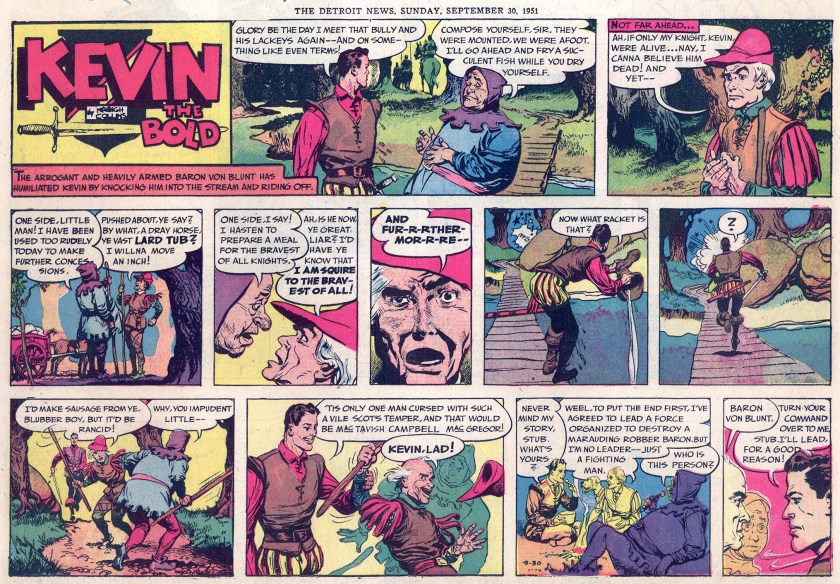
The fifth “Kevin the Bold” sequence introduced a new villain, Baron Von Blunt. Was his new Flemish armor modeled after the set from the Grand Rapids Public Museum?
Most of the early “Kevin” comics in my collection are from the Chicago Sunday Tribune, but the September 30, 1951 comic shown above ran in the DetroitNews. (Most likely, the comic had debuted in the News with this sequence). Collins’ artwork is especially strong in this period, but the printed results from the News are no match for those of the Tribune.
Kevin and his squire, Stub, had been separated during the previous sequence, in which Kevin was gravely injured. Once reunited, Stub fills his knight in on the details of the task he has been assigned — training an army of men to face Baron Von Blunt, the same ruthless man that had already made an enemy of Kevin. The October 7 comic is another beauty from the Trib, with more to follow.
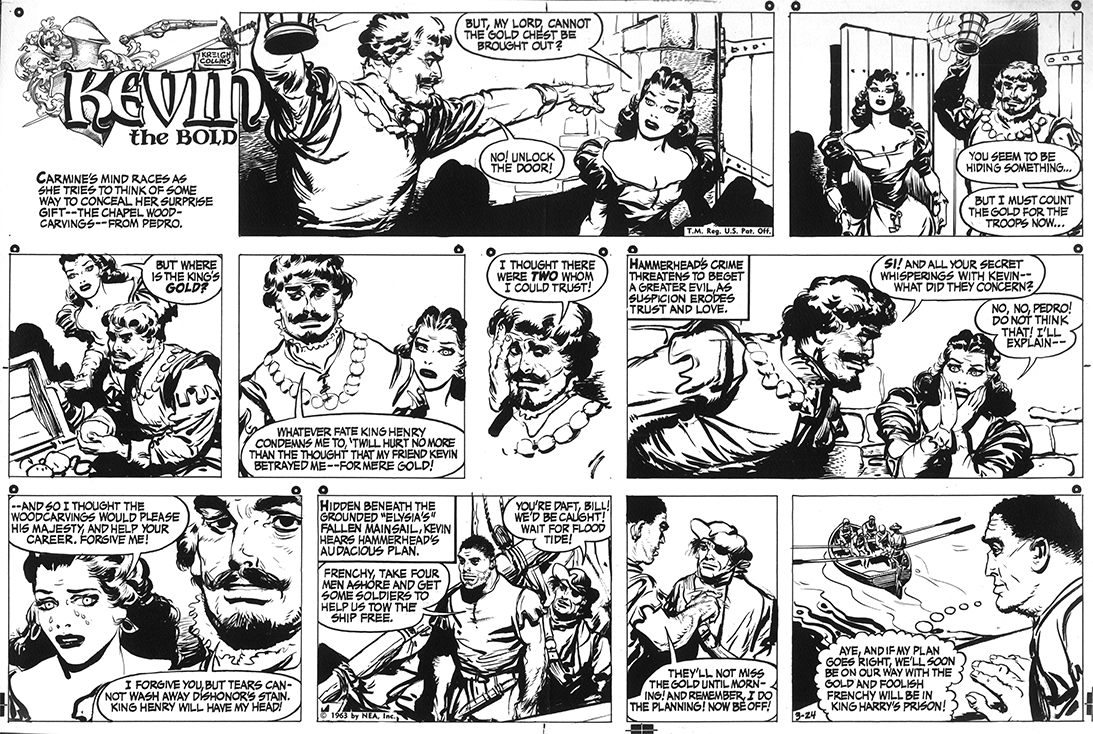
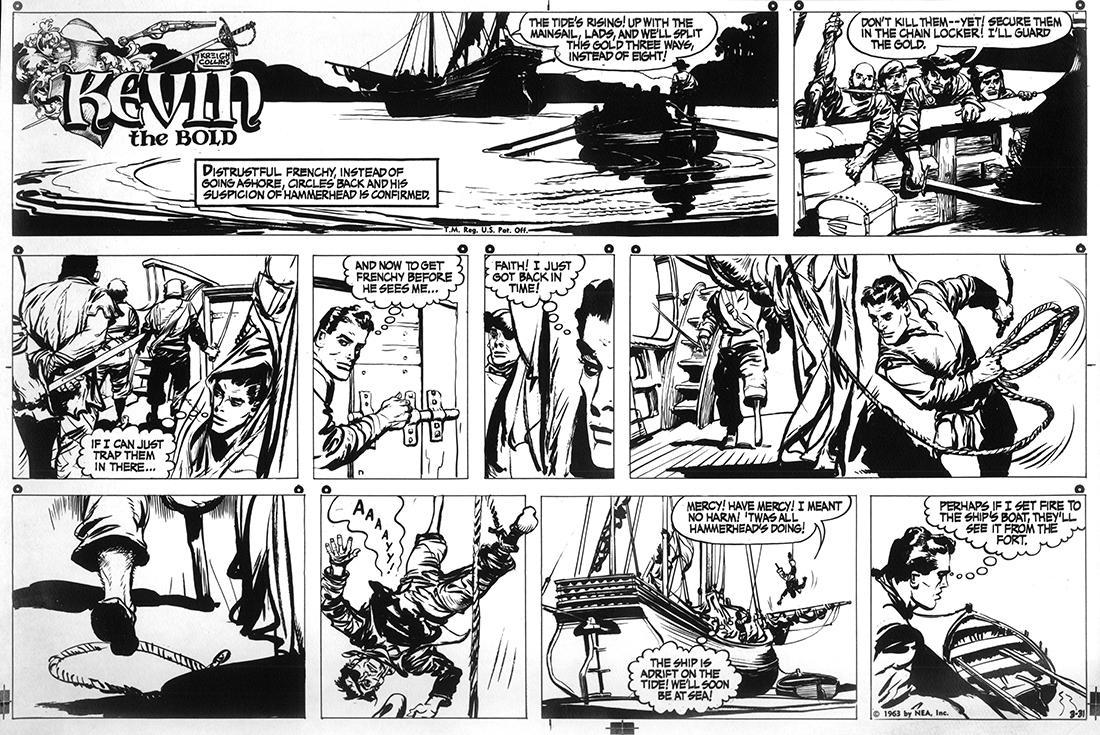
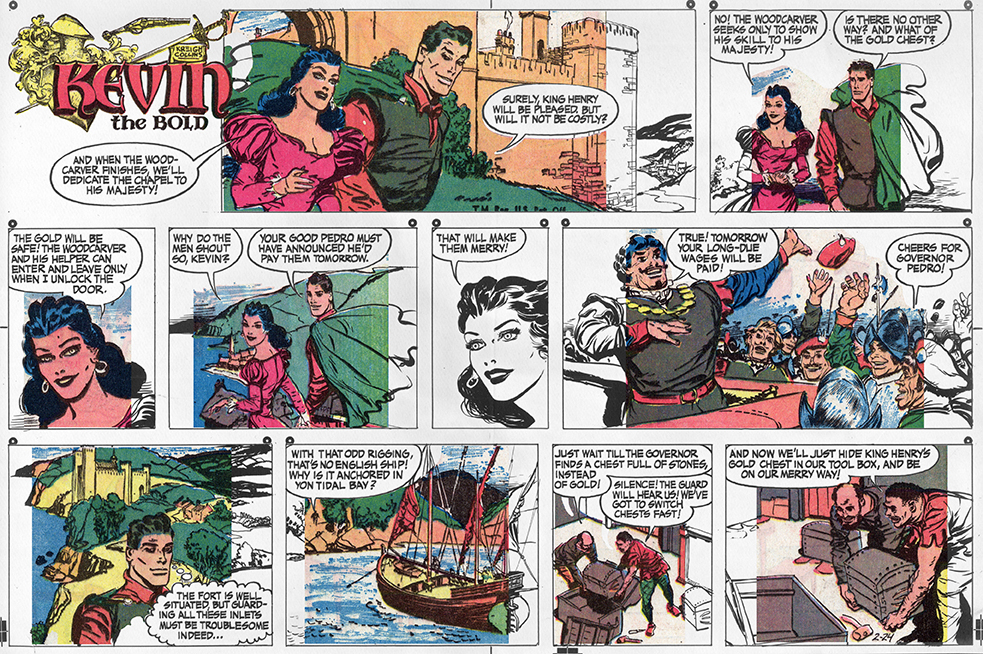
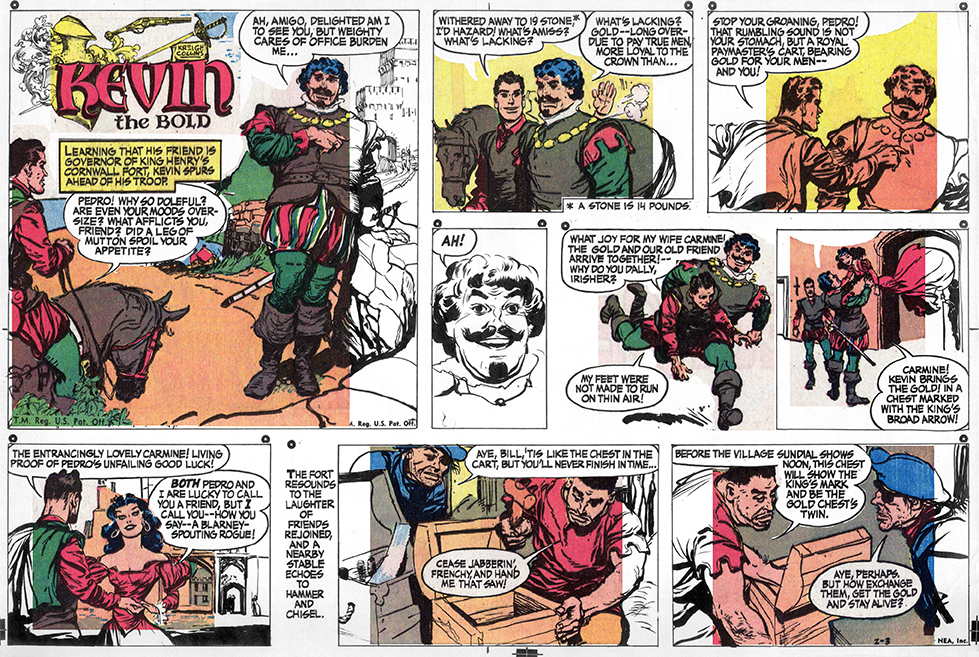
Despite getting away with the gold, the greedy Hammerhead schemes to cut Frenchy out of the deal—and turn him into the fall guy.
However, suspecting as much, Frenchy returns with a plan to turn the tables on Hammerhead. A detail I hadn’t previously noticed was Captain Frenchie’s peg leg. Reviewing the previous episodes indicates it was indeed apparent, but I didn’t catch any references to it in the captions or dialog.
A term that could perhaps use an explanation, the “ship’s boat,” is found in the final panel. Not a redundancy, the ship being a large vessel and its boat being the small utility boat it carried (or towed).
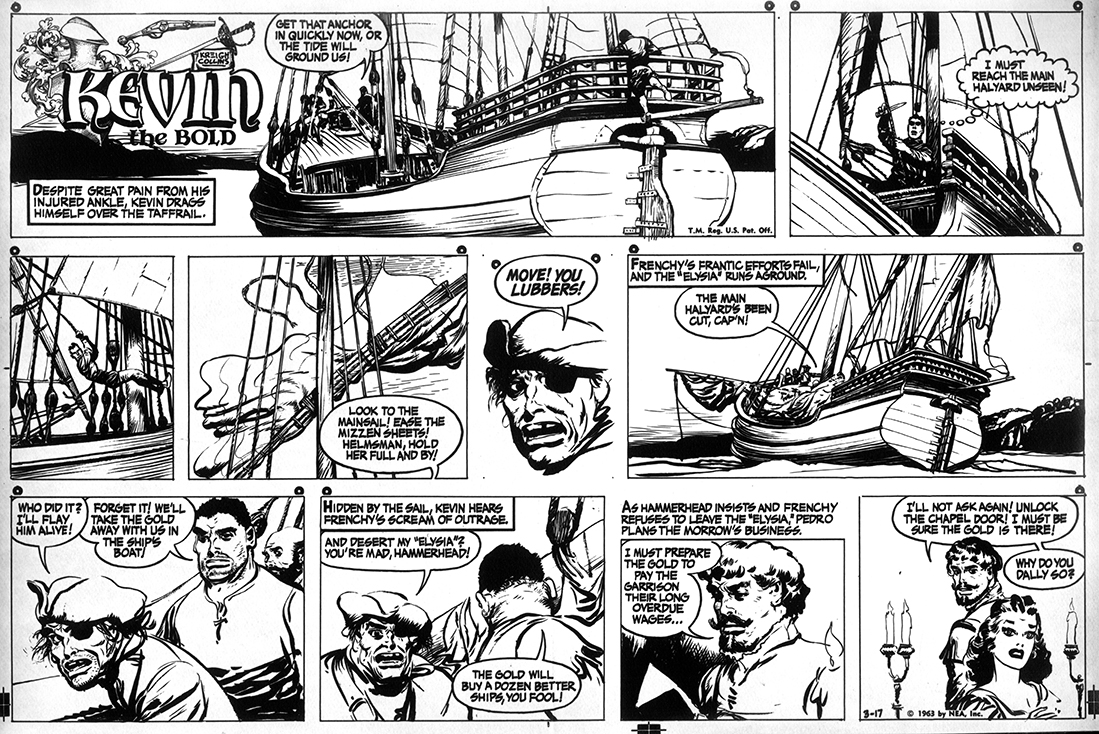
Despite his injured leg, Kevin manages to ensnare Frenchy and alert the soldiers at Governor Pedro’s fort. The chapter concludes, and in an extremely unlikely transition, Kevin and the Elysia are blown a bit off course (more than 8,000 miles!). The storm managed to send the Elysia all the south way from the Irish Sea, until it rounds Cape Horn and eventually settles… in Japan (and another 10,000 miles off course).
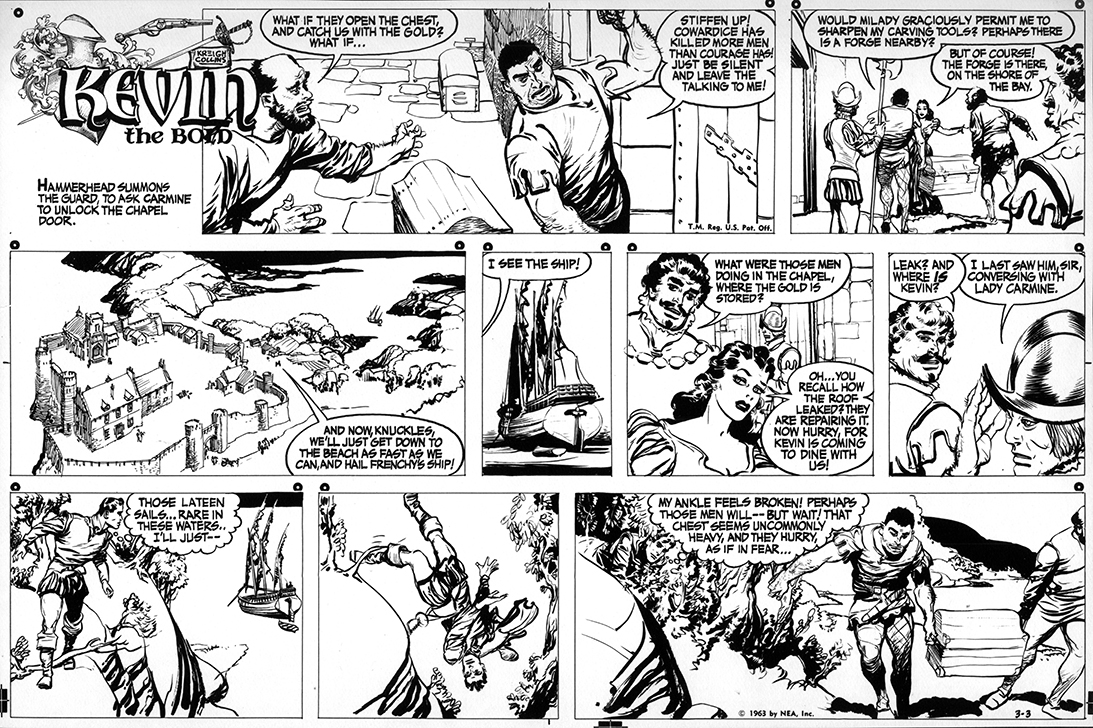
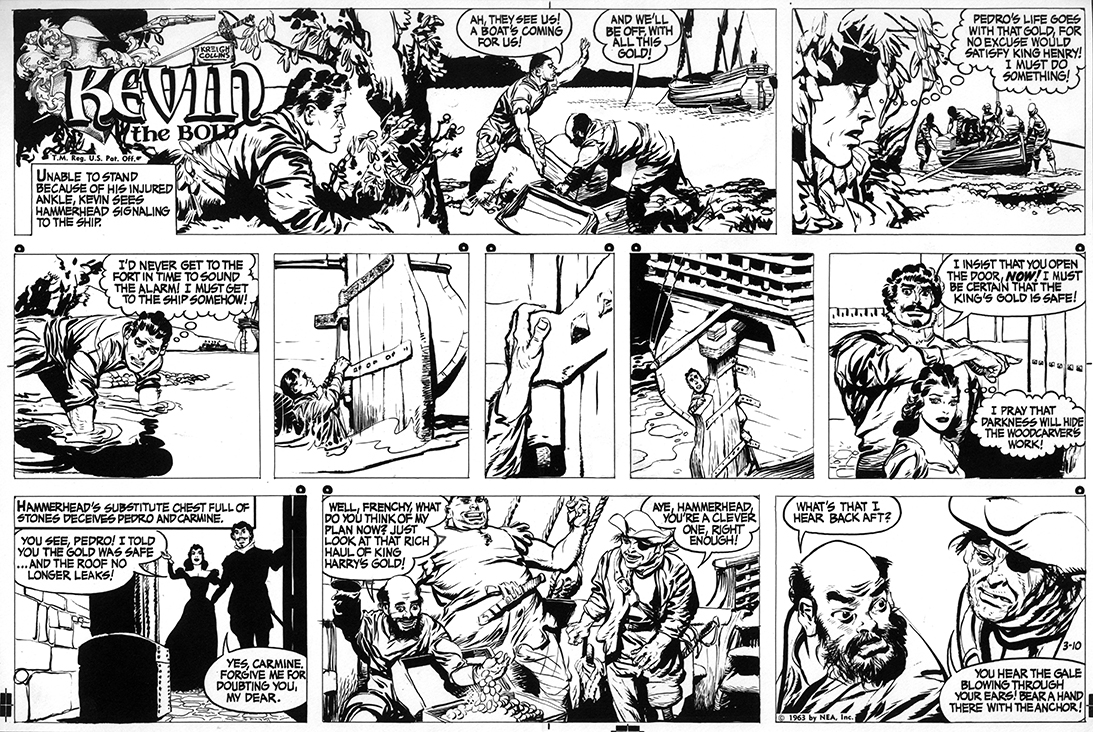
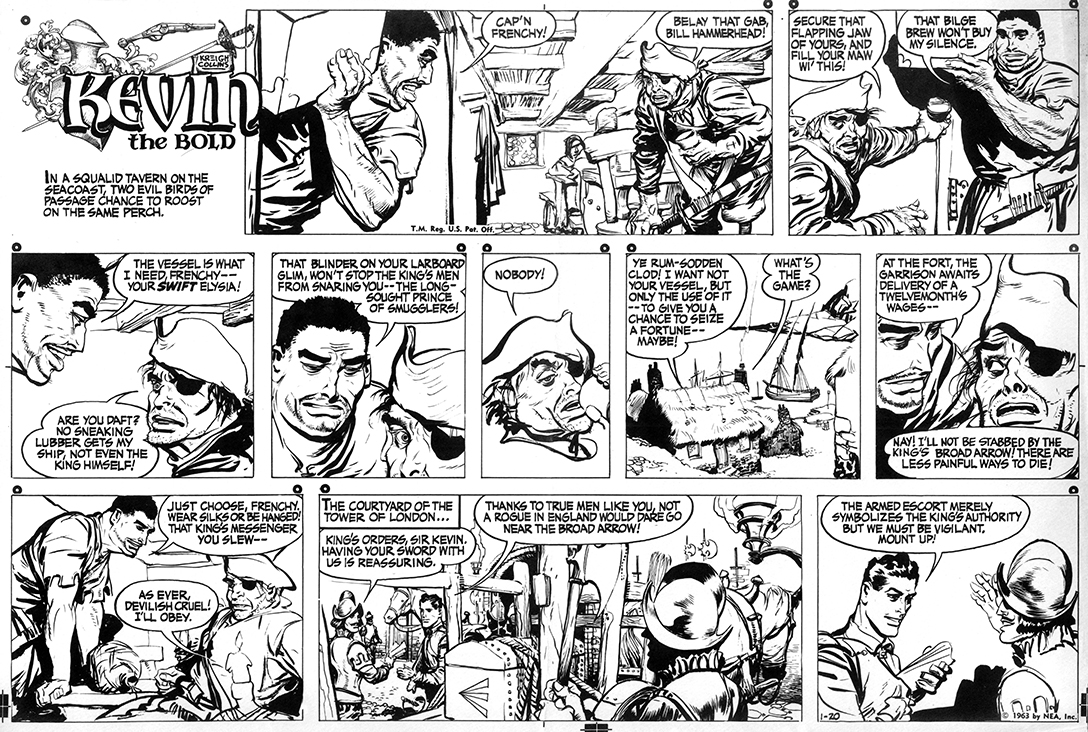
The following chapter of Kevin’s adventures originally appeared 61 years ago, in early 1963. It ran for 12 weeks, and most of the episodes consist of black and white velox proofs, supplemented with color versions wherever possible.
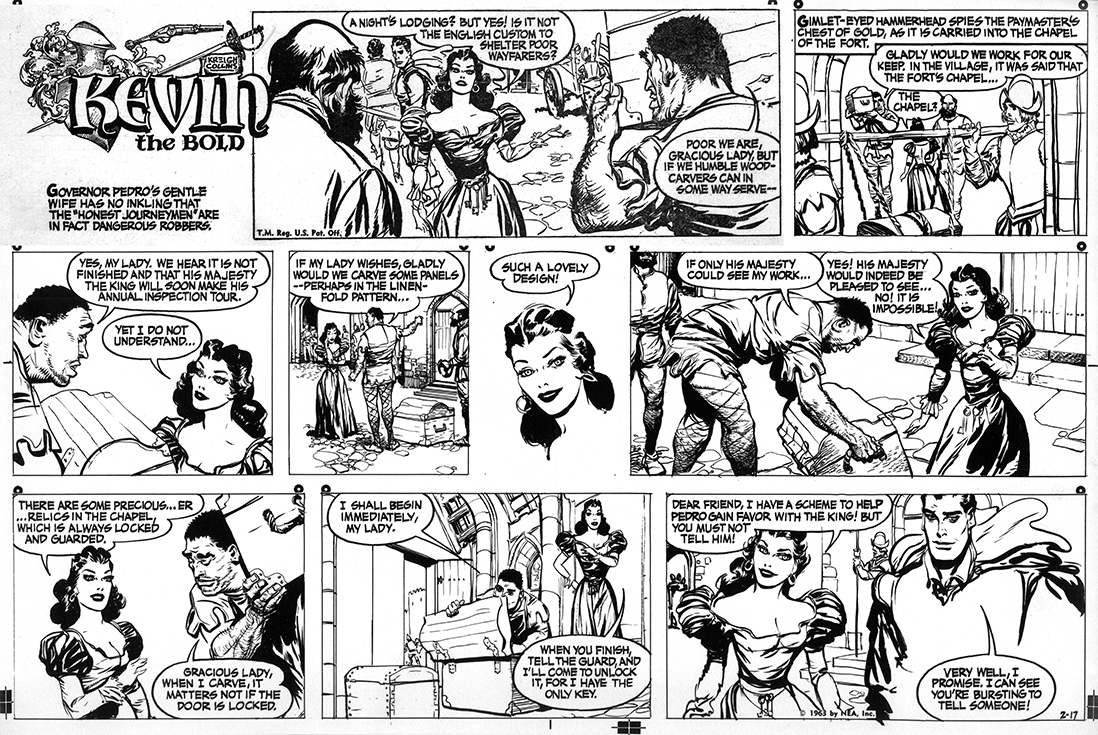
The sequence’s introductory panel introduces the villains, Bill Hammerhead and Captain Frenchy.
The unexpected encounter leads to Bill gaining an ally in his audacious plan to steal gold from King Henry.
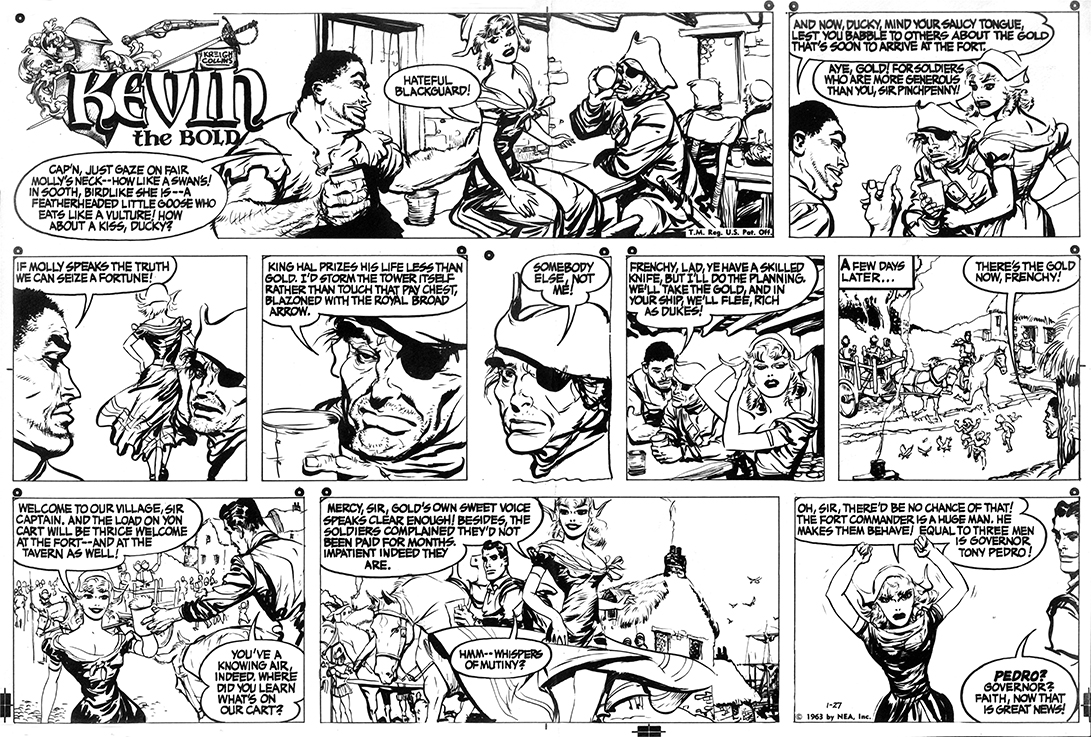
Fine-tuning their plan at an alehouse, the two quickly insult Molly, a lovely young barmaid. Everyone takes notice when the royal coach arrives, with Molly greeting Kevin with some of her establishment’s malty refreshment. She also gives him the welcome news that leads to a happy reunion.
Bill Hammerhead’s plan, as yet undelineated, seems to involve the old switcheroo.
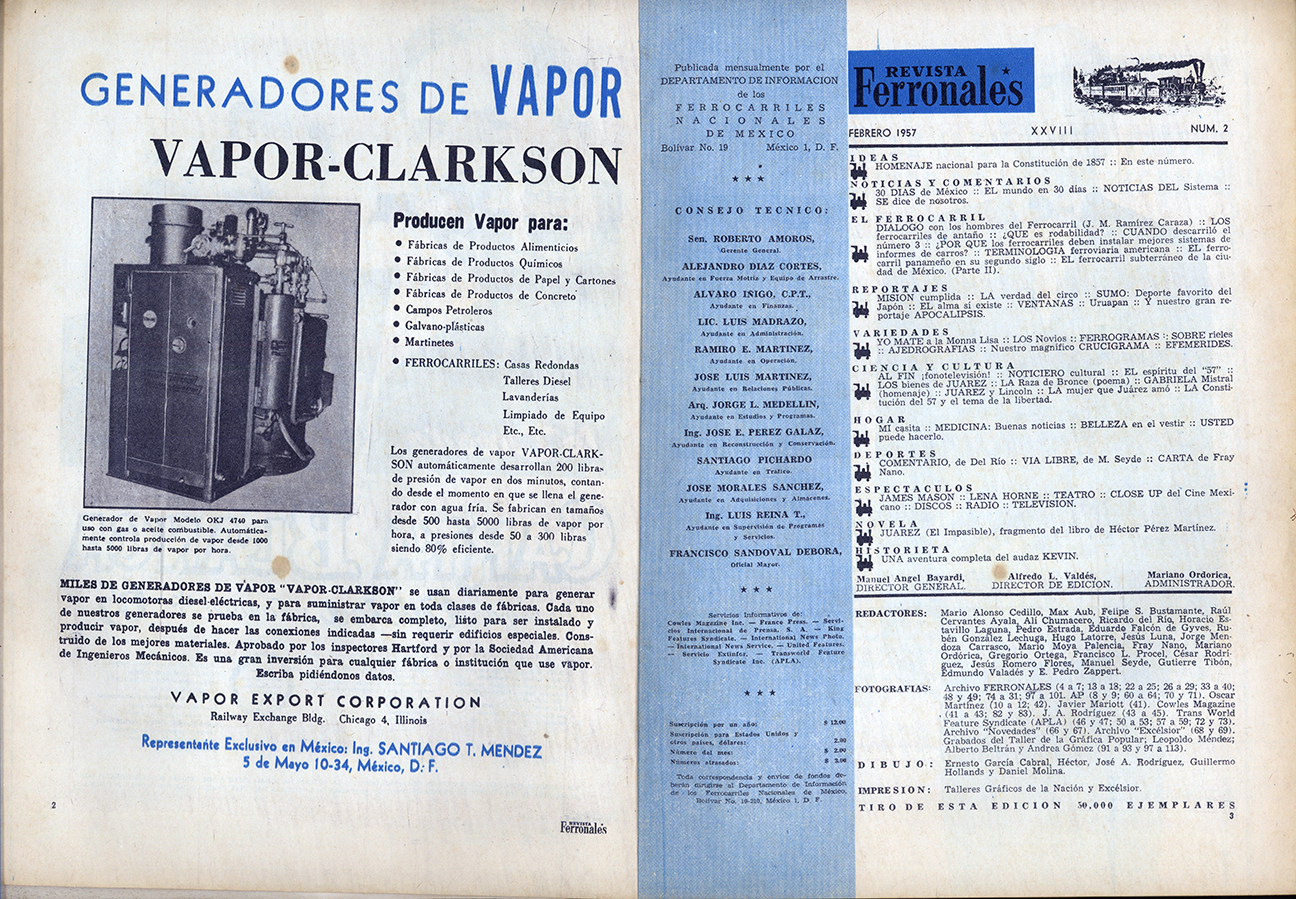
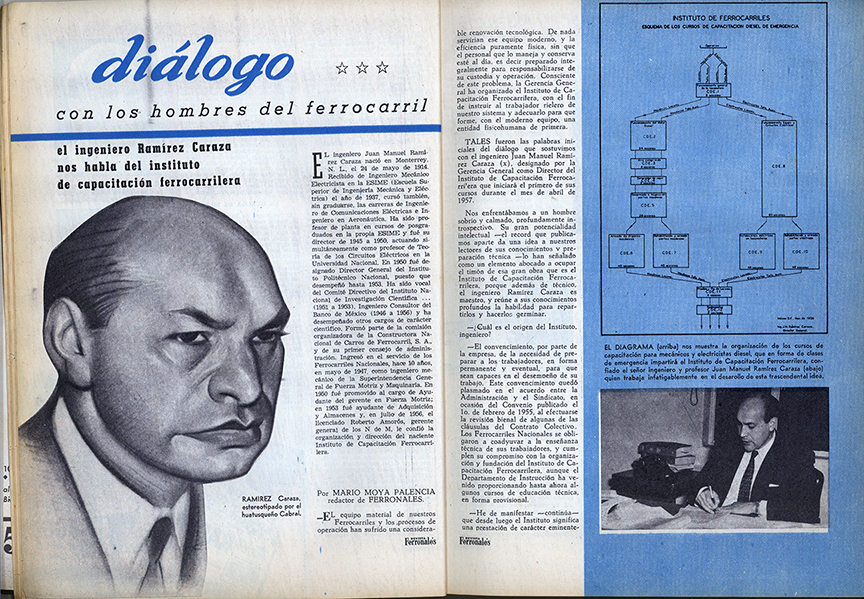
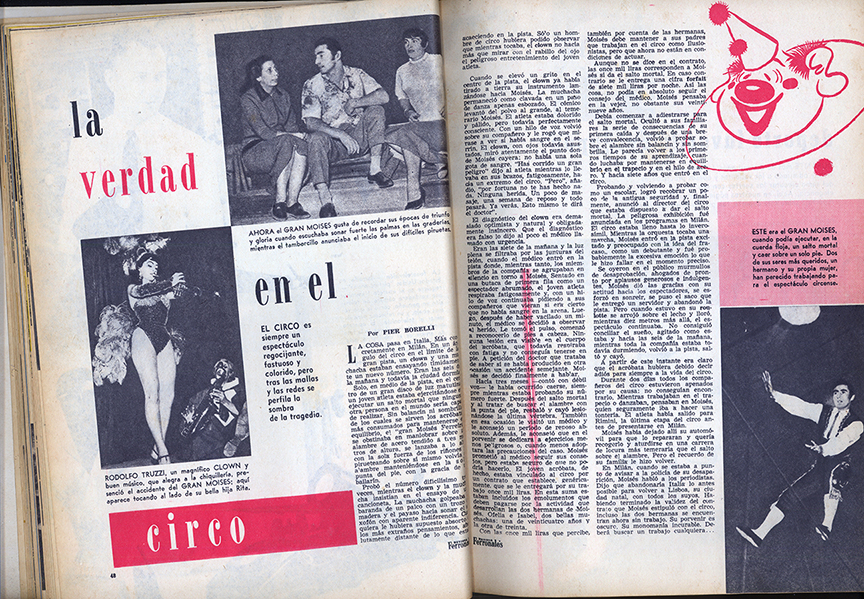
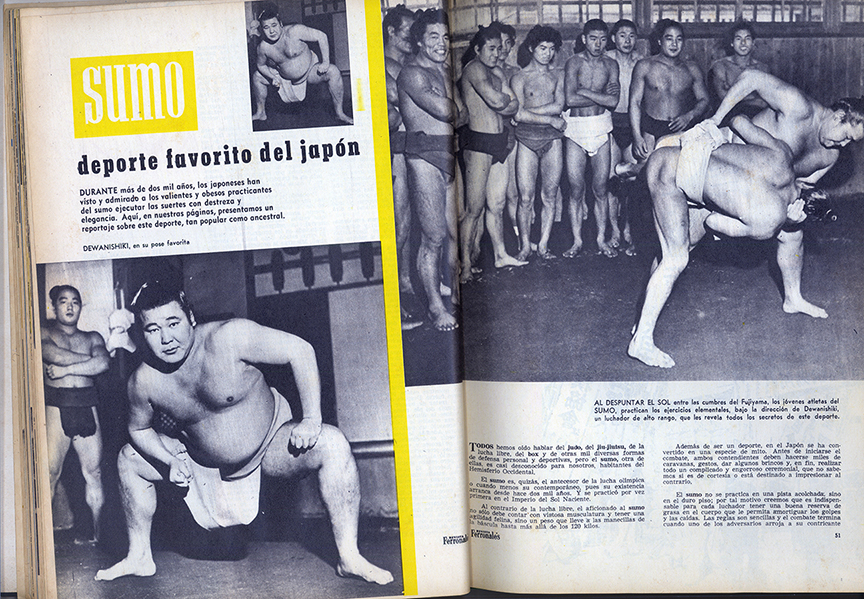
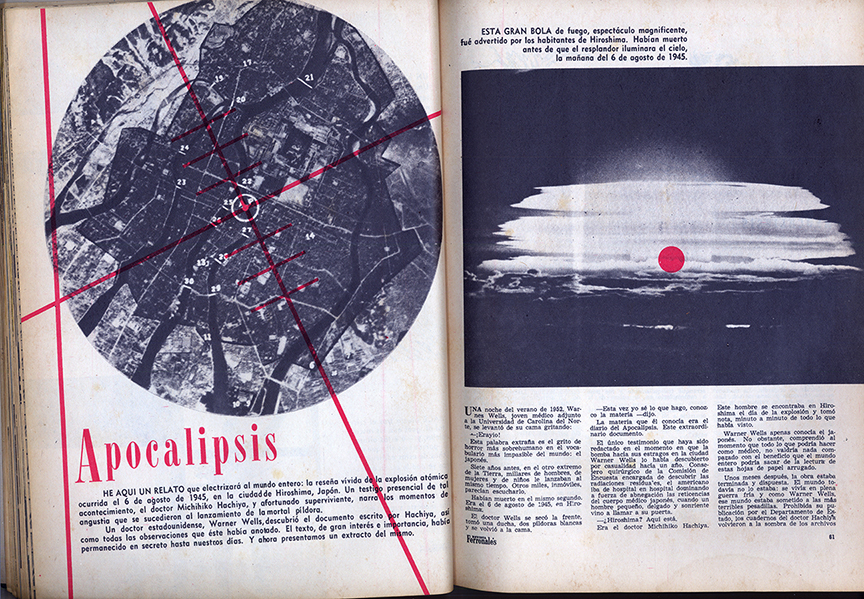
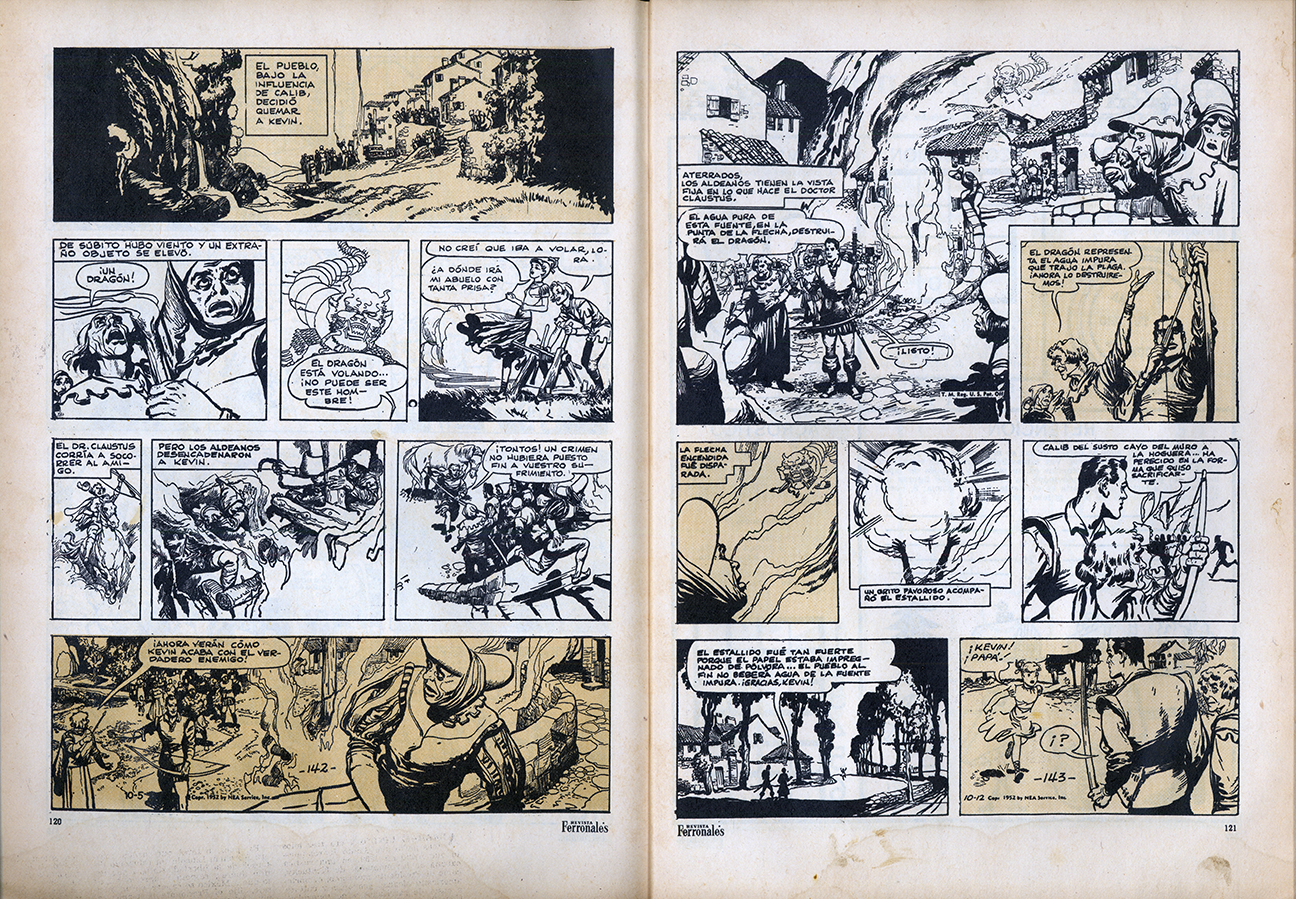
I recently acquired a copy of Revista Ferronales, a monthly magazine published by the Information Department of the National Railways of Mexico. Dated February, 1957, it is probably the heftiest magazine I’ve ever seen. The 132-page issue measures about 9″ x 11-5/8″ and weighs nearly a pound. Only its outside covers are printed using the four-color process, and the text pages are printed in two colors—black plus various spot colors. Despite its length, there are few ads inside.
In addition to numerous articles on the railroad industry, it also features a very wide range of editorial content. Sections include Ideas, News and Comments, Reports, Variety, Science and Culture, Home, Sports, Shows, Books, and Historieta, (Cartoons).
Having been published by an arm of the federal government, it’s basically a combination trade/general interest magazine with a patriotic spin.
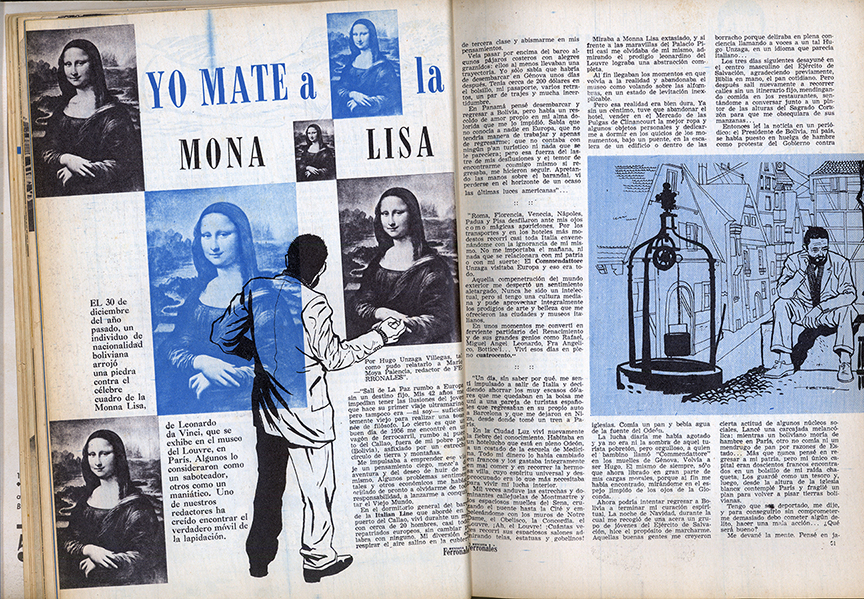
I find the layouts pretty interesting, and the editors get credit for the wide-ranging content. One feature is titled Yo Mate a la Mona Lisa (“I Killed the Mona Lisa”), and two others focus on the circus and Sumo wrestling.
Also included was a rather shocking article, Apocalipsis (“Apocalypse”)—it’s about nuclear annihilation—perhaps due to Mexico’s proximity to the United States during the Cold War.
The back of the magazine contains general interest material, such as celebrity profiles (James Mason, Lene Horne), the kind of stuff typically found in consumer weeklies. Just as many people’s favorite part of a train is the caboose, I think the final section, Revista Ferronales (“Cartoons”) has the good stuff—Una aventura completa del Audaz KEVIN. (Despite my severely limited Spanish, even I can make that out).
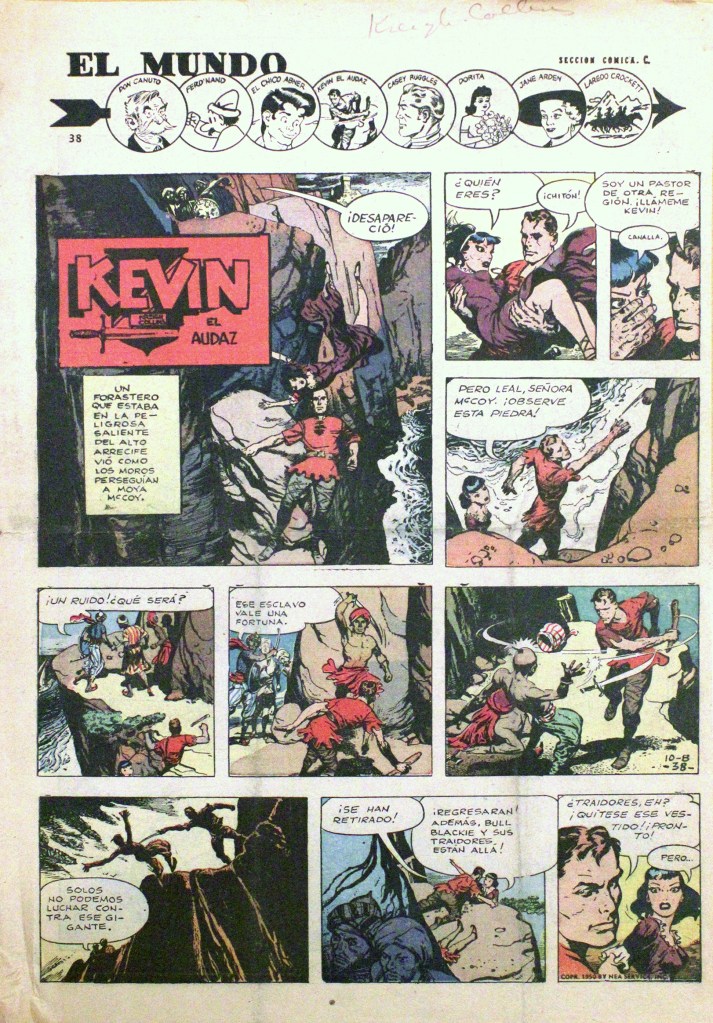
Kriegh Collins’ syndicate, NEA, distributed Kevin el Audaz to Spanish-speaking markets, including those served by the newspapers ElDiario and Havana, Cuba’s El Mundo.
Spread over eight pages, Revista Ferronales features tabloid versions of the entirety of one of Kevin’s adventures, which featured Leonardo da Vinci. It was originally published in Sunday comics sections four-plus years earlier, in late 1952.
After the first episode, the comic strip’s logo was removed from the seven that followed, and the artwork was augmented (slightly) by the occasional addition of spot color tints.
While it wasn’t uncommon for foreign magazines to run serialized versions of KEVIN, this is the only instance of which I’m aware in which an entire story arc was featured in a single publication.
It’s unclear if this inclusion of KEVIN el AUDAZ was a one-off, of if the series was a regulare feature of the Mexican monthly. Perhaps some day I’ll know the answer, if I come across another issue of the esoteric publication.
Following KEVIN are several pages of puzzles, gag cartoons, a crossword puzzle and similar fare.
















 Kreigh’s Comics