Metamorphosis 1 — By Popular Demand

Editor & Publisher, a newspaper industry trade magazine, announced in its August 26, 1950 issue that “Mitzi McCoy” was about to be taken over by a new character. According to NEA feature director Ernest “East” Lynn, jumping back nearly five centuries to this new lead character was without precedent in the comic business. With the comic strip’s new setting, Collins returned to the field in which he made an international reputation — the field of costume illustration.

E&P quoted Lynn, “It was the outgrowth of popular approval of two episodes in Mitzi McCoy, each of which gave the artist an opportunity to display his great flair for period art. The first was a story dealing with the history of the Irish wolfhound. The second, ‘The Christmas Story,’ told the story of the birth of Christ. In each instance Mr. Collins used the device of having Stub Goodman, one of the leading characters of Mitzi McCoy, narrate the story to a young boy, Dick Dixon. And in each instance fan mail greatly increased. Several editors urged period illustration on a regular basis.”

A month after the announcement, the final episode of “Mitzi” ran, the tale of the McCoy family legend.

MM 092450 OA 100 cc

The following Sunday (October 1, 1950), the action continued, but under a new shingle. It began with Kevin saving Mitzi’s ancestress, Moya McCoy. However, the focus soon shifted as Kevin left Moya (and Mitzi) behind. As penance for a wild youth, Kevin had pledged a fight against oppression wherever he found it. He waged his battle for the next eighteen years in the funny papers, until another major plot change occurred.

MM 100150 72 cc

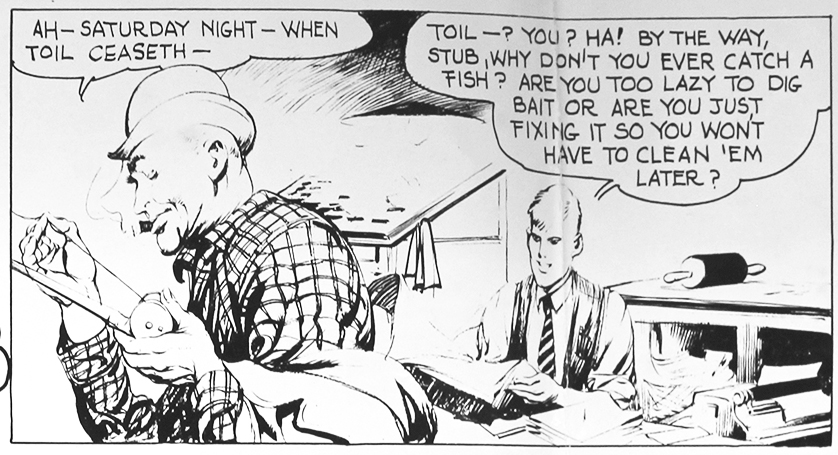
Tom Match and Stub

Tom Match and Stub 150

This undated one-off comic, found in the archives of the Grand Rapids Public Library’s local history department, appears to pre-date “Mitzi McCoy.” After taking notice of Kreigh’s “Bible Stories Comics,” the Newspaper Enterprise Association (NEA) began pursuing Collins to develop a comic, and “Tom Match and Stub” is likely an early draft of a proposed strip.

This early comic was set in Fishtown (Collins often spent summers painting in nearby Leland, Mich.); most of the action in “Mitzi” occurred in the fictional “picturesque little town of Freedom,” which was also situated in Michigan. Like “Mitzi,” “Tom Match and Stub” is set in a newsroom, only the roles are reversed — here Stub works for young Tom, whereas Stub is Tim’s boss in the syndicated version. Stub is clearly Stub, Tom resembles Tim, but the Match character doesn’t resemble Mitzi.

 MM Stub Stub TomTimMatchMoya McCoy KrgbHowever, she does bear a resemblance to an ancestor of Mitzi’s, but that’s jumping ahead (or is it jumping back?).

One Man’s Trash

Throway panels 1950s 72 Gals

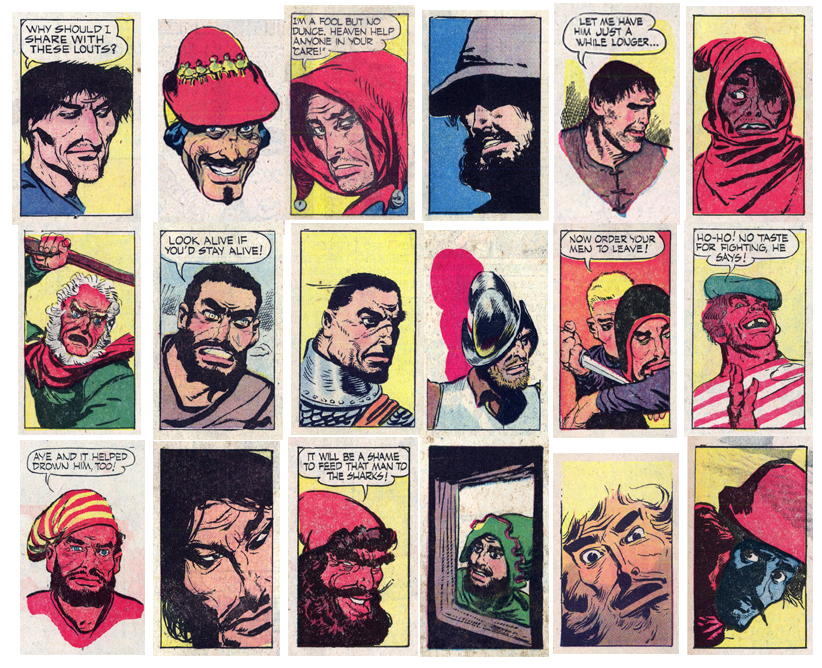
“Throwaway Panels” — such an unfortunate term for these wonderful little illustrations. Deleted in order to squeeze and rearrange a half-page comic into a tabloid format, they were usually somewhat incidental to the action. In “Kevin,” they often showed damsels — in distress, or otherwise.

Other options included villains, exclamations, or random bits of scenery. Kevin himself also made frequent appearances in this panel.

Throway panels 1950s 72 Thugs  Throway panels 1950s 72 exclamations

Throway panels 1950s 72 nice illo

After seeing enough of these, I couldn’t help but be reminded of Lotería, a Mexican game of chance similar to Bingo. With the strip having a presence in Latin America (“Kevin el Denodado”), I think the NEA missed a marketing opportunity!

loteria sets

kevin el denodado 72

Kevin vs. the Spanish Armada, Part I

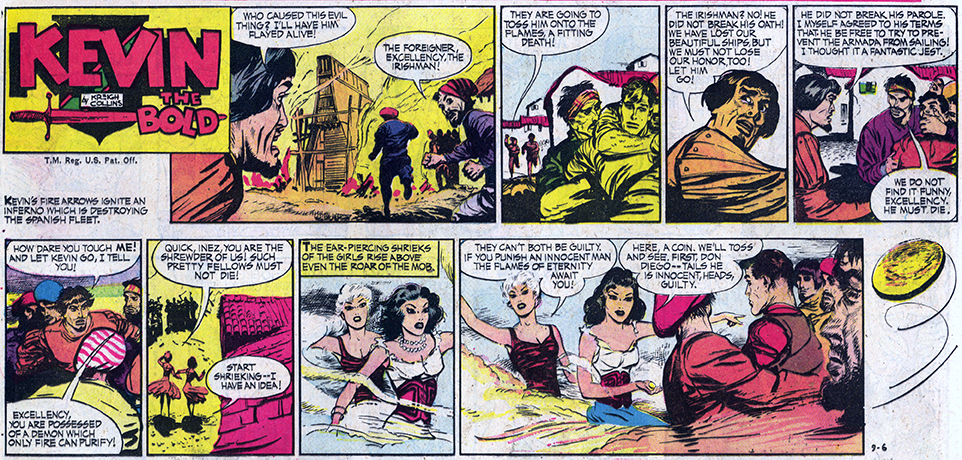
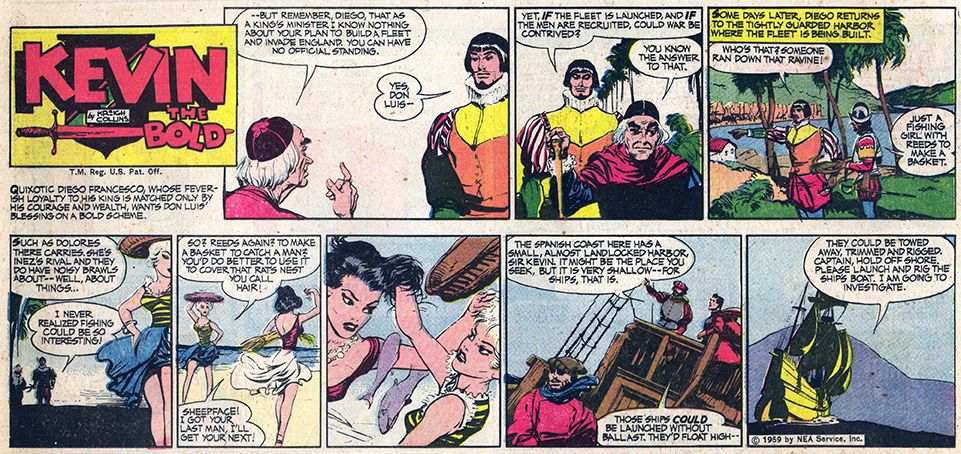
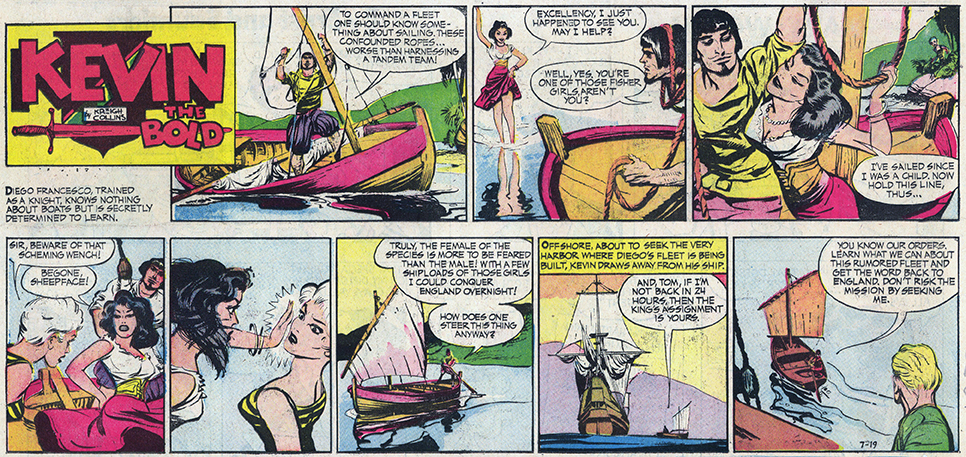
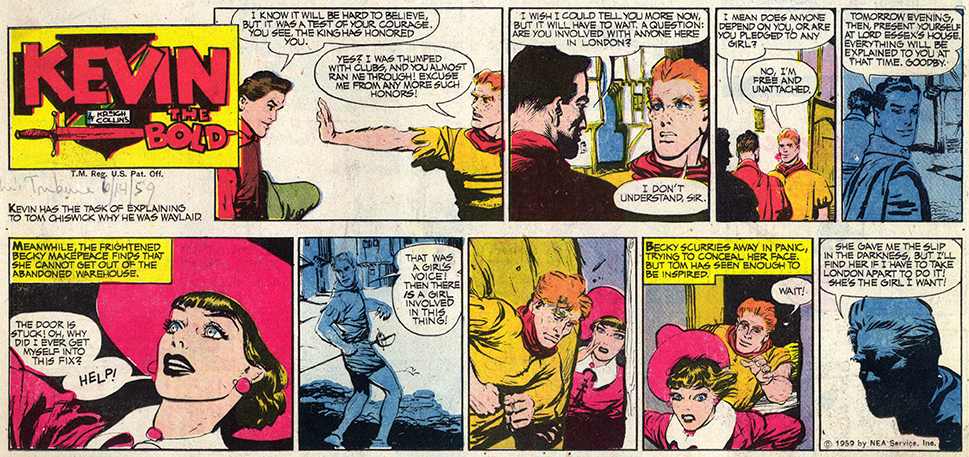
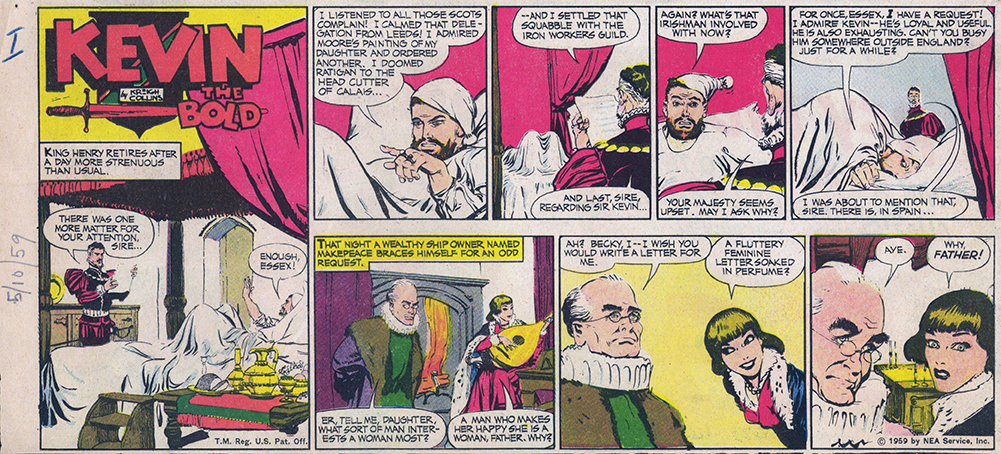
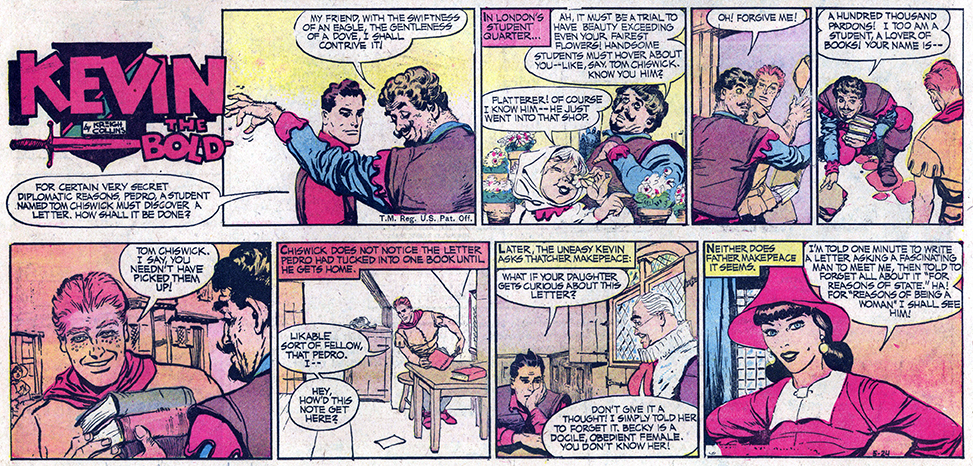
Kreigh’s NEA-syndicated comics, “Mitzi McCoy,” “Kevin the Bold” and “Up Anchor” each ran as serials. The individual storylines could be as short as six episodes, such as in “Mitzi,” or much longer, as was often the case with “Kevin.” The next few posts will feature a storyline from “Kevin” that ran from May to September, about halfway through the 18-year run of the comic. Unfortunately, these comics are third-pagers, but the story is highly entertaining. The first episode, from May 10, 1959 serves as the transition from the previous storyline to the new one.

The original comics are in decent shape, but they are rather yellowed due to exposure to sunlight (the mortal enemy of newsprint). The reason for this yellowing is that they came from Kreigh’s studio — they had been pinned up on the walls to allow him to keep track of continuity. (Note pinholes and Roman numeral “I” on the May 10 comic). The first three comics appear to be from the Detroit News, and the fourth one is from the Chicago Sunday Tribune, which generally had superior color reproductions.

I gave them a quick color correction to sharpen them up. Check in again next week as the story continues…

KTB 051059 TH 72 cc

KTB 051759 TH 72 cc

KTB 052459 TH 72 cc

KTB 053159 TH 72 cc

Sunday Comic Formats

KTB 102757 HF 72 QCC

Common formats for Sunday strips include the half page, the one-third page, the tabloid page, and the half-tab. Usually, only the half-page format is complete, with the other formats dropping or cropping one or more panels. Such “throwaway” panels often contain material that is not vital to the main part of the strip. Collectors generally value half pages the most, since the other formats are incomplete by comparison. Half-tabs have approximately the same aspect ratio as half-page comics, so while their printed size is quite small (10″ x 7″ vs. 14″ x 10″ for half-pages), at least the reader sees all of the artwork. The half-page version of the October 27, 1957 episode of “Kevin the Bold” is shown above.

When Kreigh’s comics appeared in tabloid papers, the small center panel was generally the throwaway. When they appeared as one-third pages, severe cropping could occur (in addition to losing the throwaway panel). The storyline would continue but the impact of the comic was lessened.
Below are tabloid and third-page versions of the same comic. In this case, Black Llewellyn’s scowl is the throwaway. Too bad! And in the third-pager, each panel is cropped both left and right.

KTB 102757 TA 72 QCC KTB 102757 TH 72 QCC

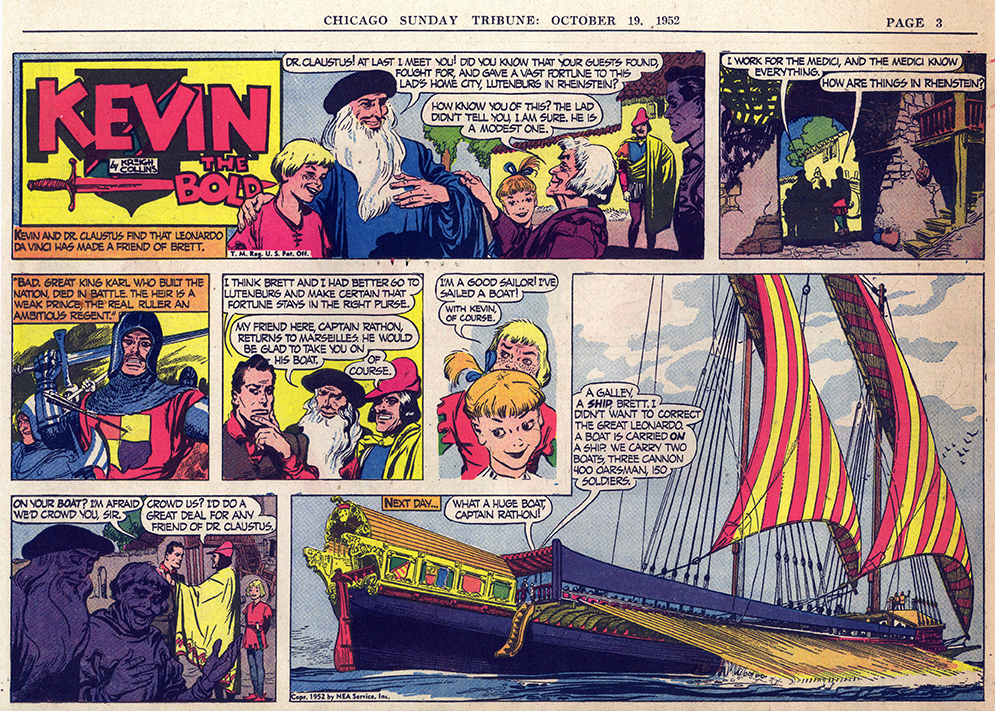
At bottom, examples of the “Kevin” that ran on October 19, 1952 show an even more unfortunate example of the cropping that could occur. (This strip also has an appearance by Leonardo Da Vinci. Leonardo would also show up toward the end of “Kevin” ’s run, in 1967).

KTB 101952 HF 72 QCC

KTB 101952 TH 72 qcc

In the Beginning

031046 StLP-D Ad 72

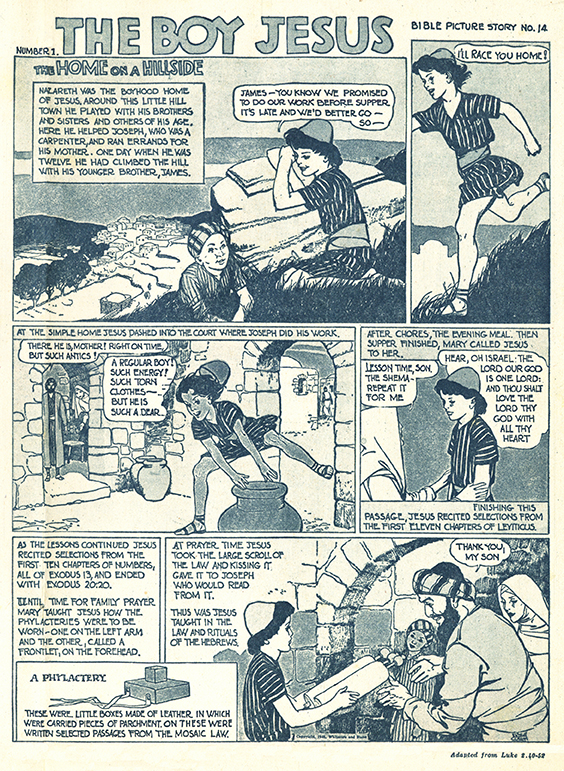
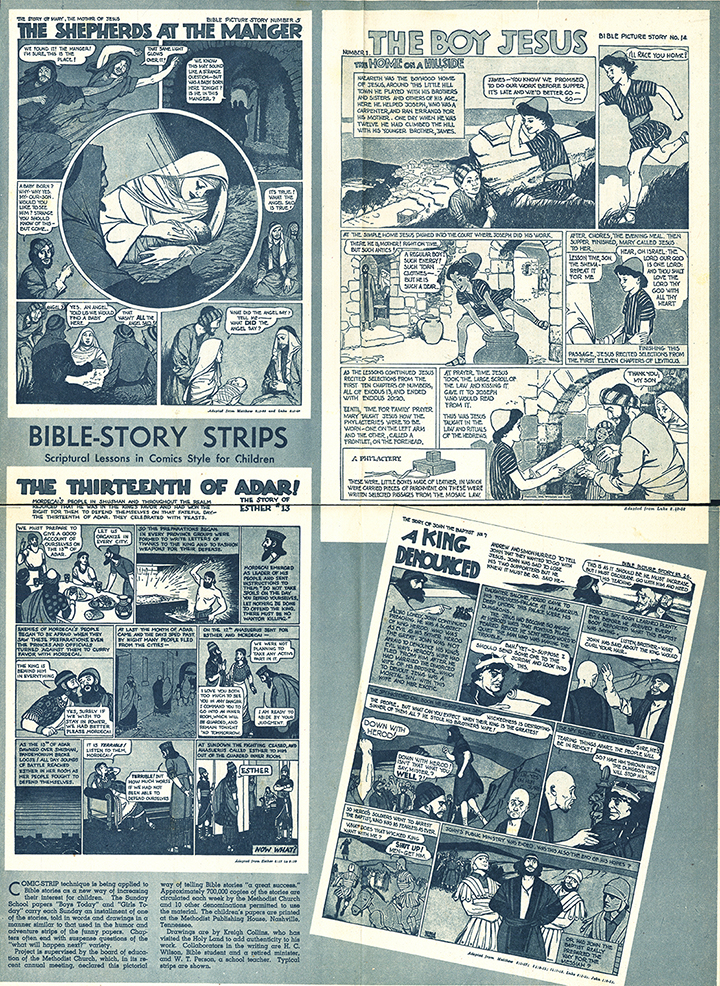
Before creating his NEA-syndicated comics, Kreigh Collins took all sorts of painting and illustration commissions; he also wrote and illustrated books. He found steady illustration work with religious publishers, including Pilgrim Press (“These Men Knew God,” from 1947), the Fideler Company (1948’s “Bible Days”) and The Graded Press (“The Story in the Bible,” 1949), among others. For Nashville’s Methodist Publishing House, he did comics which were reproduced in Sunday School brochures called “Boys Today” and “Girls Today.”

Comic-strip technique was being applied to religious stories in a new way in order to increase their appeal to children. The Methodist Church’s board of education declared this pictorial way of telling Bible stories a great success, and approximately 700,000 copies of the stories were circulated each week. Chapters often ended with suspense questions of the “what will happen next?” variety.

An item in the March 10, 1946 St. Louis Post-Dispatch (top) described the phenomenon and featured several of Kreigh’s comics. The blurb said that Collins had “visited the Holy Land to add authenticity to his work,” but it is more likely the authenticity was provided by hundreds of hours spend doing research at local libraries.

BPS The Boy Jesus 72

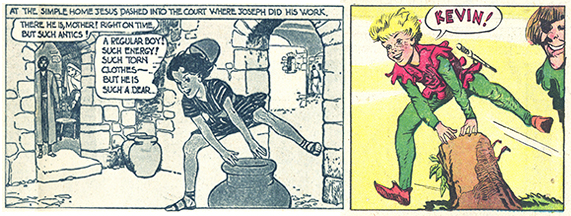
These early comics showed examples of Kreigh’s style and devices he would employ throughout his career. Note the distinctive lettering, the use of descriptive inset illustrations (above, a phylactery; below, a quintain), and even Jesus’s pose, as he leapfrogs the vase (compare to Brett, at bottom, from a 1955 Kevin).

KTB 050353 HF 72 QCC

Leapfrog

An Original

KTB 012162 OA 72

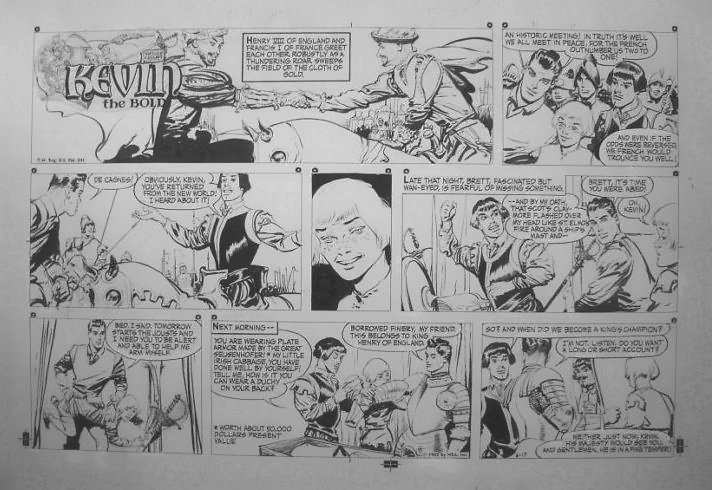
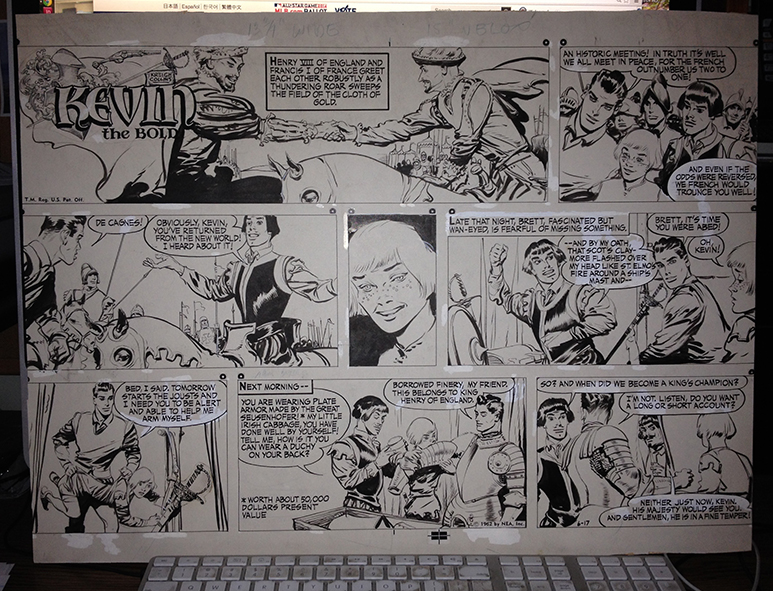
Original pieces of Kreigh Collins’s comic strip illustrations are quite amazing. They are large (drawn on 20 x 30″  illustration board), rich in detail, and interesting in other ways — corrected areas are readily apparent, stock elements are revealed to be pasted in, and instructions or notes are sometimes written in the margins. In the example shown above, Kreigh (my grandfather) personalized the illustration and gifted it to my other grandpa (“For Walt Palmer, May his trials be less than Kevin’s!”). Unfortunately, the art has a bit of wear and tear due to hanging on my brother’s bedroom wall through high school and college. He gets a pass as he shared a name with Kevin’s young ward — Brett accompanied Kevin on many of his adventures.

Originals can occasionally be found at auctions for a couple hundred dollars or so, depending on their condition. Another original I own was in quite nice shape when it was offered for sale about ten years ago. But by the time I won it on ebay in a later sale, its edges had been hacked down to fit into a cheap 18 x 24″ picture frame. I suppose its value has taken a hit, but I didn’t buy it as an investment. For me, it’s all about the family connection.

KTB 061762

IMG_1598.JPG