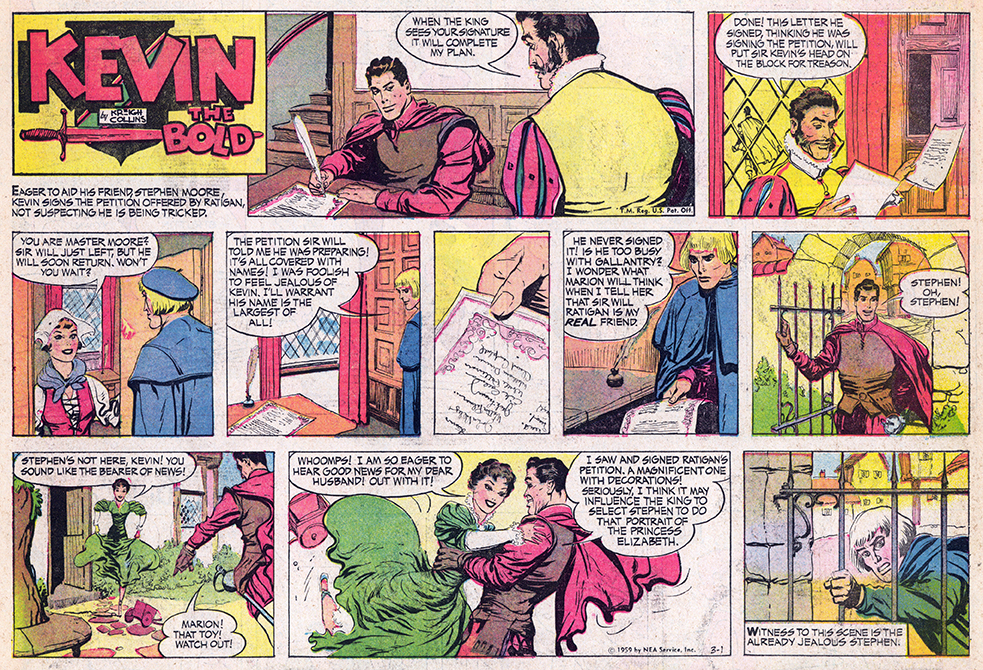
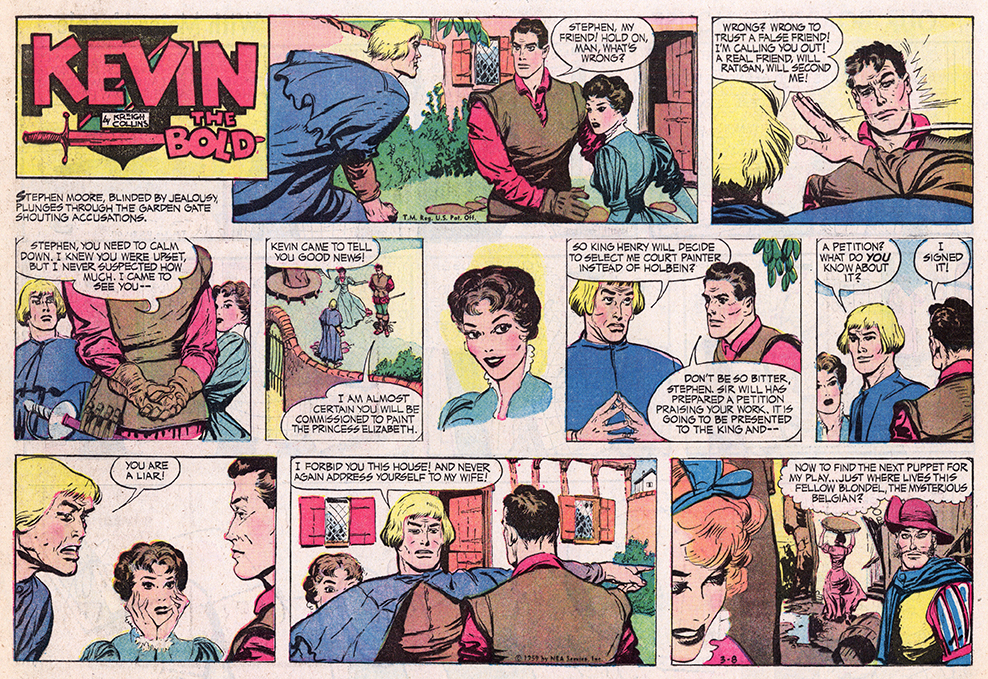
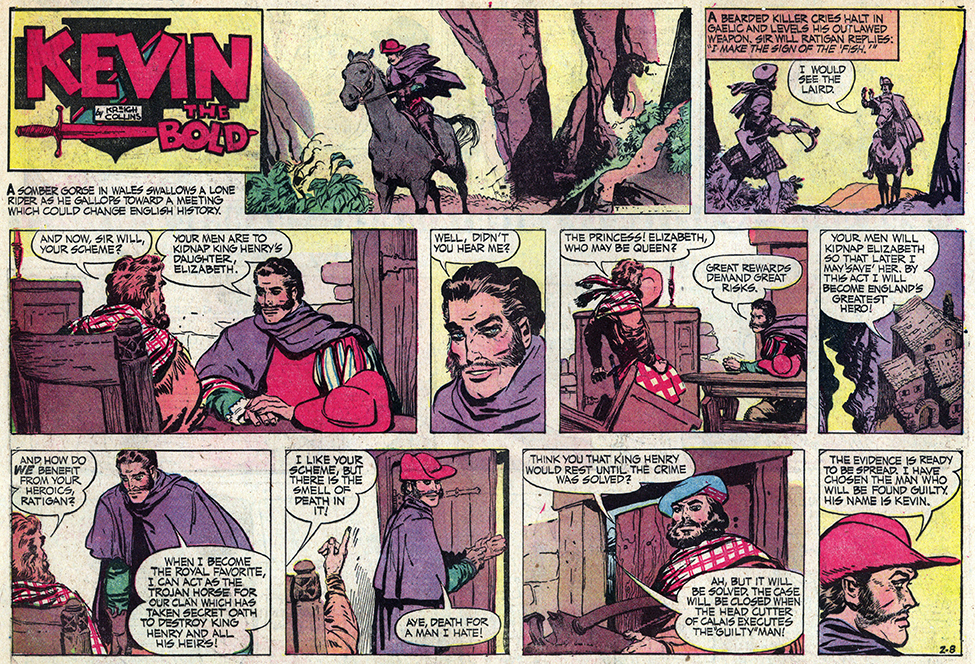
The following sequence, from early 1959, features a character named for one of Kreigh Collins’ friends. William Ratigan lived in Charlevoix, a town situated on an inland lake in northern Michigan that was a frequent port of call for Collins’ schooner Heather. Ratigan was was best known as the author of the book Great Lakes Shipwrecks and Survivals, published in 1960. In this chapter, Sir Will Ratigan is the villain in a plot against the monarchy of Henry VIII.
To achieve his ends, Ratigan plans to exploit the weaknesses of Stephen Moore (self doubt) and Kevin (altruism).
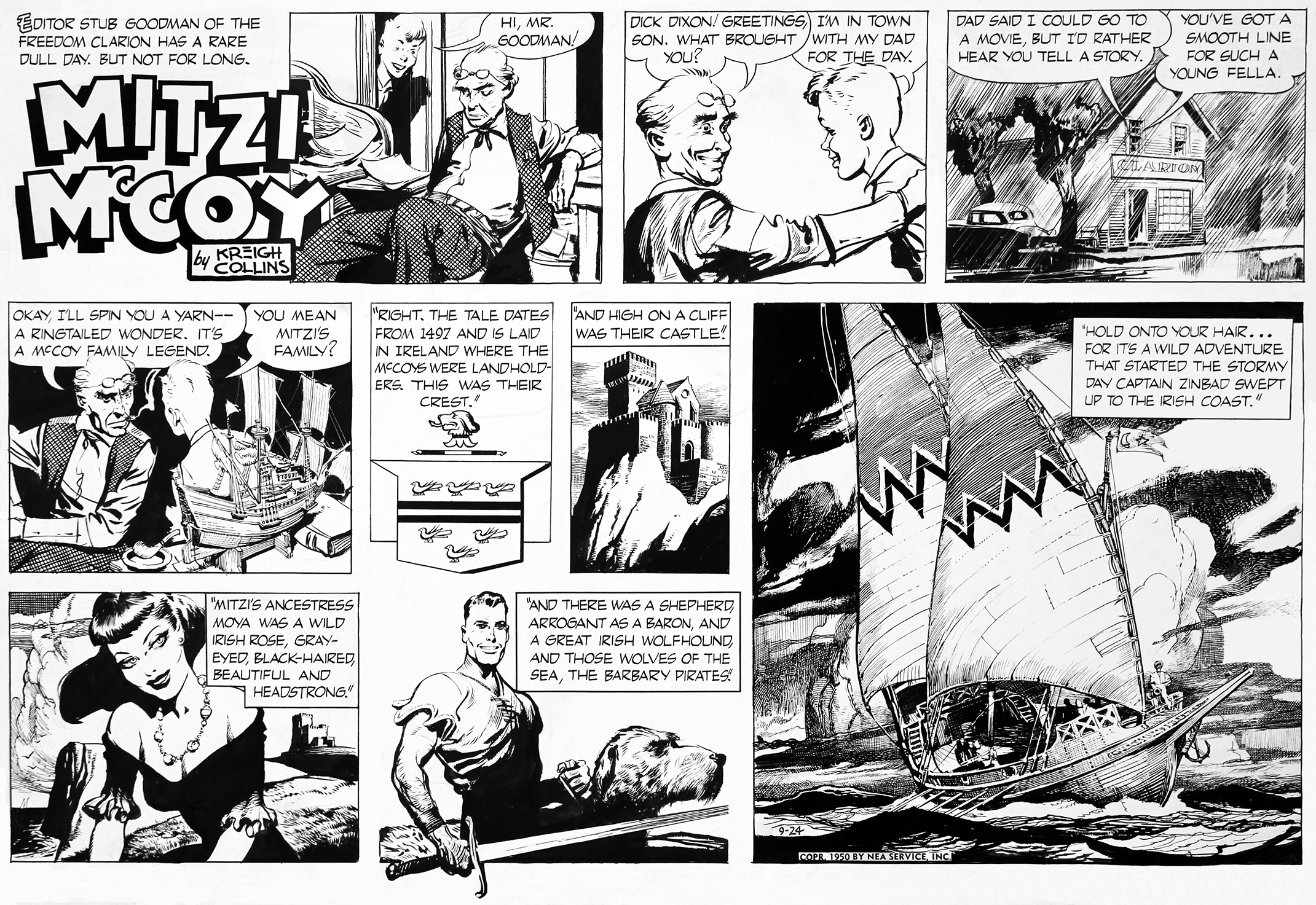
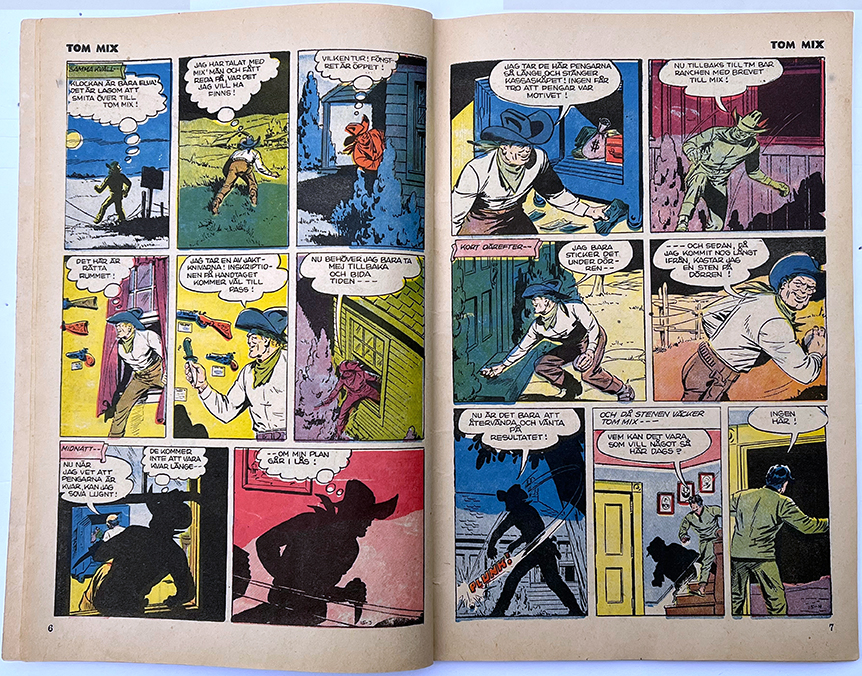
Released only a week after its predecessor, TOM MIX Nr. 3 featured a ROLAND DEN DJÄRVE-themed cover. The cover illustration was based on the evocative splash panel that introduced ROLAND back in TOM MIX Nr. 1; actually, the splash panel originally appeared as the last panel in the final episode of MITZI McCOY.
Positioned as usual on the inside front cover were two episodes of UGH, adorned with magic markers by a young Swedish artist (reminiscent of other collaborations I have seen). As usual, the body of the comic book was kicked off by a mock-up of a newspaper’s front page.
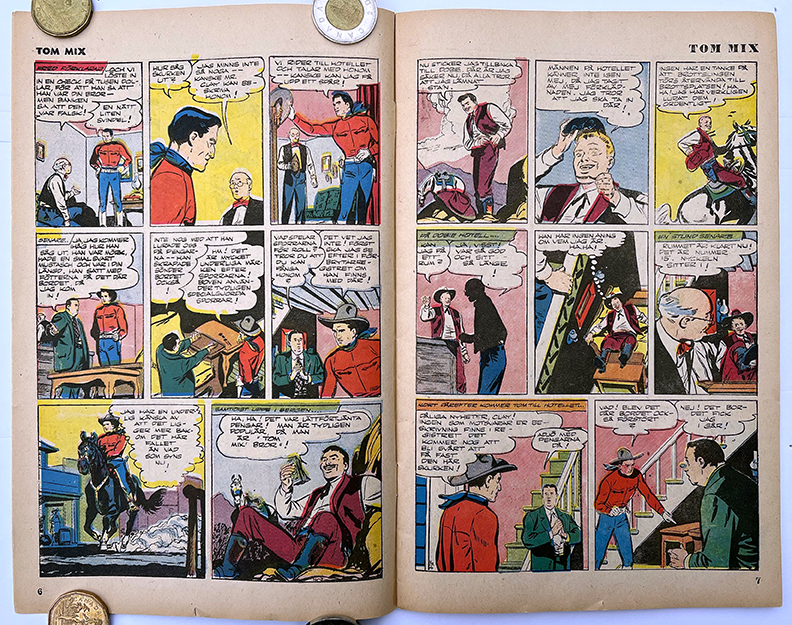
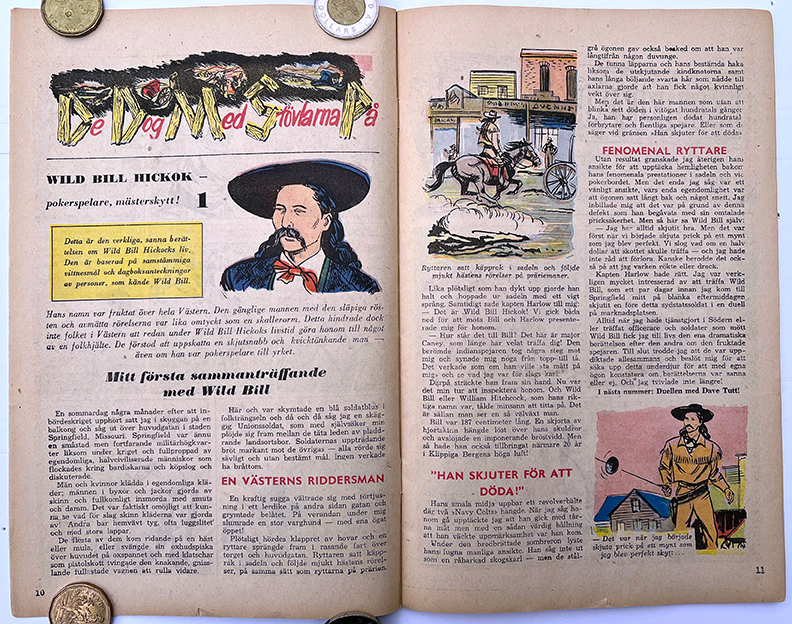
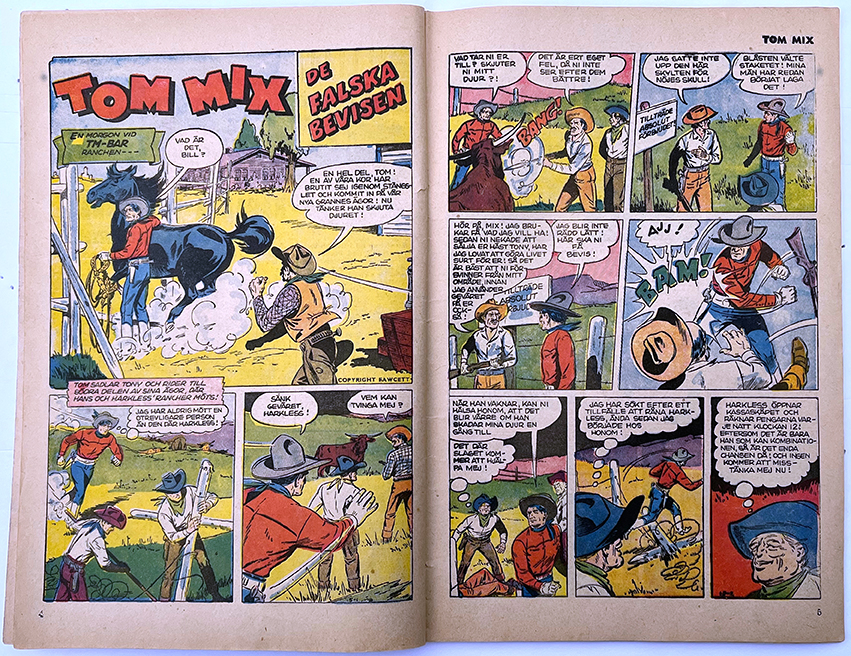
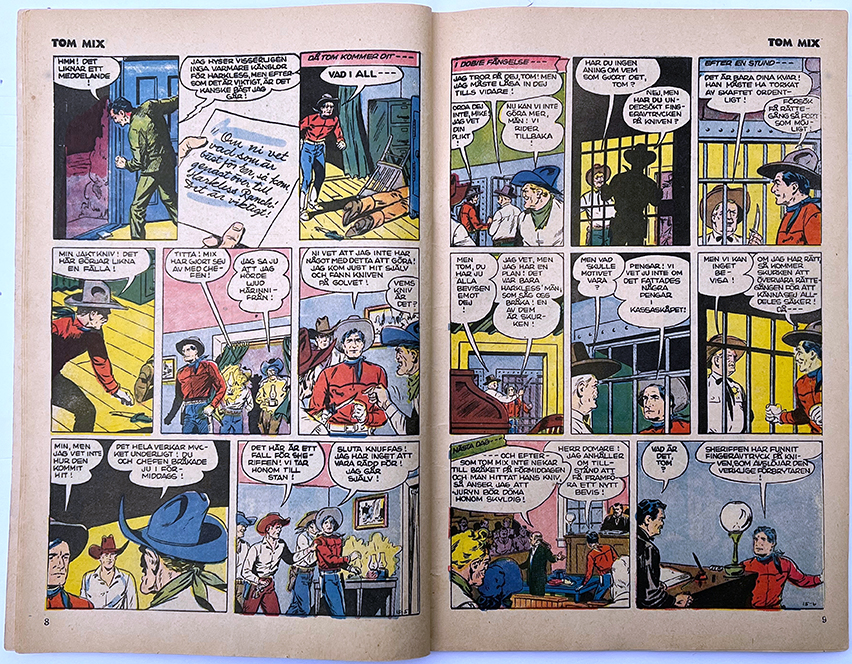
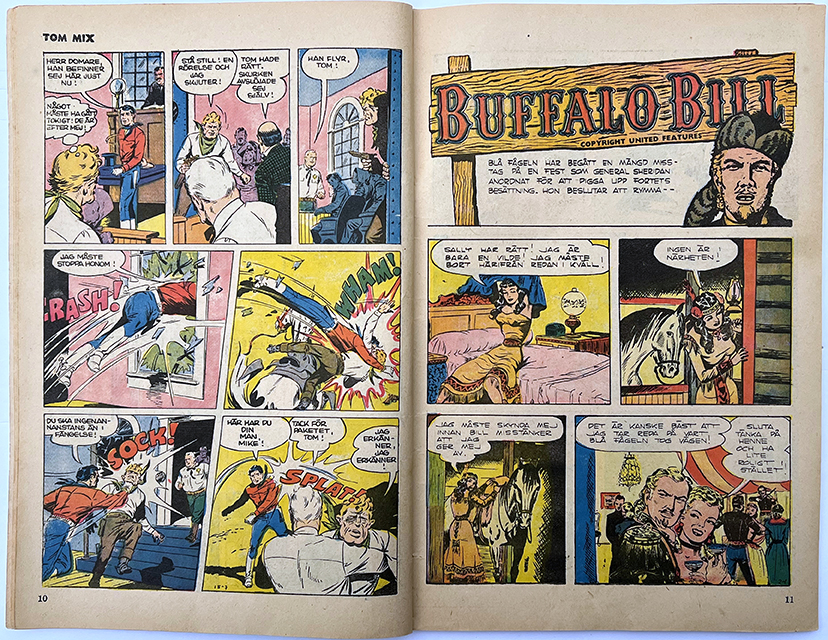
TOM MIX runs across three spreads, followed by the recurring feature De Dog Med Stövlama På (“They Died with their Boots On”), which profiled the old west gunfighter Wild Bill Hickok.
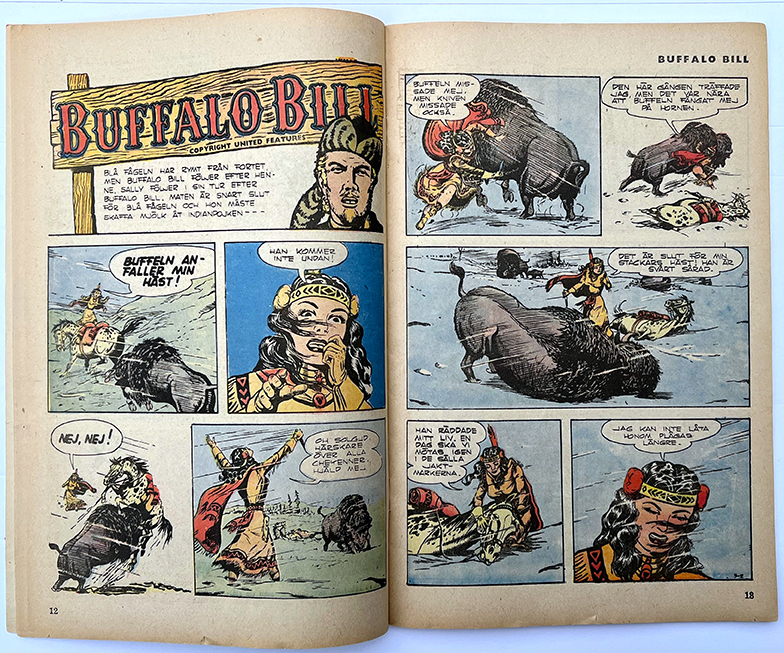
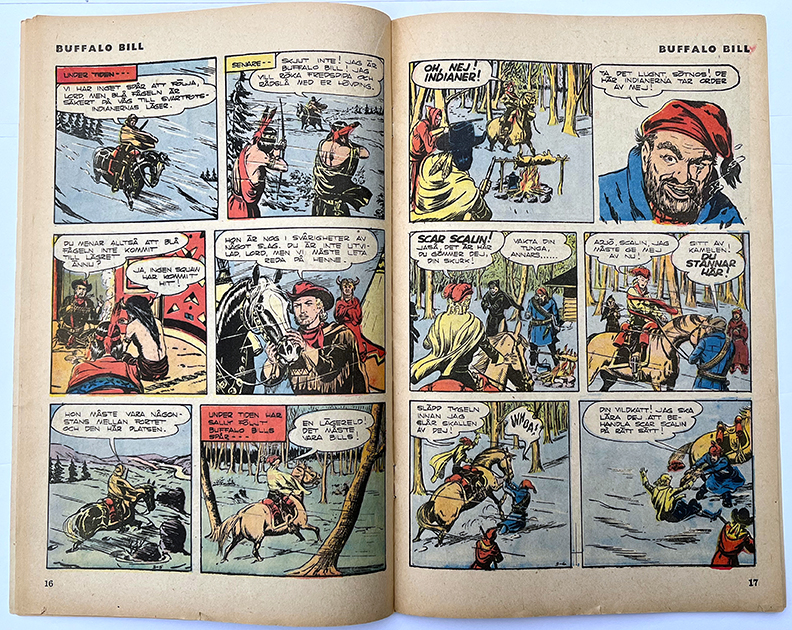
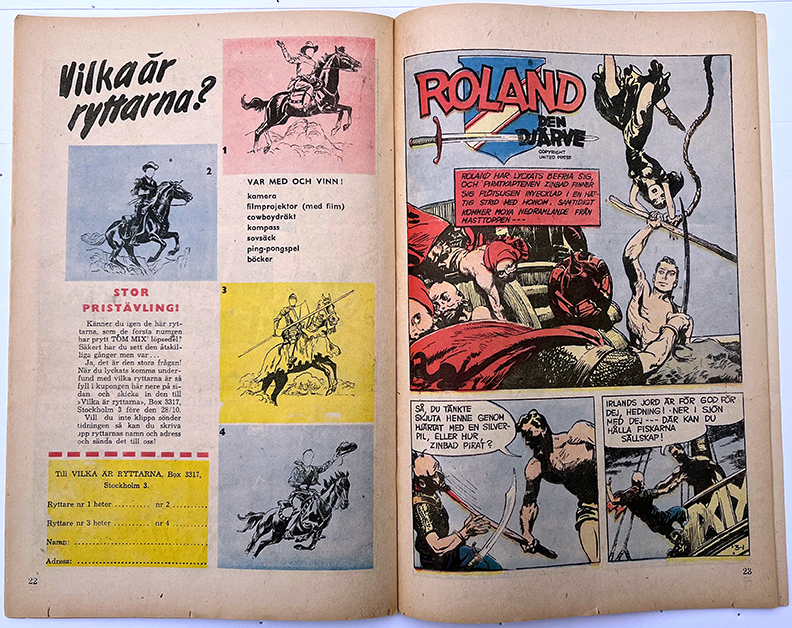
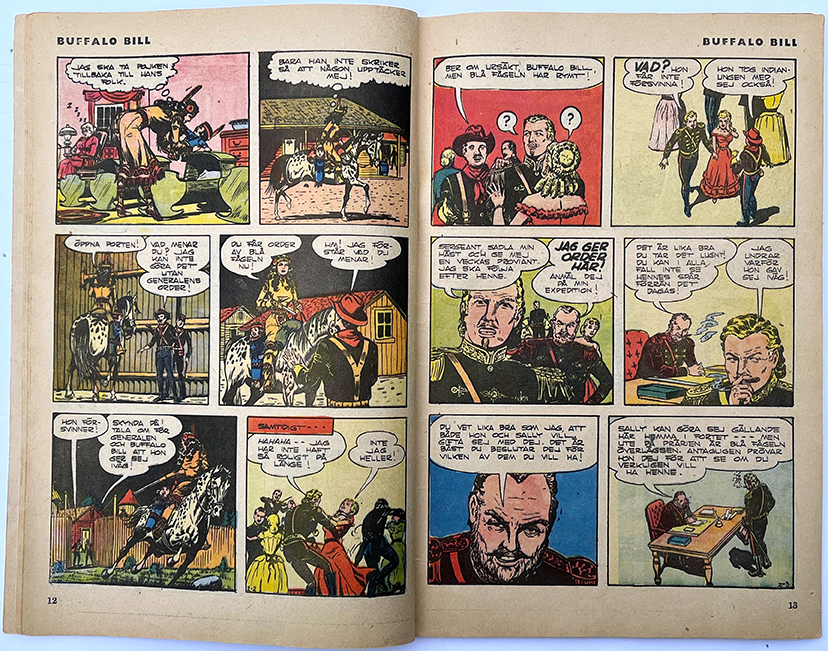
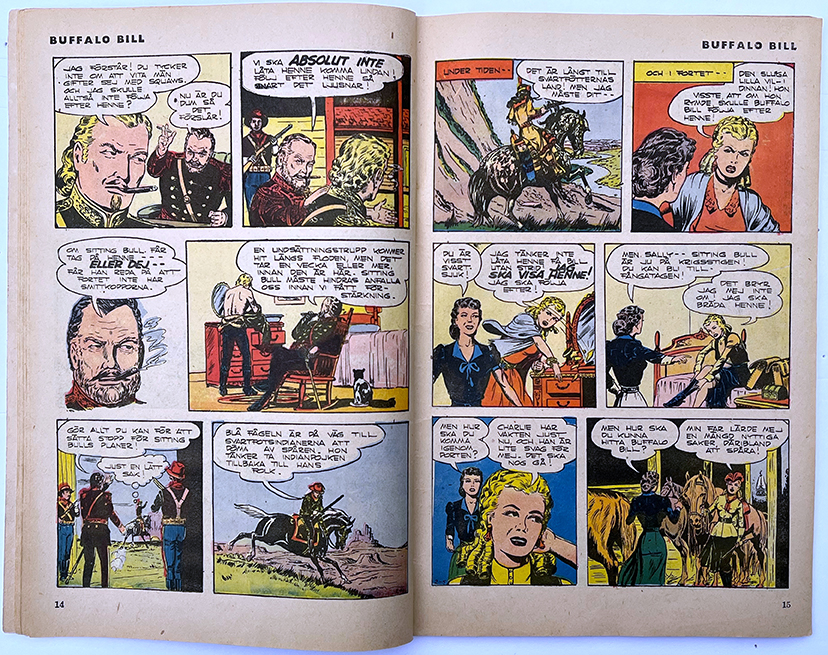
Nine pages of BUFFALO BILL followed, plus a promotion offering “a half million in Christmas money” to those who would sell Christmas magazines (“and make good money for Christmas”), and a contest to identify horsemen (I’m pretty sure Nr. 3 is Roland).
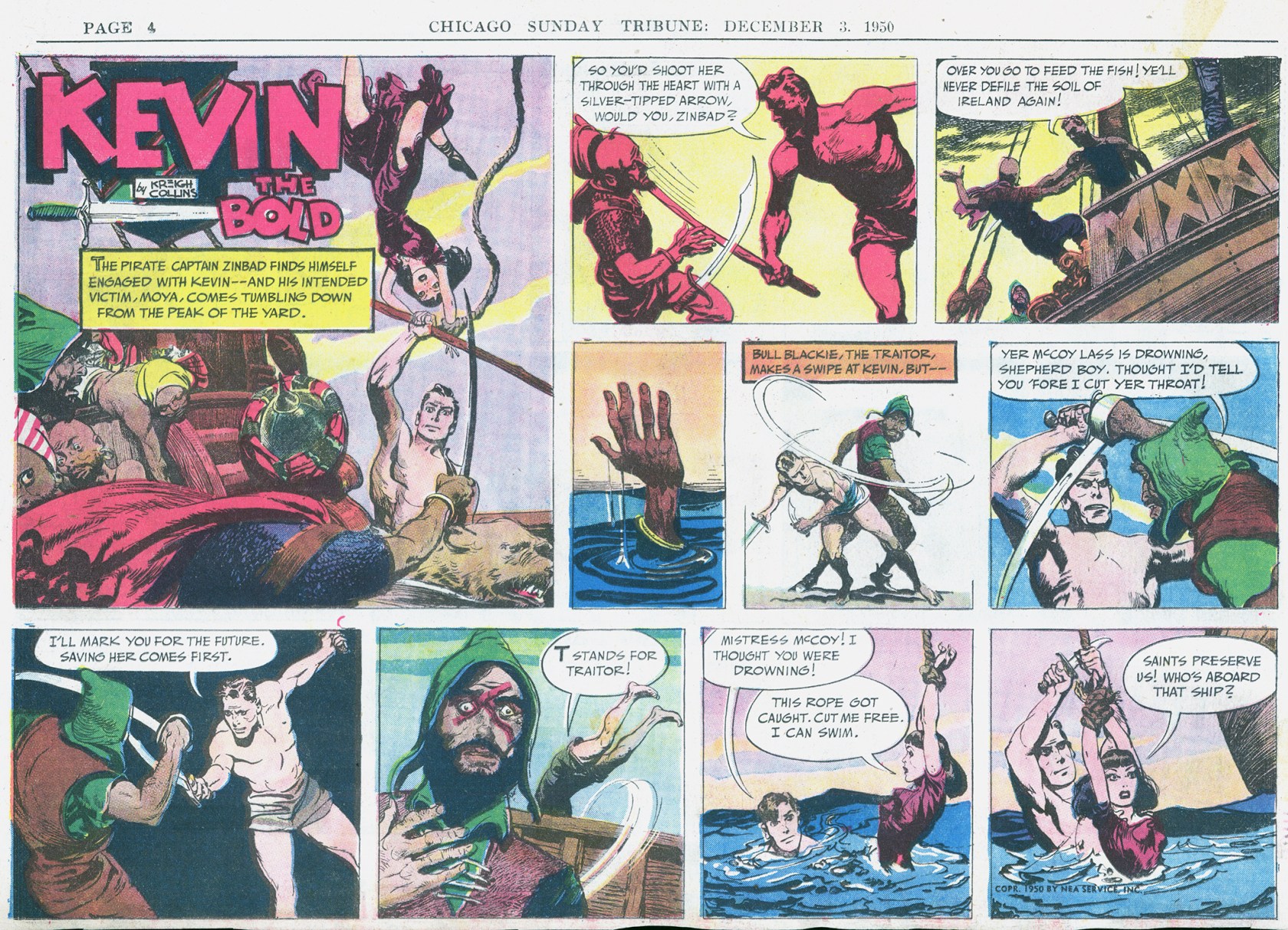
Next up was ROLAND DEN DJÄRVE. The action picks up where it left off in TOM MIX Nr. 2, with the episode that originally appeared on December 3, 1950. As usual, the comic book publisher created their own color separations, and a notable change is made to the color of Roland’s hair—he’s now a blond! (A detail I missed in the first two issues of the comic book. However, it’s not the first time Kevin was shown with flaxen locks).
An interesting modification to Kreigh Collins’ original artwork appeared in the fourth panel of page 24 (necessary due to the translation into Swedish). Before escaping, Roland marks Bull Blackie, using his sword to cut the letter “F” into his tormentor’s face. Diving overboard, he shouts, Du har förrädarnas märke “F” i ansiktet min vän! (“You have the mark of the traitor’s “F” on your face my friend!”). In the original version, Kevin carves a “T” in Bull Blackie’s face and leaves him with the more concise parting shot, “T stands for traitor!”
The savior of Castle McCoy, Roland is rewarded with a claymore and is knighted as Roland den Djärve. Soon, he is reunited with his mentor.
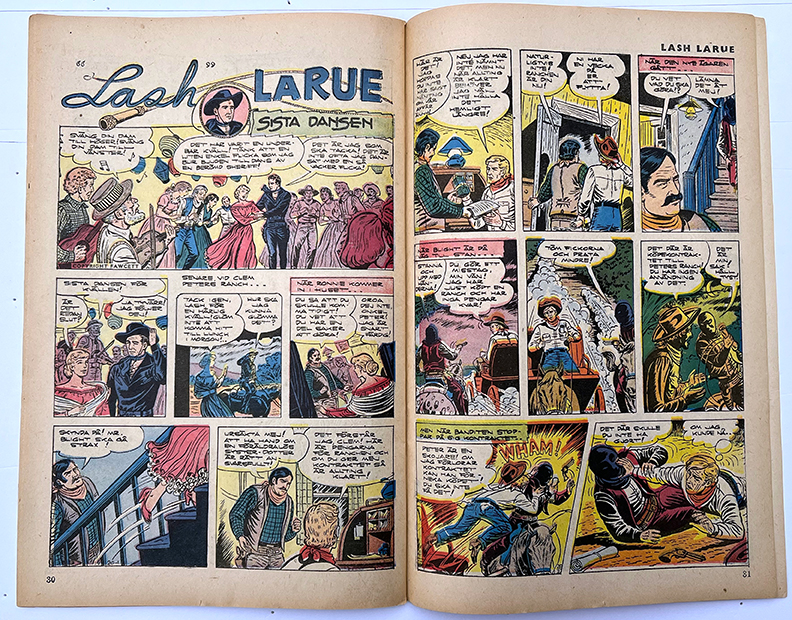
After the equivalent of four Sunday episodes—Kevin/Roland’s introductory chapter concludes. Following the third installment of the Roland contest, it’s time for LASH LaRUE.
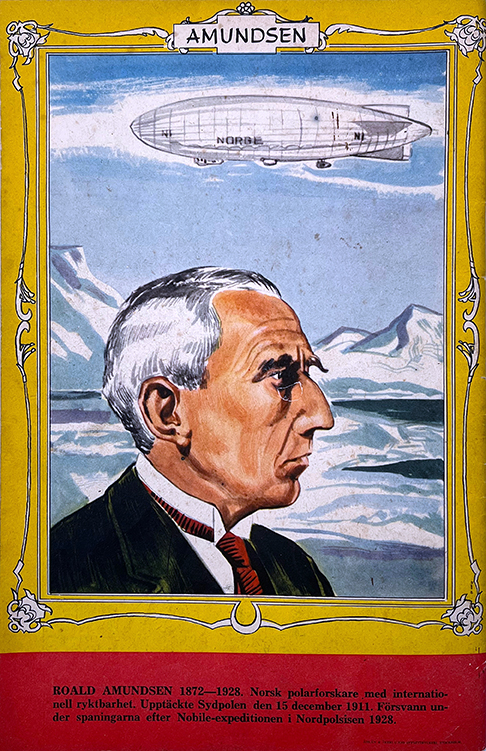
On the inside back cover, Amerikas Upptäckare (“America’s Discoverer”) Christopher Columbus is given credit (though this is debatable). Nonetheless, Columbus’ portrait is featured on the back cover.
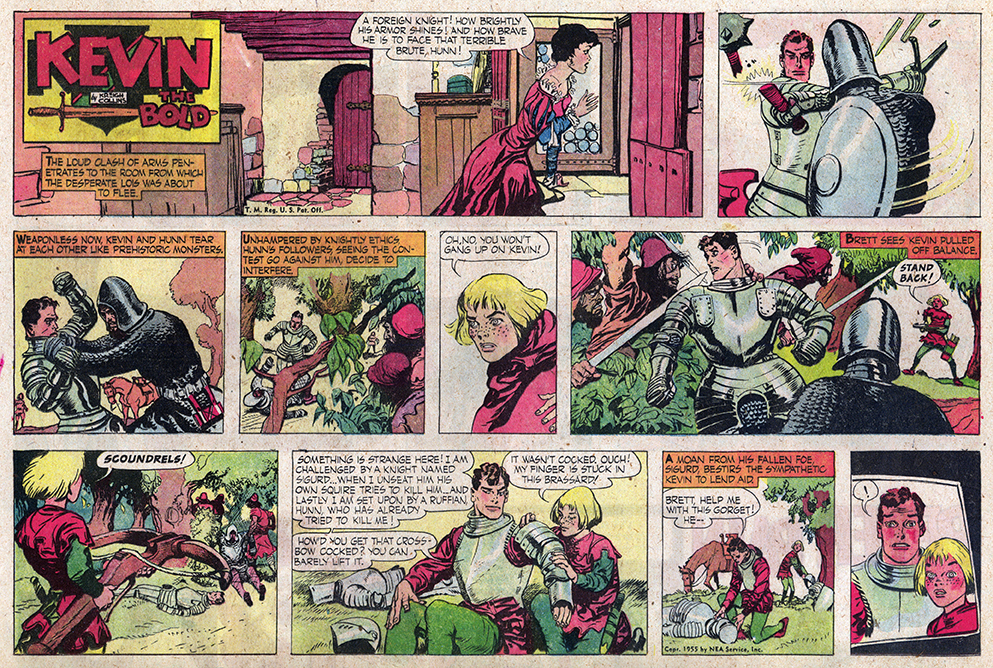
I generally think of Brett as being Kevin’s ward, but the more accurate term would be page. A boy served as a page for about seven years; at age fourteen he could graduate and become a squire. A page’s duties were acting as a messenger, serving, cleaning clothing and weapons, and learning the basics of combat. He also received a more general education from his master.
The January 16, 1955 episode shows Brett at work.
Again, Brett shows his skills (combat training this time). While it might seem unlikely that a lad as young as Brett was shown wielding a crossbow, it was not unheard of—the wikipedia article that described a page’s responsibilities also states “The mechanical and long-range nature of [crossbows] made them almost the only medieval weapon which could be employed effectively by a youth.”
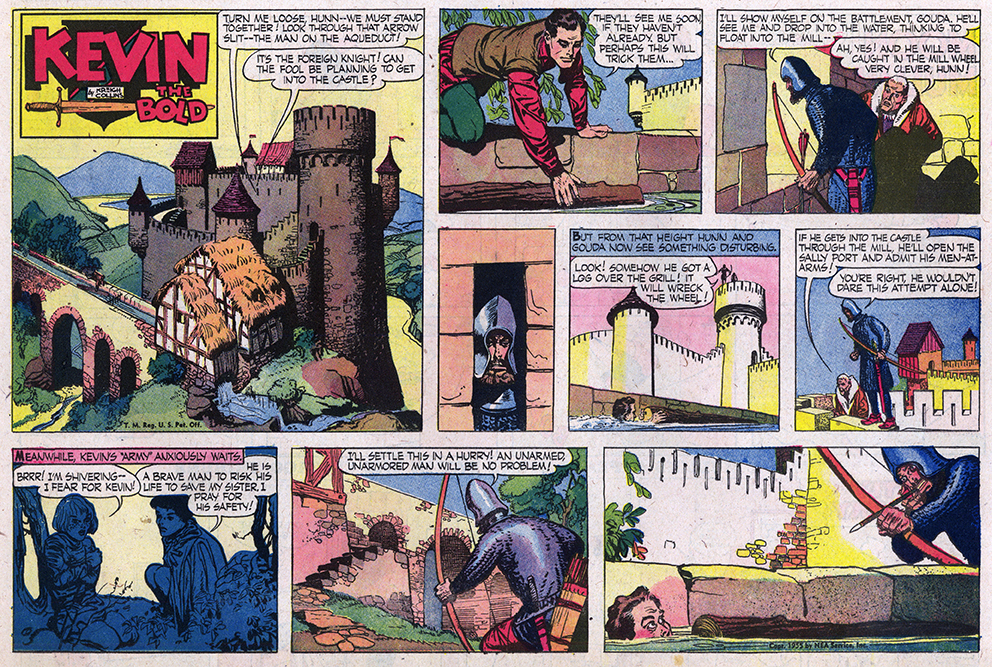
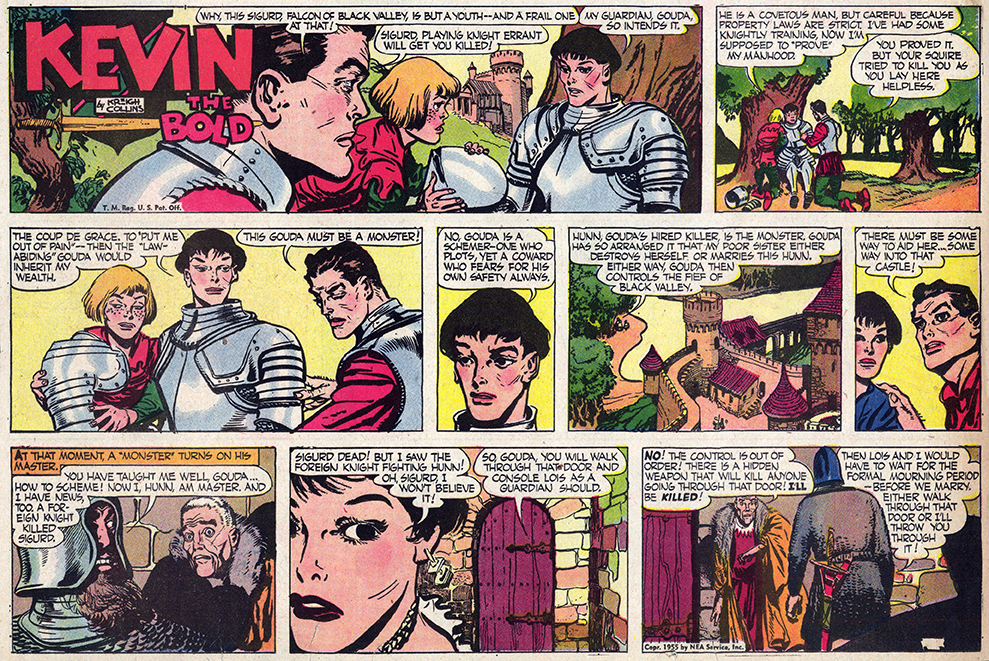
This example of the January 30, 1955 episode taken from the Chicago Sunday Tribune reproduced beautifully.
Meanwhile, young Sigurd—more squire than knight—is being conspired against by his supposed guardian, Gouda, who is using the thug Hunn as a means to his end.
In 1954’s final episode, the previous story arc wraps and transitions to the next chapter by way of an extremely dynamic splash panel.
Kevin’s lady friend yearned for some excitement, proving the adage “be careful what you wish for!”
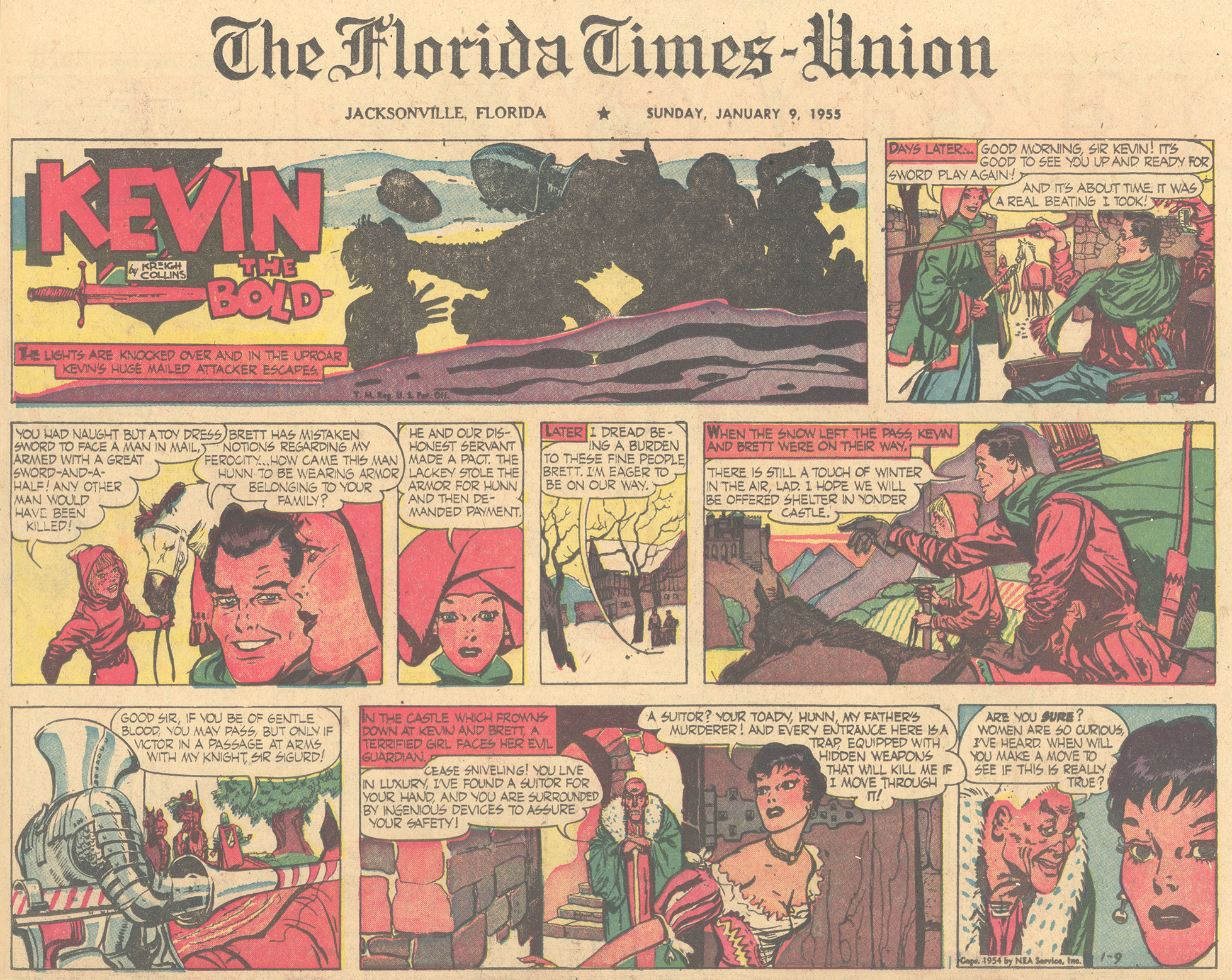
The action takes a rather grim turn as the giant intruder rampages. After his futile attempt at stopping him, Kevin looked to suffer the same fate as the fallen servant, only to be saved by the quick-thinking (and strong-armed) Brett.
Although they were both sourced from the Chicago Sunday Tribune, the color scheme changed significantly between the last two episodes. Such problems were avoided when KEVIN THE BOLD began appearing in the black and white Menomonee Falls Gazette (Issue 109, which also featured Kevin on the cover).
Further mayhem was avoided, and after healing up, Kevin and Brett continued on their way.
When I originally posted this episode, for some reason I neglected to do color correction.
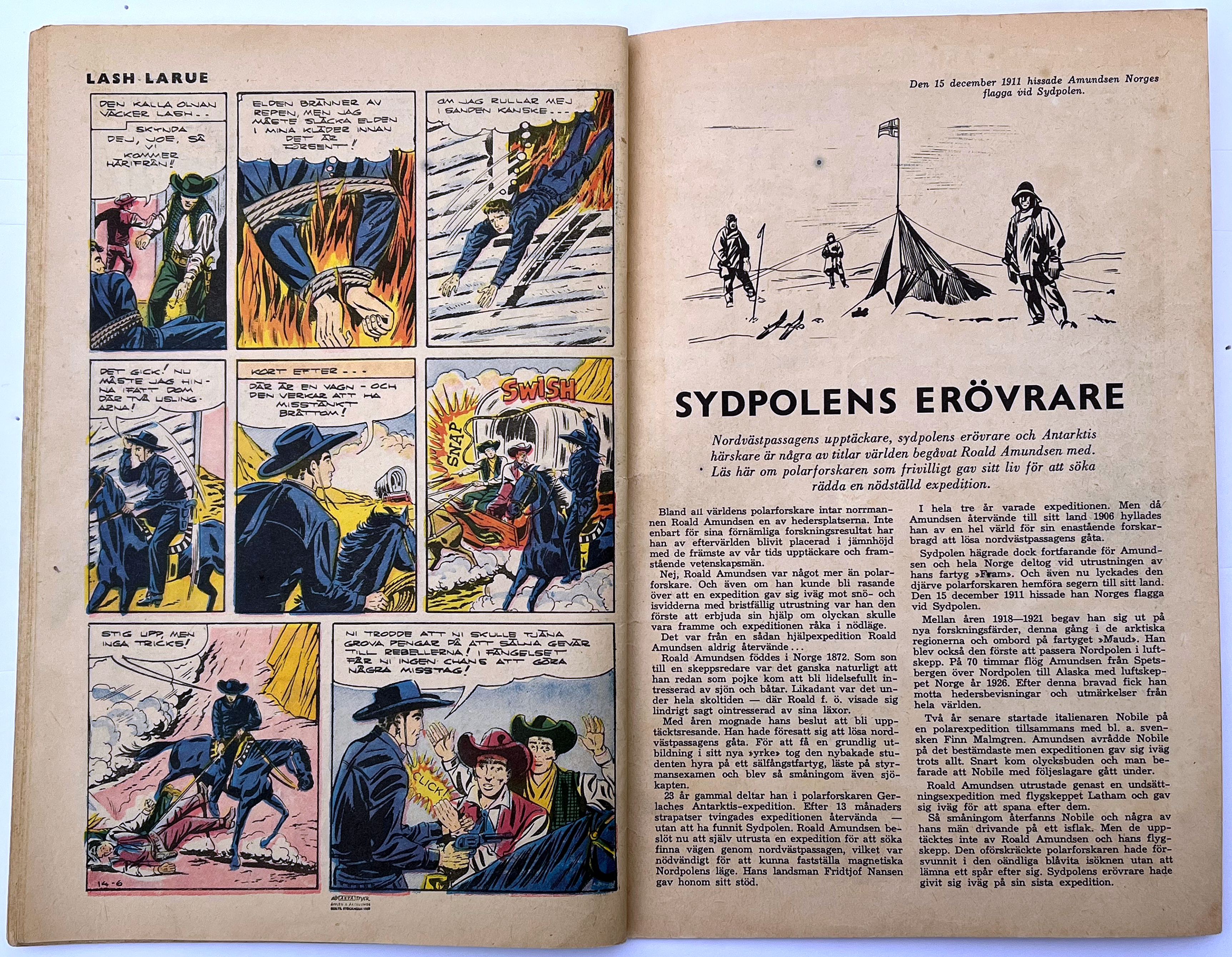
Appearing two weeks after its predecessor, TOM MIX Nr. 2 again featured the titular character on its cover, the silent comic UGH on the inside front cover, and was followed by a mocked-up newspaper front page.
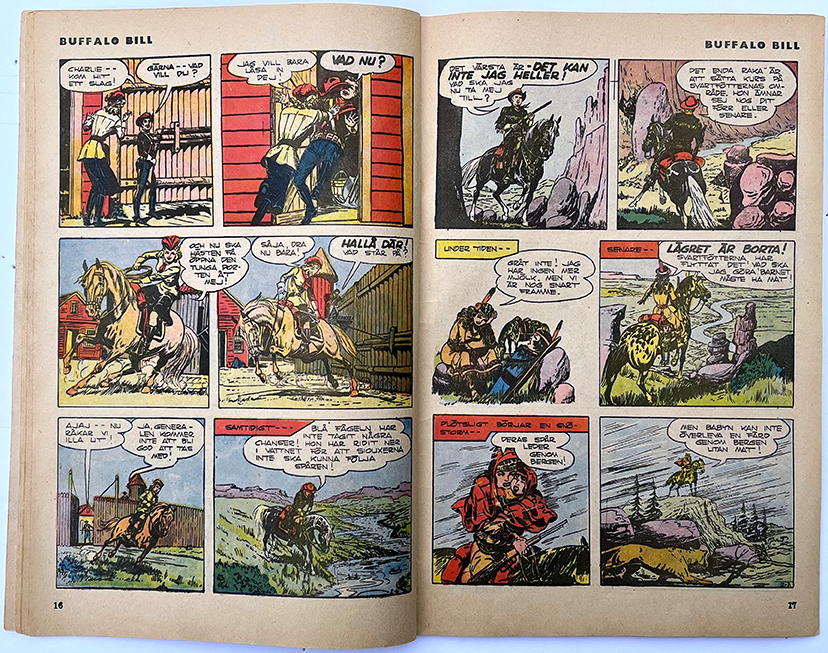
TOM MIX runs for seven pages, followed by BUFFALO BILL’s nine pages.
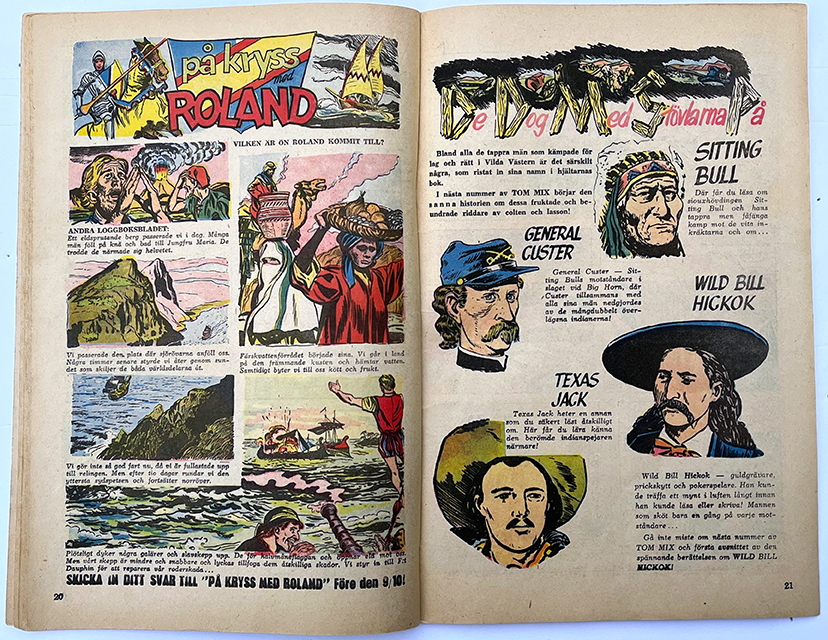
On page 20, a contest that began in TOM MIX Nr. 1 continued. Facing the contest was a page with the memorable title De Dog Med Stövlama På (“They Died with their Boots On”). It consisted of profiles of notable 19th century western figures, with a presumed focus on their grisly demises.
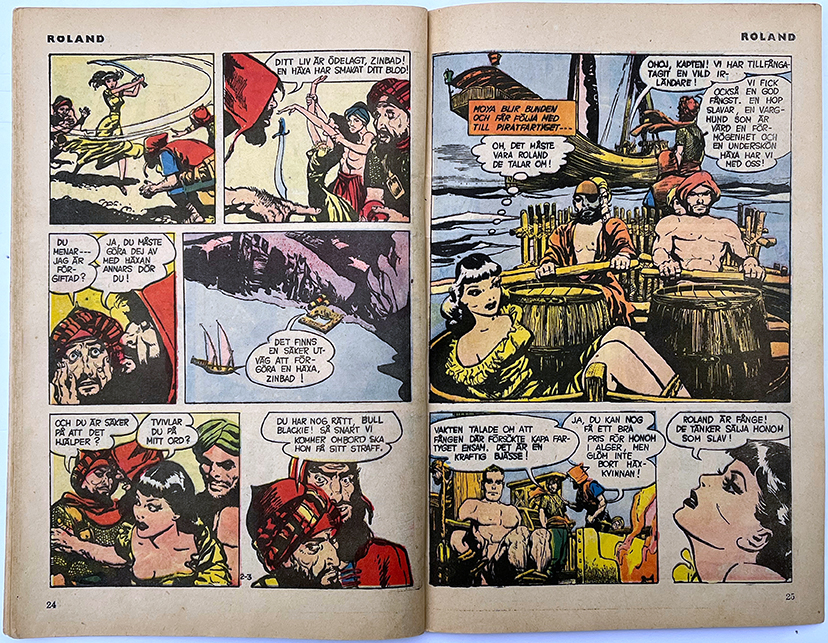
Next up was ROLAND DEN DJÄRVE. The action picks up where it left off in TOM MIX Nr. 1, with the episode that originally appeared on November 5, 1950. Like the previous issue, the publisher has come up with its own color scheme. While a copyright is given to United Press (?), no credit is given to the illustrator, Kreigh Collins.
After the equivalent of four Sunday episodes—Roland’s time is up. LASH LaRUE follows.
On the inside back cover, Sydpolens Erövrare (“Conquerors of the South Pole”) is an account of famed Norwegian explorer Roald Amundsen’s polar exploits. Amundsen is also featured on the back cover; similar portraits will appear in the back covers of future issues of TOM MIX.
After too many black and white episodes—eleven out of twelve, in case you lost count—the sequence wraps up with a couple of splashes of color.
Ponce and Snake, weakened by seasickness, can only watch as their nefarious plan unravels.
The story comes to a happy ending, with the messier details of the bad guys’ detainment left to the reader’s imagination. As the sequence transitions to a new chapter, my eye is caught by the action in the background of the second panel.
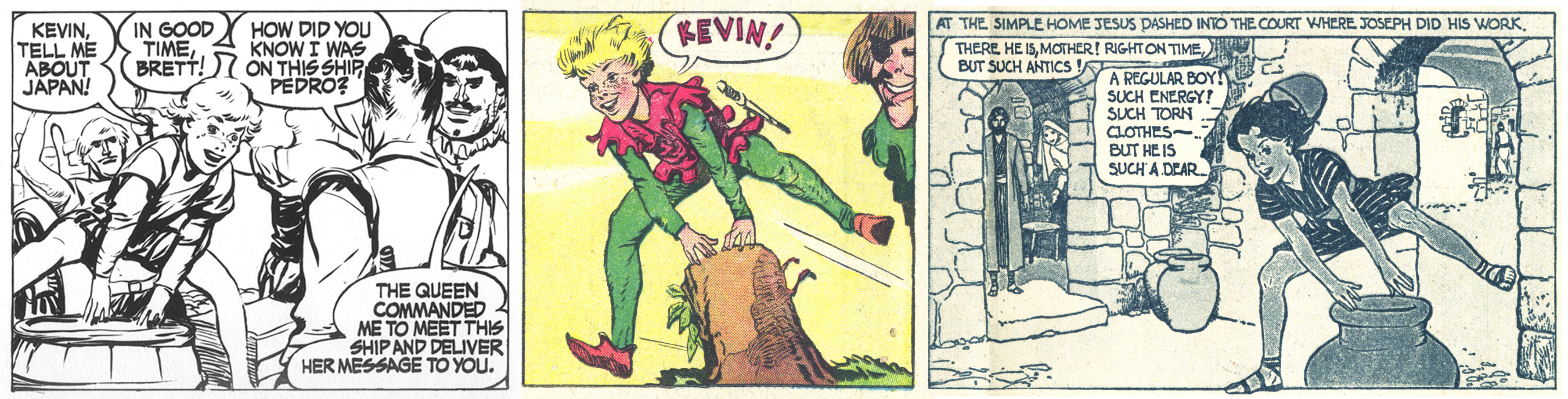
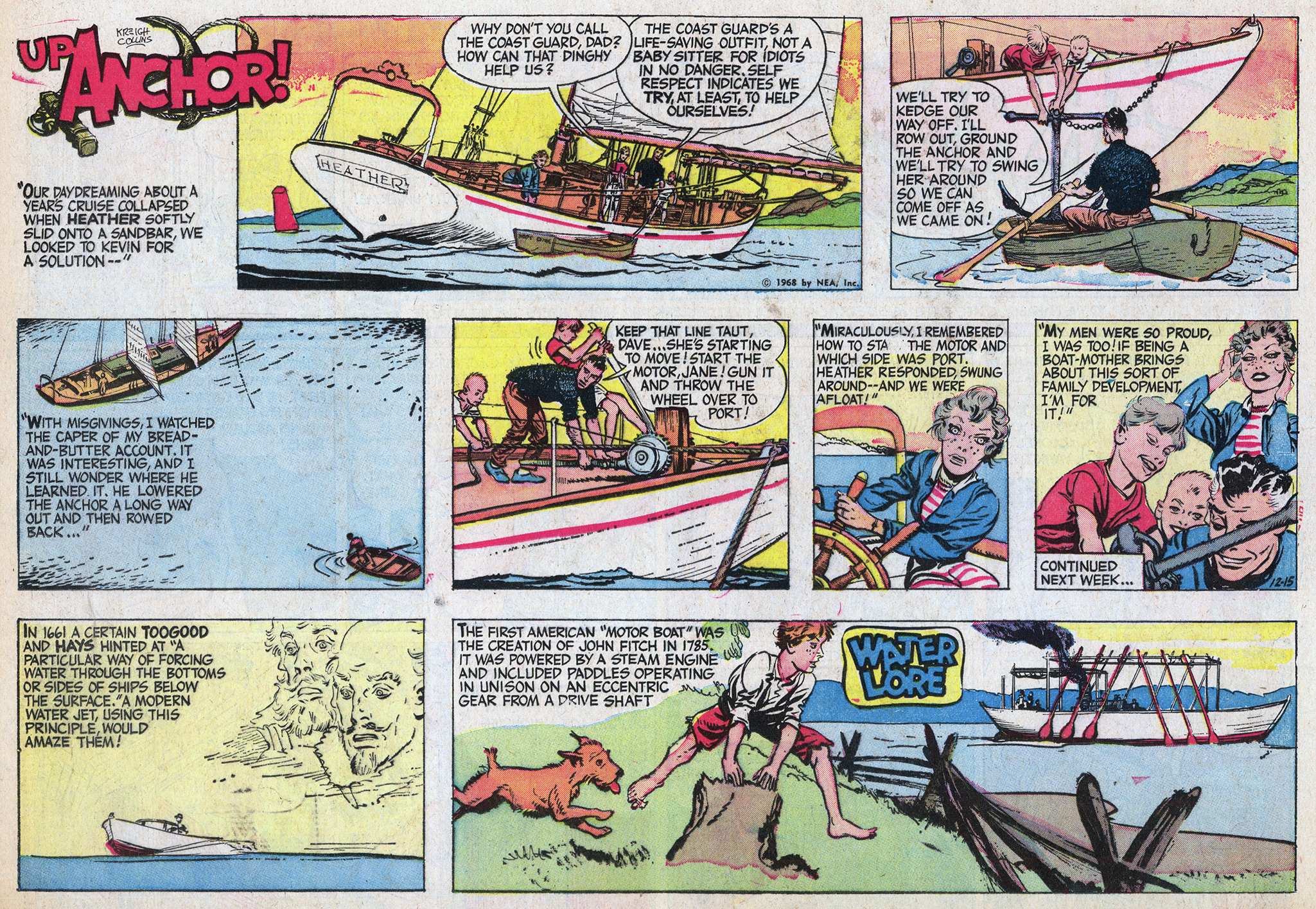
Young Dave is playing leapfrog (jumping over Heather’s boom?). The pose—used by Collins numerous times over the years—always makes me wonder of the whereabouts of the original illustration used as its source.
It first appeared in an episode of BIBLE STORIES COMICS (far right, c. 1944) and then twice in KEVIN THE BOLD (October 30, 1955 and December 15 1963). Collins used it another time in UP ANCHOR!’s seventh episode (December 15, 1968), when it popped up in the topper strip, “Water Lore.”
It’s a shame Dick Dixon never busted the move in MITZI McCOY!
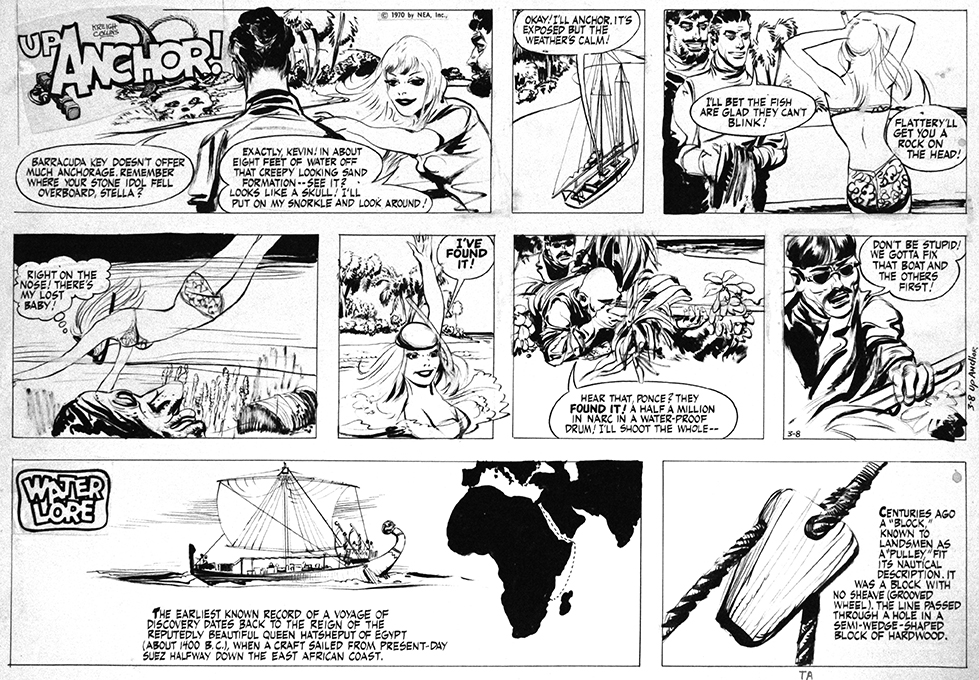
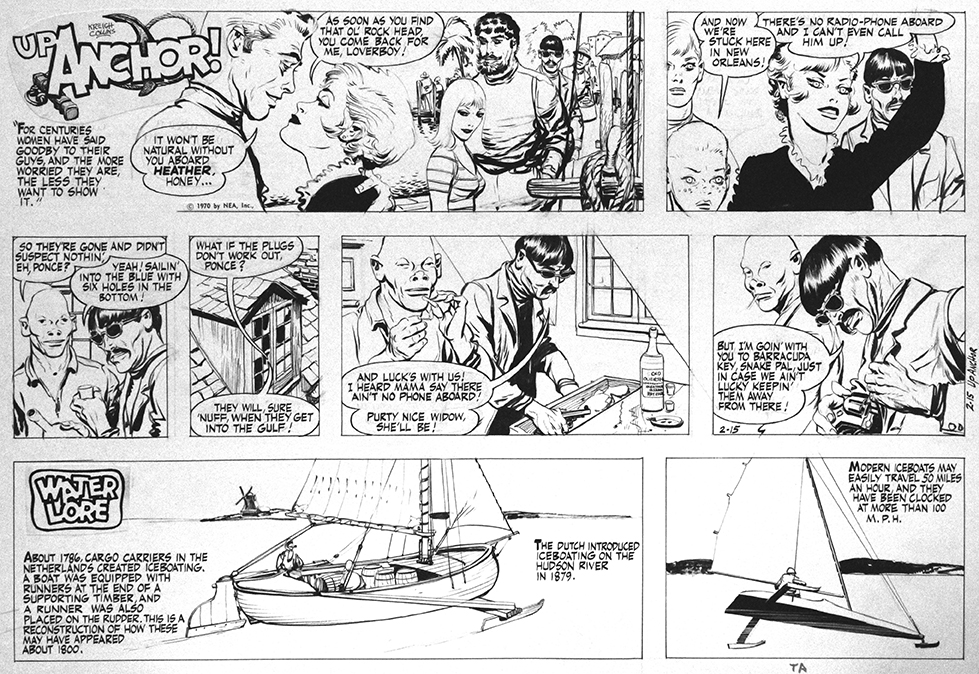
Barracuda Key is a real place, located about nine miles west of Key West, Florida. In 1959–60, My grandparents sailed to Florida (via the Mississippi River and New Orleans), but not as far south as the Keys. However, visiting the chain of islands was likely on their original itinerary, which included sailing to the Bahamas, as per a profile that appeared in the Chicago Tribune’s Sunday Magazine.
Ironically, their plans changed due to a downturn in Kreigh Collins’ business affairs—as the 1950s drew to a close, the Tribune dropped KEVIN THE BOLD from its stable of comic strips.
While Barracuda Key is real, the story told here with Ponce and Snake (and Dr. Estella Mosa) is obviously fiction.
Jane Marlin sees her husband off at the dock, seemingly not worried about the pretty crew member joining Kevin and Pedro. But she has cause for concern—and it’s not Estella, the blonde PhD chartering Heather.
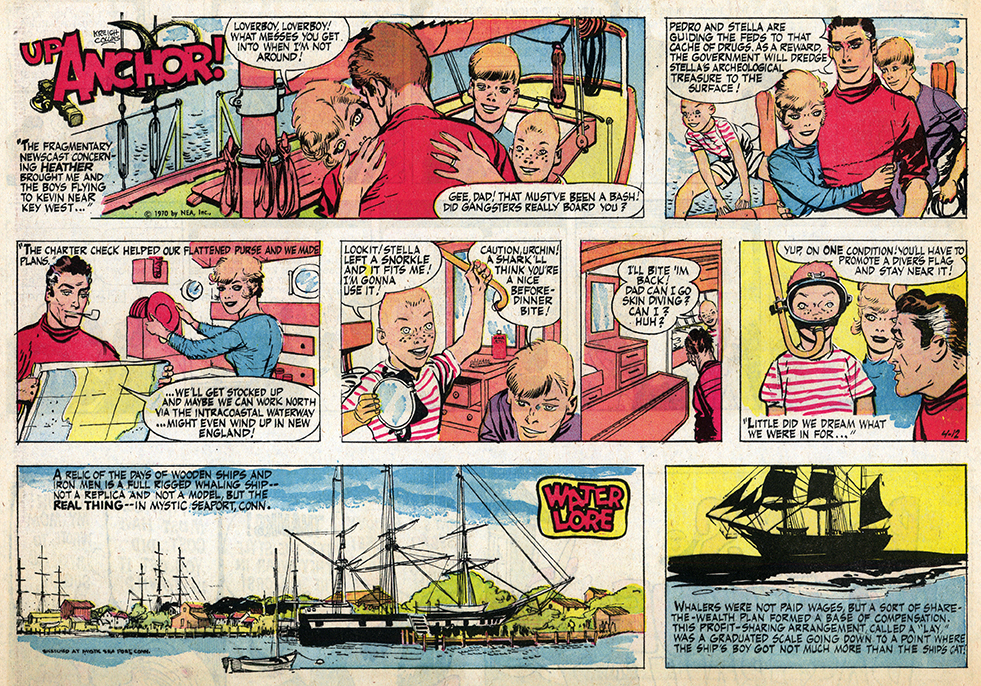
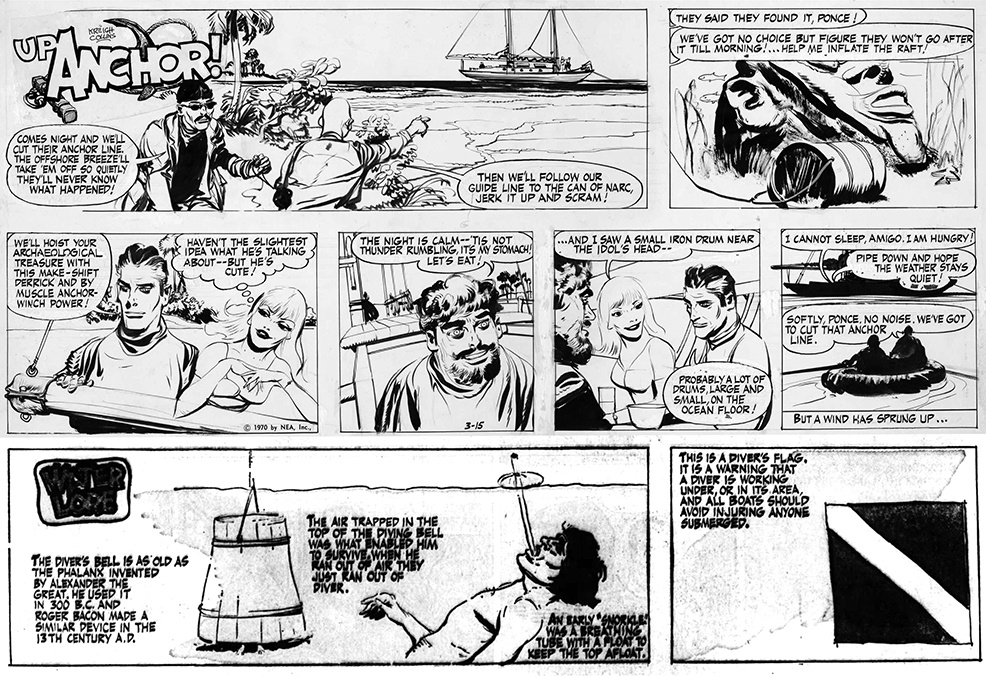
In UP ANCHOR!’S topper strip, WATER LORE, Kreigh Collins incorporated all sorts of nautical trivia, instructional information, and historical tidbits. When UP ANCHOR! appeared in its third-page format, the topper solved the problems caused by cropped panels, by serving as a throwaway. When running as a tabloid, only the larger panel appeared, filling the entire fourth tier of the comic. Generally, the subject of the topper strip wasn’t related to the feature at all (here, ice boats vs. sailing in the Gulf of Mexico).
Much of the information was recycled from or related to various former projects. For instance, a child-sized ice boat project was featured in a book Collins wrote and illustrated 30+ years earlier, called “Tricks, Toys and Tim.” (I highly recommend the book, if you can find a copy).
“Tricks, Toys and Tim” was published in 1937 by Appleton Century.
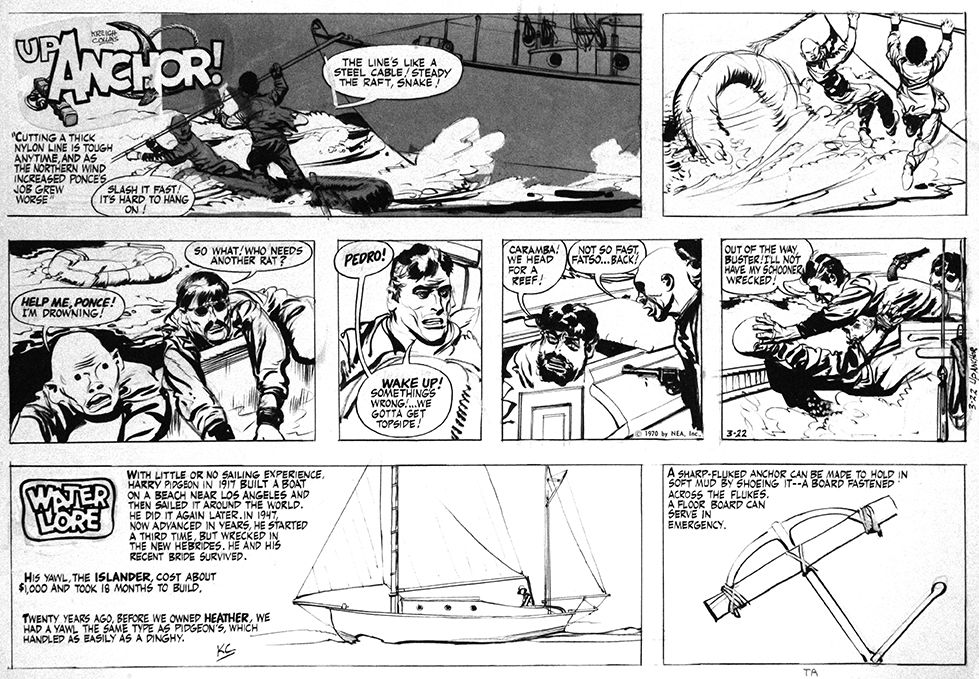
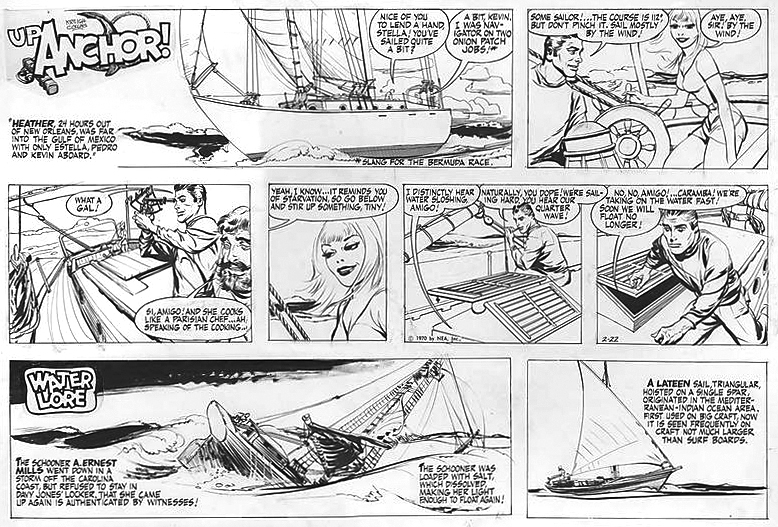
As Pedro looks for a snack, he is shocked to discover the damage caused by the saboteurs. And in this case, the subject of WATER LORE, a sinking schooner, is directly related to the events in the feature.
The resourceful skipper quickly comes sup with a plan to patch the holes, and the crisis is averted.
Occasionally, WATER LORE featured boating safety, essentially functioning like a Public Service Announcement. Somehow, I’m reminded of this strange PSA. It warns of the dangers propane can present on boats (and features an extremely spacious galley for a boat of the size shown at the end of the clip).
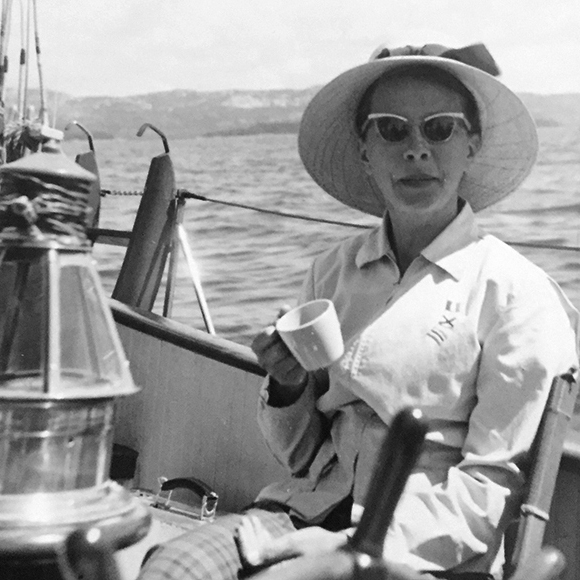
Kreigh’s wife Theresa wasn’t afraid to boil a kettle on a boat—here she is enjoying a spot of tea aboard Heather.
However, the cooking done on Heather was done safely using an alcohol stove more typical for a boat built in the 1920s.





























 Kreigh’s Comics