New Year/Old Gear

After acquiring my first comics — a two-year run of “Kevin the Bold” — I decided I should publish a book somehow. First, I needed to figure out the best way to get images of them, and since they were too large for my present scanner, I thought of using a camera stand. I had a vague notion of what one would look like, so I jury-rigged one out of some dowels and thin pieces of pine. 

Camera Stand

It held my camera, a Canon PowerShot A40. The camera wasn’t very sleek, but a grip that bumped out on its side helped secure it onto the camera stand. It was March, 2004, so shooting indoors made sense.

A40

Being a bit of a packrat, I still had some old light scoops and 3200K bulbs that dated back to college. I plugged them in by my camera stand and my ersatz photo studio seemed set. However, the resulting photos left much to be desired — my lighting was terrible!
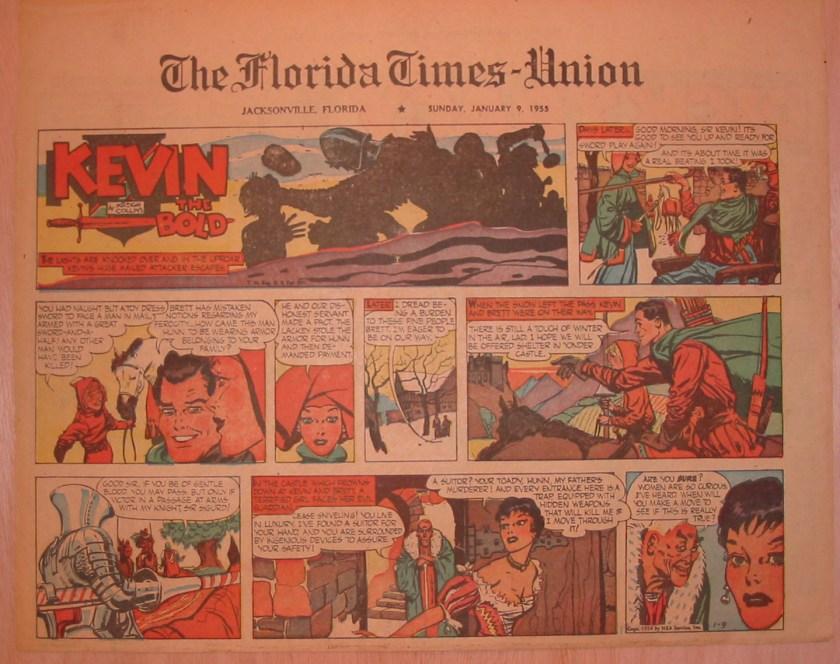
KTB 010955 inside photo

I decided to try shooting outside; I figured the natural light would be perfect. It was now May, so going outside wasn’t out of the question. The light was ideal, but even a light breeze complicated everything.
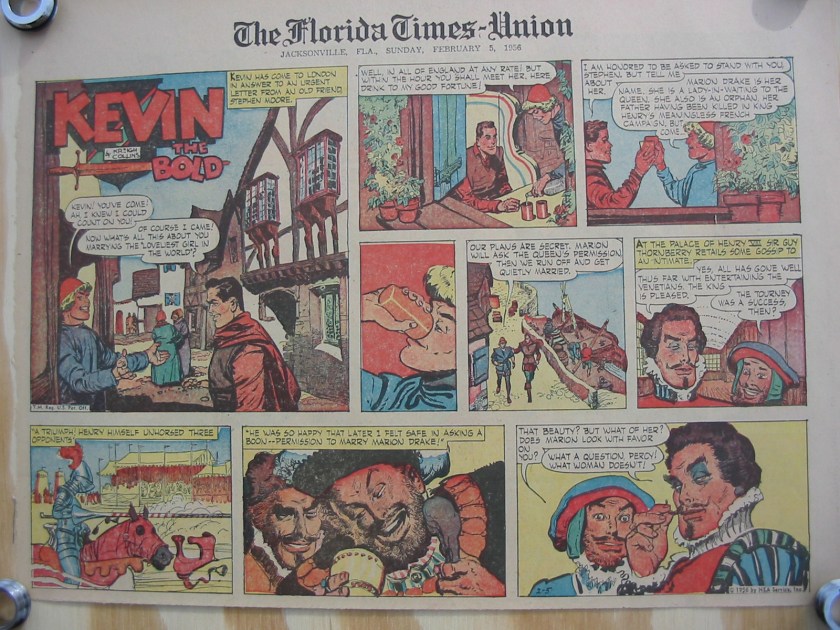
KTB 020556 outside photo

Needless to say, I didn’t have a photo assistant. I could use weights to hold the comics in place, but having to deal with all these moving parts for each shot was less than ideal. It was a very slow, nerve-racking process — one gust and everything would be all over the back yard. Eventually I decided that shooting indoors on a sunny day near large windows was the most workable solution.

One way to say it would be that I didn’t know what I was doing; I prefer to think I was making it up as I went along. Regardless, it’s not the most confident way to start an endeavor, but I thought the most important thing was to just get started. I settled on using three 75-watt bulbs, my camera’s flash and the necessary color corrections in PhotoShop.

I shot my 105 comics, and proceeded to photograph new additions the same way, using a SanDisk card reader to  upload the images to my iMac. My collection grew slowly, which was just as well, since the process was so time-consuming. I recalled vaguely that higher-end cameras had lenses with optics that produced images whose edges were square but the A40 was obviously not in that category. So I also used PhotoShop to square up the images. But again, what a slow process.

Card Reader

A guy who worked at a place where I freelanced knew how to use the company’s tabloid-sized  photocopier as a scanner, and this seemed promising, but I wasn’t able to get permission to take advantage of this piece of equipment. As my comics collection grew, I become familiar with eBay, and I started looking into inexpensive tabloid scanners. Eventually I won an auction for a Microtek ScanMaker 9800XL. It makes nice square scans and easily accommodates half-page comics on its 12″ x 17″ bed. Lighting and wind are no longer problems. Even with its ultra-slow scanning speed, the $200 investment was well worth it. And it’s much more civilized than the old camera-stand process. The scanner is probably 15 years old but it still works fine (though I’ve had to purchase third-party software drivers to keep it functioning with the ever-changing Mac operating systems. I recommend VueScan from Hamrick software).
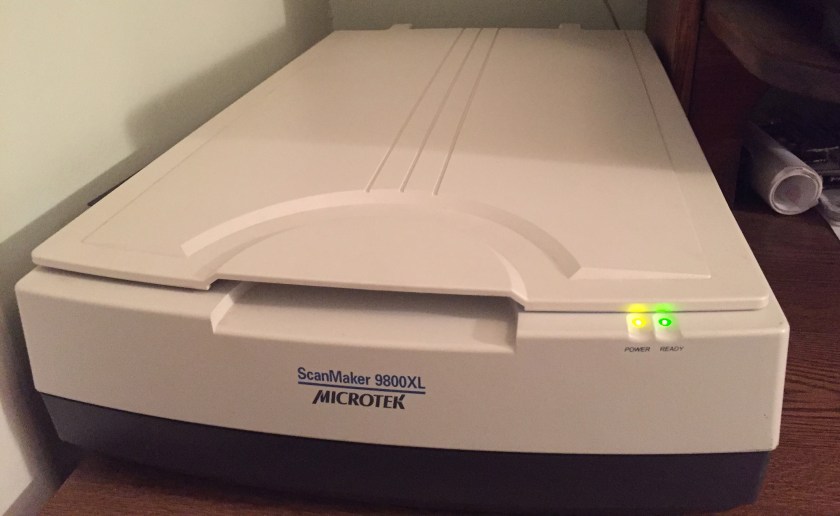
9800XL

At this point, I have most of my comics scanned (duplicating my attempts with the camera stand). Color-correction lags way behind, though I have nearly worked my way through the 100 “Mitzi McCoys” extant. And with any luck, a Mitzi McCoy book will be published in 2016.

Happy New Year!

Selling Mitzi

MM 122648 Slick Promo 72 cc

As the calendar flipped to 1949, “Mitzi McCoy” began to appear in more and more newspapers. The NEA would use nice, clean reproductions of the comics on glossy paper to try and sway comics editors’ opinions of the appeal of the strip. By February, 35 newspapers across the United States and Canada were running the comic.

However, conservative attitudes held more sway in some cities than others. In one such case, the Sunday Editor at the Boston Post, John H. Griffin, informed the NEA that Mitzi showed more of her female charms than the Post was comfortable  printing.

This was the era when Dr. Fredric Wertham began pushing his ideas on the alleged negative effects of comic books on children. A 1948 interview with Wertham in Collier’s magazine was titled “Horror in the Nursery.”  The reaction to Dr. Wertham’s views was swift. By spring, a story in Time magazine quoted Detroit Police Commissioner Harry S. Toy, who declared all the comic books available in his community were “loaded with communist teachings, sex, and racial discrimination.” Mass burning of comic books began across the country.

Appealing to Collins, his boss, NEA features director Ernest Lynn, emphasized the importance of signing the Post: “keep her as attractive as possible, and snappily dressed, and don’t try to conceal the fact that she is a woman. Just let good taste be our guide always, and when there is a question of doubt, lean over backwards on the side of the Watch and Ward Society.” However, Wertham’s beliefs seem to have prevailed, as “Mitzi McCoy” never ran in the Post’s pages. 

Promoting Mitzi

MM Promo3 cc

The NEA provided promotional materials for newspapers that ran its comics, including Mitzi McCoy. The promos featured nice artwork, some marketing text and instructions for where the newspaper would insert its own name into the copy. They were used to herald the addition of a new strip to the paper’s comic section. In the case of the Grand Rapids Press, the comics ran in black and white on Saturdays.

MM Promo4 cc

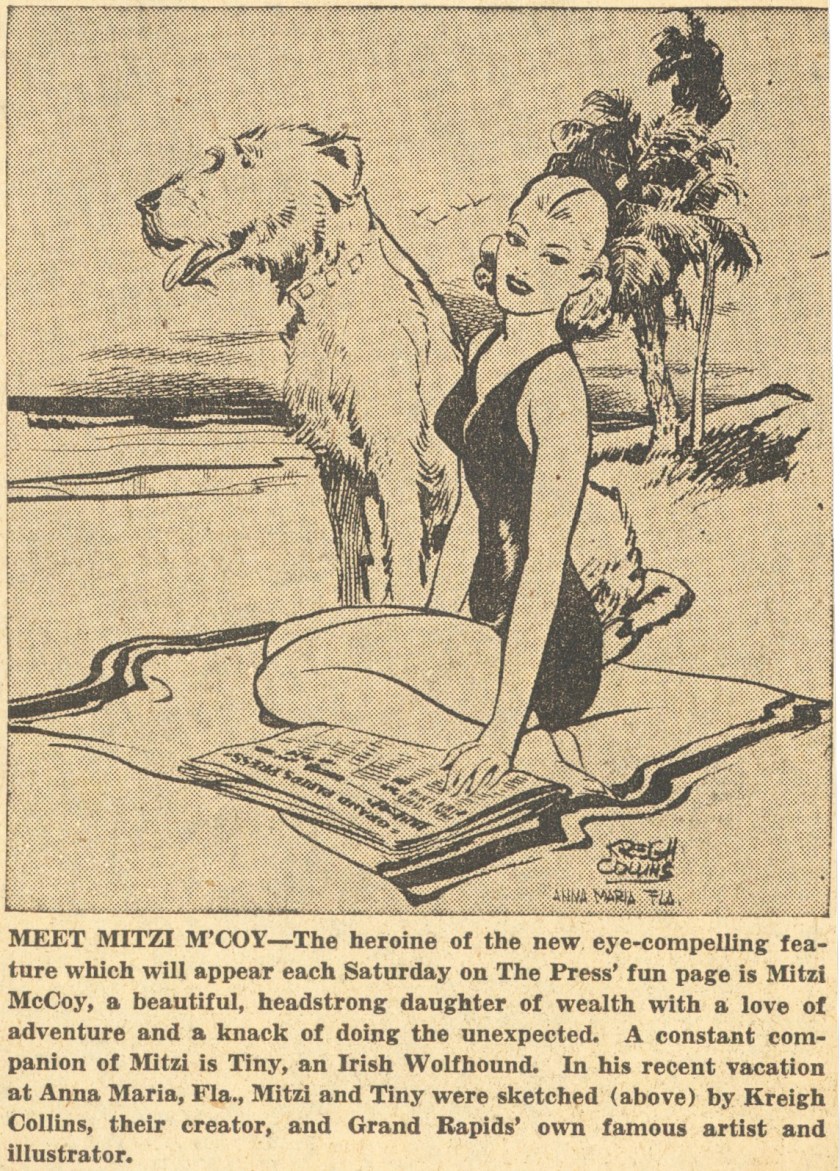
In the case of the Grand Rapids Press, Kreigh got additional promotion, as he fell under the “local boy makes good” news angle. The paper ran a profile of Collins with some interesting pre-1950 biographical information.

MM Promo3B cc

Metamorphosis 2 — More Time Travel

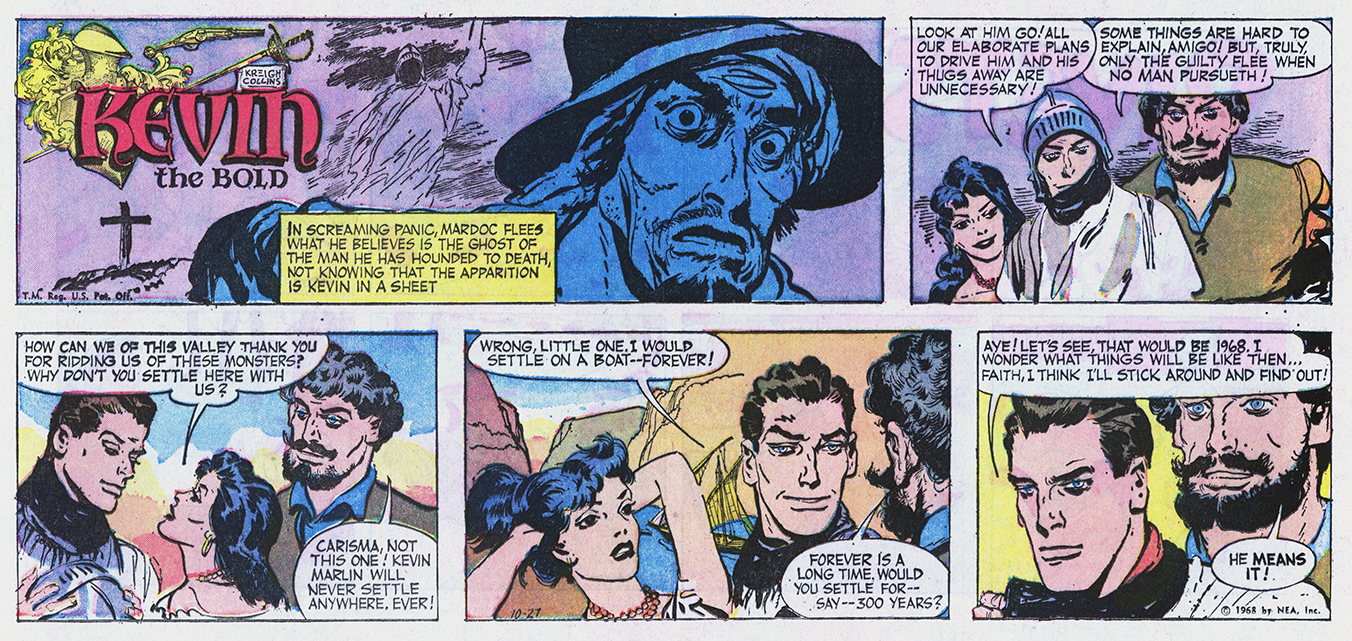
In the final episode of “Kevin the Bold,” after saving yet another damsel in distress (and of course, an entire village), our hero is begged by a lovely señorita to settle down and stay in her now-peaceful valley. Kevin, whose last name (Marlin) has been revealed in a recent, prior episode, declines the offer from the Spanish beauty but admits he could imagine himself settling down on a boat in say, 300 years.

KTB 102768 Th 100 qcc

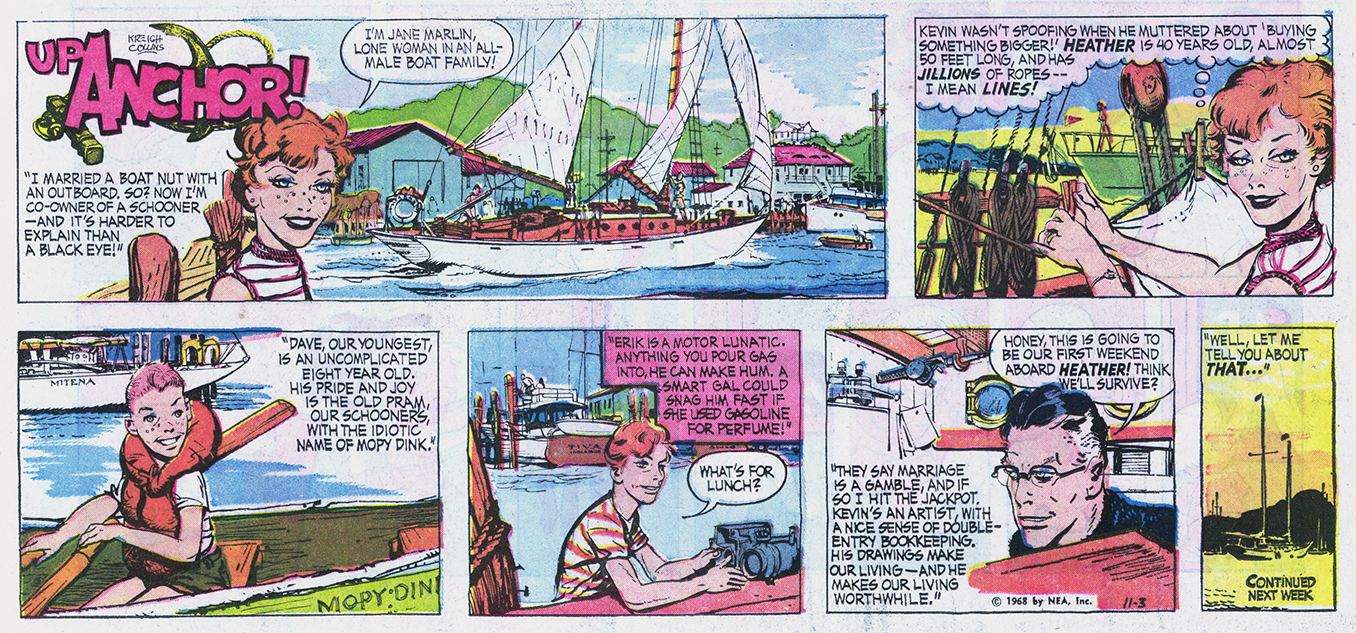
Abruptly, “Up Anchor” was launched a week later (November 3, 1968). As the NEA’s promotional literature put it, “Kreigh Collins’ credentials to create and draw ‘Up Anchor,’ America’s first color comic strip devoted to boating, are as bona fide as the burr on a thistle.” Narrated by first mate Jane Marlin, “Up Anchor” was based on experiences Collins had with his family cruising on his own sailboat. Aboard Heather with Jane were her husband (Kevin Marlin, remember him?), and sons Erik and Dave. The scripts were developed in partnership with Collins’ wife Theresa (“Teddy”), who had previously chronicled the family’s round-trip journey from their home port on Lake Michigan to Maine (Teddy’s “The Wake of the Heather” was published in 1967) .

UA 110368 Th 100 qcc

Introducing Mitzi McCoy

MM 110748 72 cc wbg

Kreigh Collins’s first comic strip was “Mitzi McCoy.” It premiered on November 7, 1948. Mitzi’s debut was appropriately dramatic — beautiful illustration and a runaway bride. This half-page ran in the Indianapolis Times. Collins obviously put a lot of time into the artwork, and the Times invested a lot of effort in a getting it to print so nicely. Cyan was used in addition to black for the speech balloons and most of the line work to create very rich blacks, and the registration is perfect, resulting in a nice crisp comic.  

Along with Mitzi, the strip’s other two main characters (Stub Goodman and Tim Graham) were introduced, and I don’t think we’ve seen the last of that scoundrel Phil Rathbone.