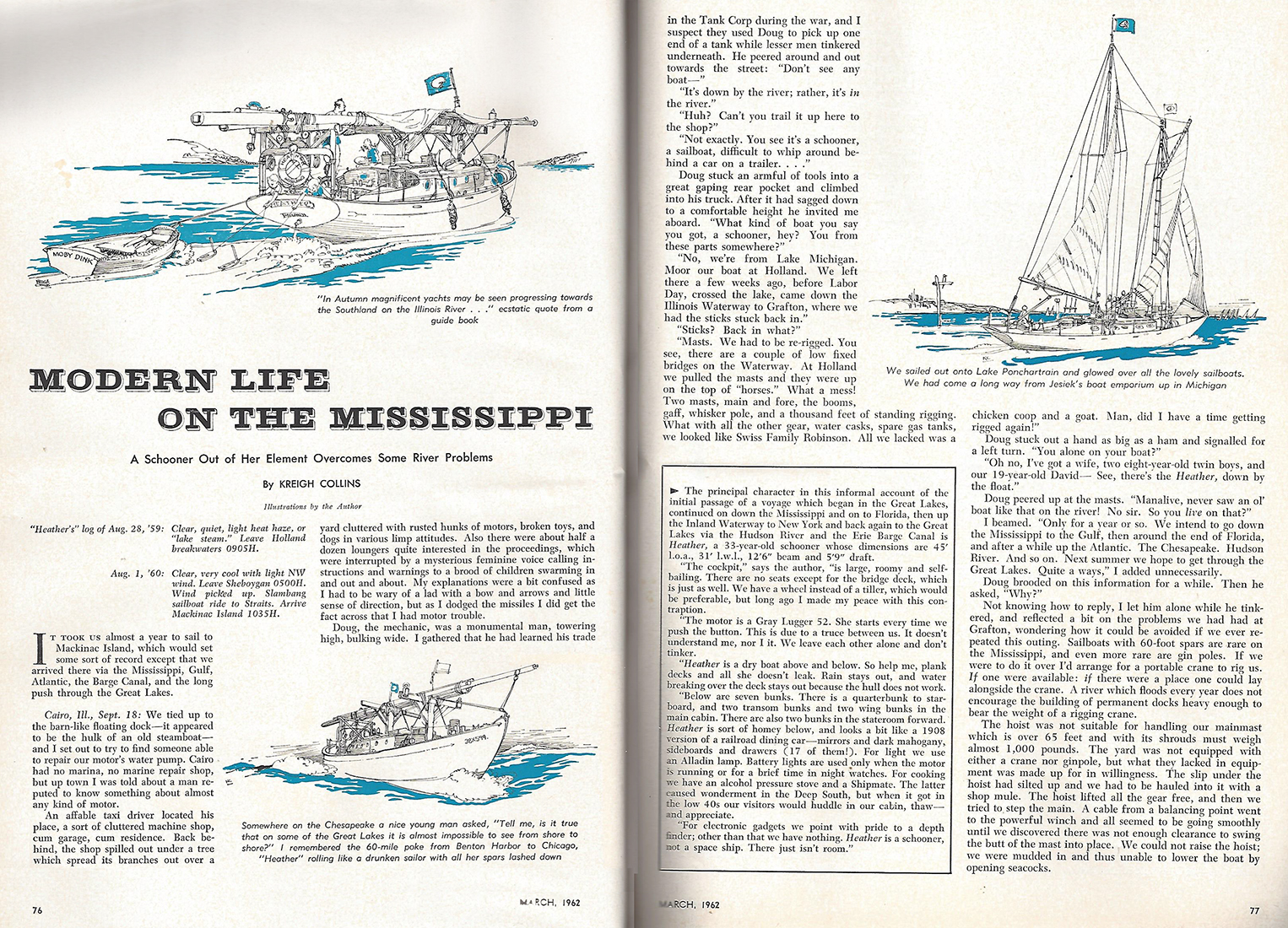
Yachting is a monthly magazine first published in 1907; it’s still on newsstands today. I’m most familiar with issues from the 1960s–80s, because my father had stacks of them piled in his library. Little did I know then, but on at least two occasions my grandfather wrote and illustrated features for Yachting. The first that I’m aware of was included in the March, 1962 issue.
Due to the times, these articles occasionally contained language now considered politically incorrect. Otherwise they are well-written, informative, and very funny. The March, 1962 article described the trip down the Mississippi that became the inspiration for this blog’s current story arc.
A cute detail are the two toy boats trailing behind Heather, in addition to the dighy, Mobe Dink.
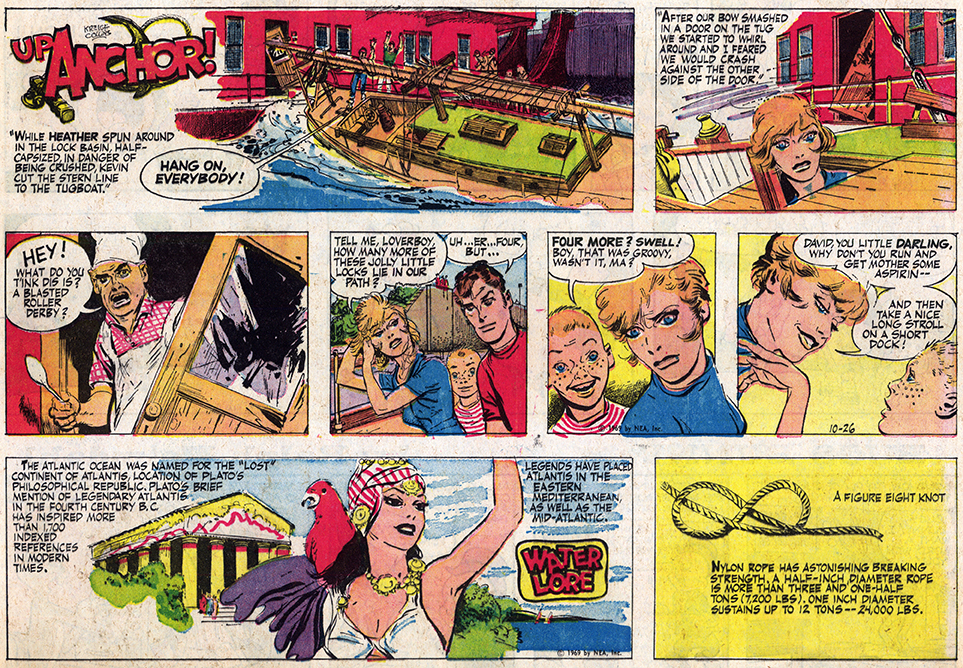
While the opening spread relates some of Heather‘s mechanical troubles, the following page describes the incident later featured in the October 26, 1969 episode.
No doubt some liberties were taken in both versions of the story, and it’s not surprising that in the comic strip version, the smashed window was placed in the galley (kitchen), not the head (bathroom).
The article jumps to the back of the magazine, and continues for three more pages. (If you’re interested in the complete article, copies are usually available on ebay).
Heather and her crew survived this first drama, but surely there would be more to come.
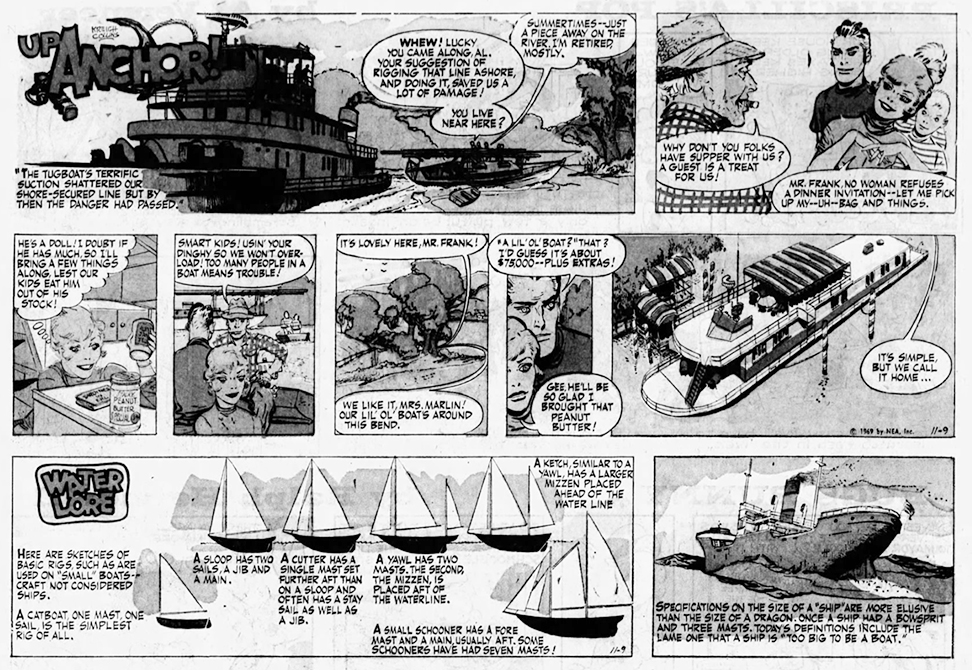
The Marlin family’s new friend had some good advice, but it was to no avail. Making sure not to judge a book by its cover, they graciously accept Al’s generous offer. (Of note, the November 2 WATER LORE episode consists of three panels, not two—the only such instance I can recall).
More surprises awaited—thankfully, this one was pleasant.
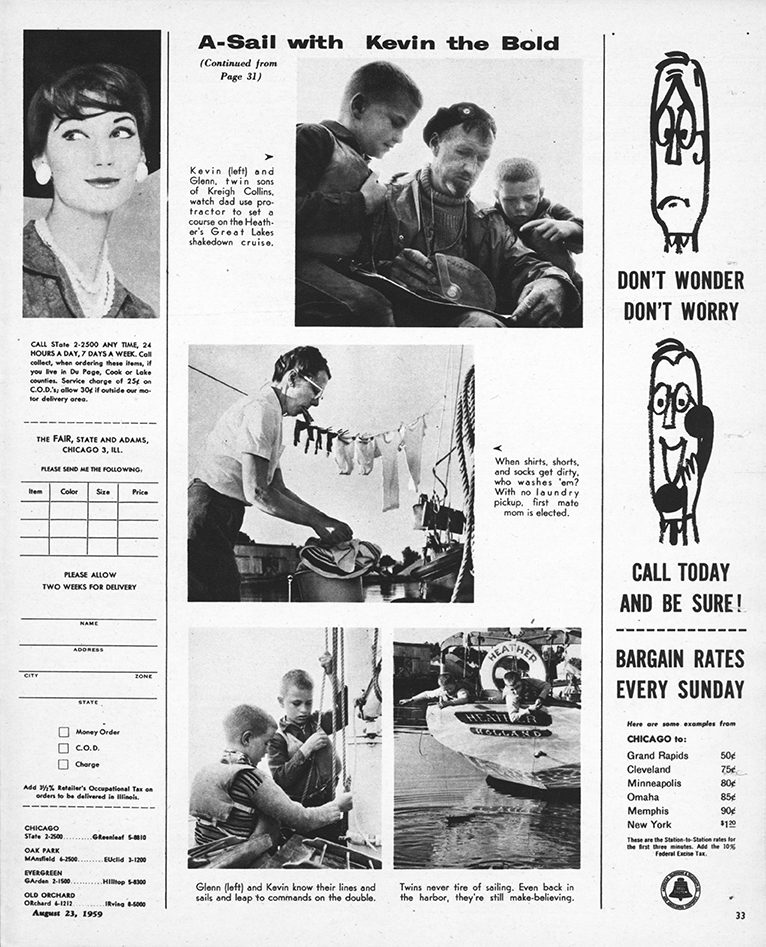
On August 23, 1959, a short photo-essay appeared in the Chicago Sunday Tribune Magazine. It described life aboard Heather for the Collins family as they prepared for their journey south. The short profile was a nice promotional piece for the artist, whose work appeared every Sunday in the Trib’s funny pages. (Sadly, it is likely the last promo the Tribune ran for Collins—four months later, after a nine-year run, KEVIN THE BOLD was discontinued.)
Now back to the story that resulted from the trip south.
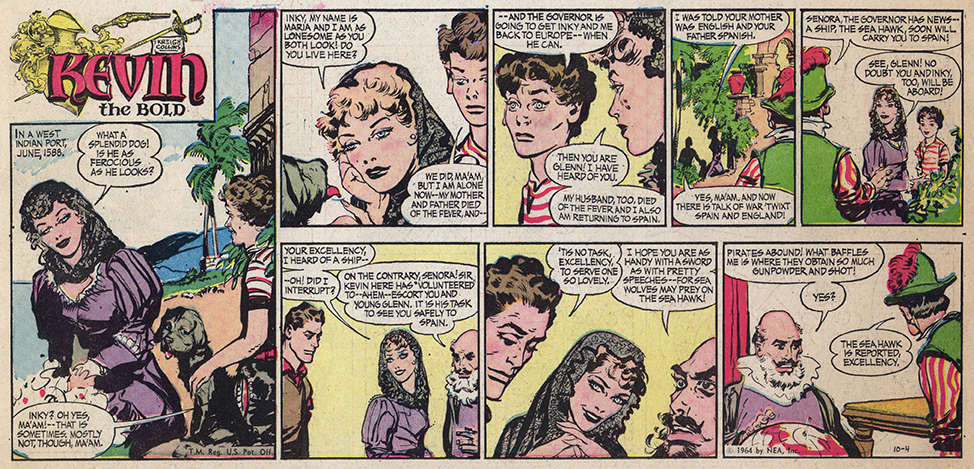
Say… that dog and little boy in WATER LORE… they sure look familiar.
Ah yes, it’s Inky—a dog that, in real life, belonged to one of the Collins’ neighbors. But I digress. Heather has arrived for her overnight stay in Chicago, with an early morning departure and a date with its first lock.
It was smooth sailing through the lock, so much that Jane Marlin thoughts turn to Robert Burns’ Duncan Gray.
With summer here, it seems appropriate to feature a sequence from Kreigh Collins’ sailing-themed comic strip UP ANCHOR!. In this chapter, Kevin Marlin and his family are making plans for an extended journey south aboard Heather. Of the 19 episodes, only half are in color, but they will be supplemented in the coming weeks with some interesting articles on the real-life events that inspired the action in UP ANCHOR!.
The voyage was begin in the fall, and the story picks up on a late summer shakedown cruise.
As Jane learned to sail, so did the readers, with help from the topper strip WATER LORE.
Written with help from his wife, Theresa, no doubt some license was taken, but I’d be inclined to believe that this incident actually happened.
A point of pride for me are the capable actions of Erik. My father, eldest of my grandparents four sons, was actually the only one who was not aboard Heather during this period. Ironically, relations between him and my grandfather were somewhat strained, so this is something of an idealized version of events.
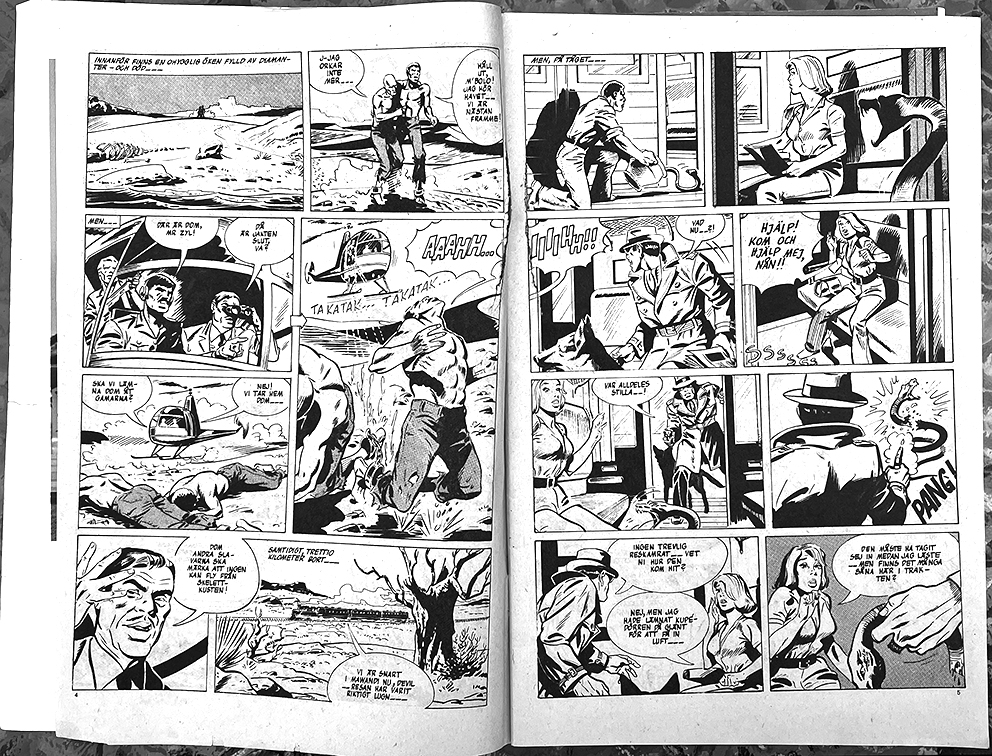
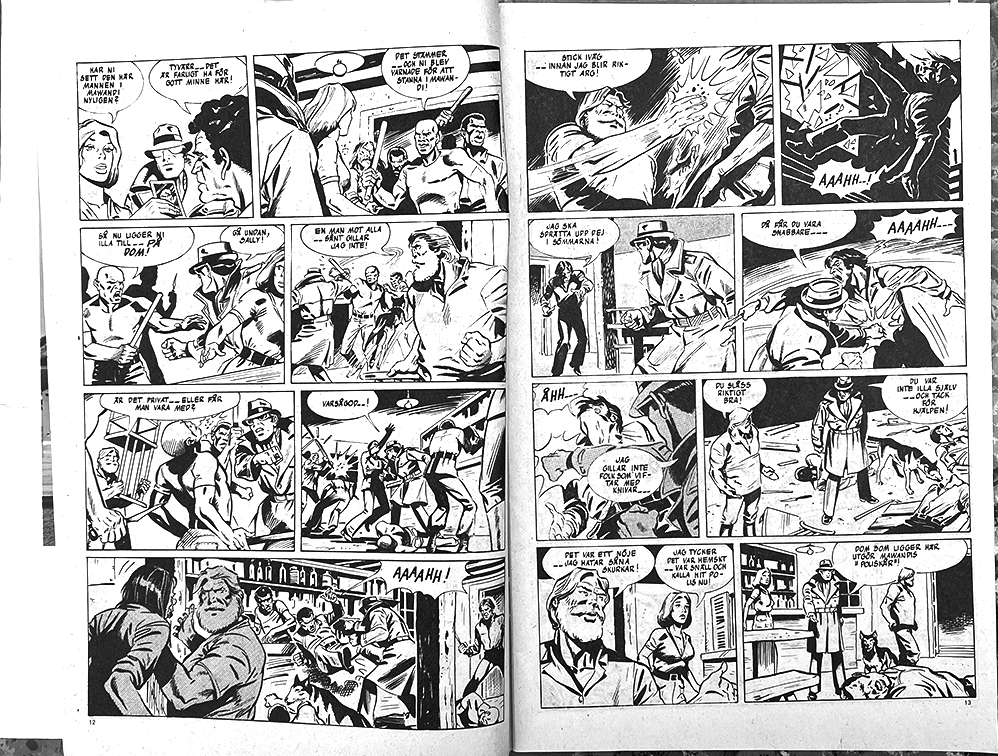
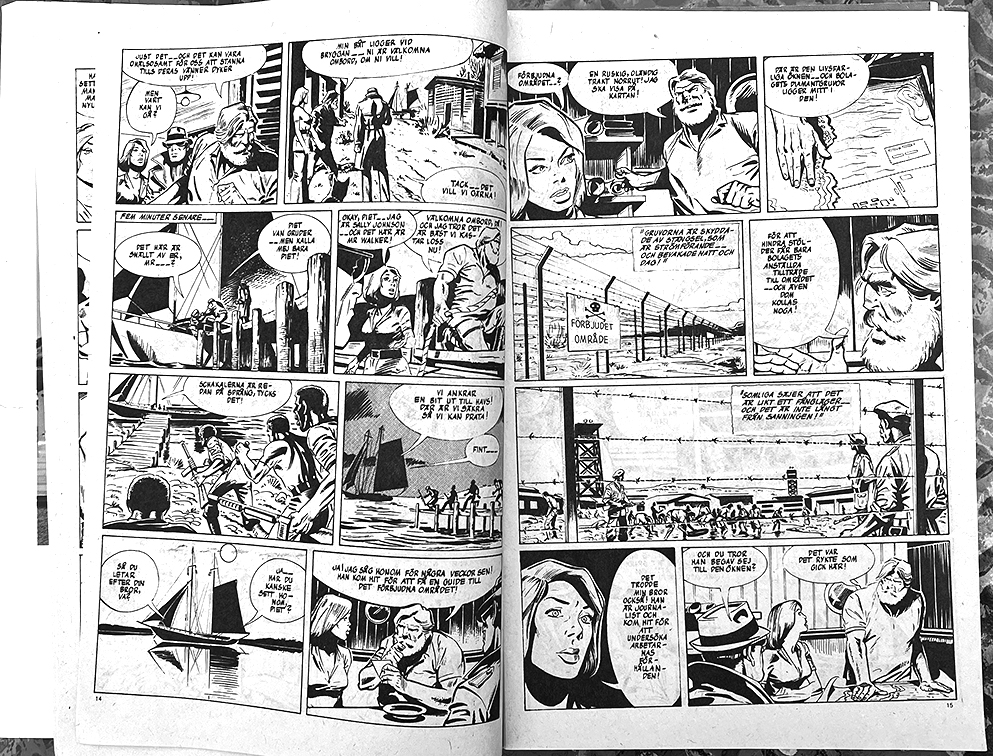
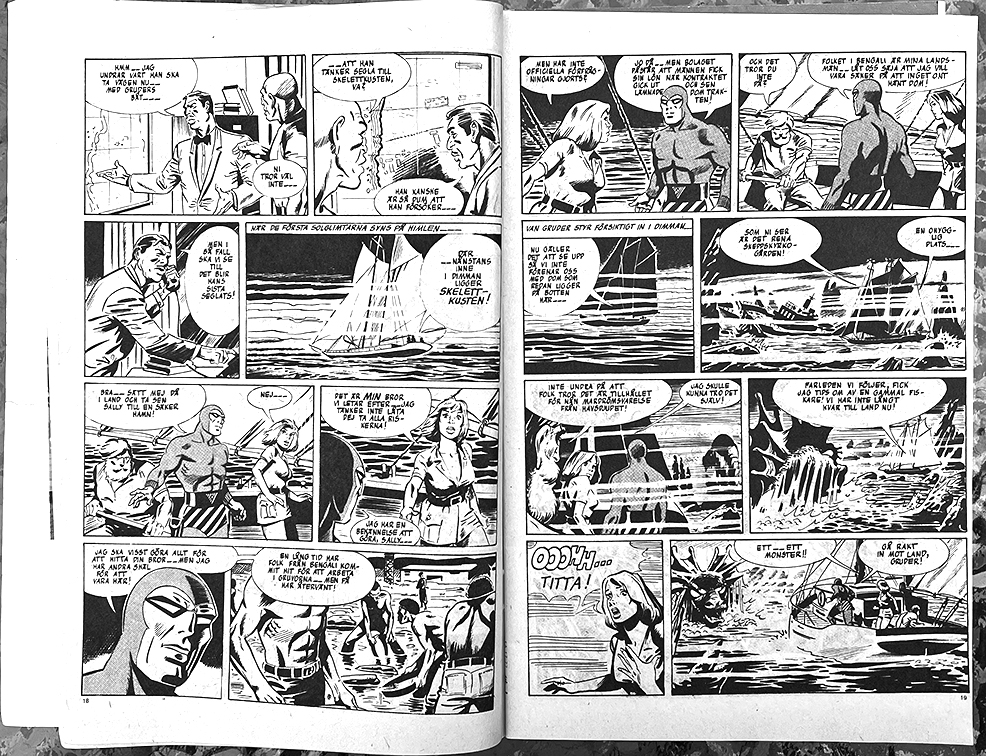
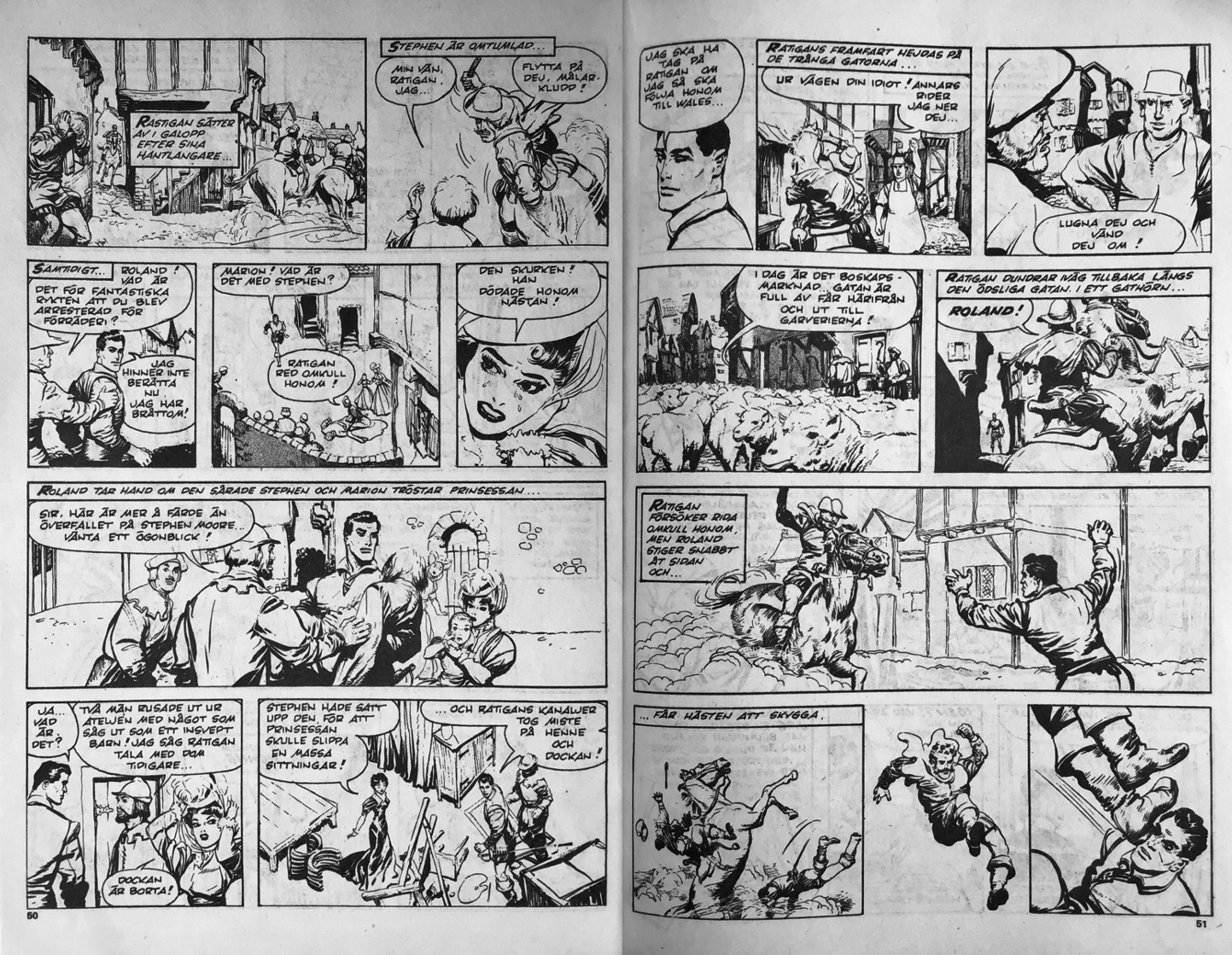
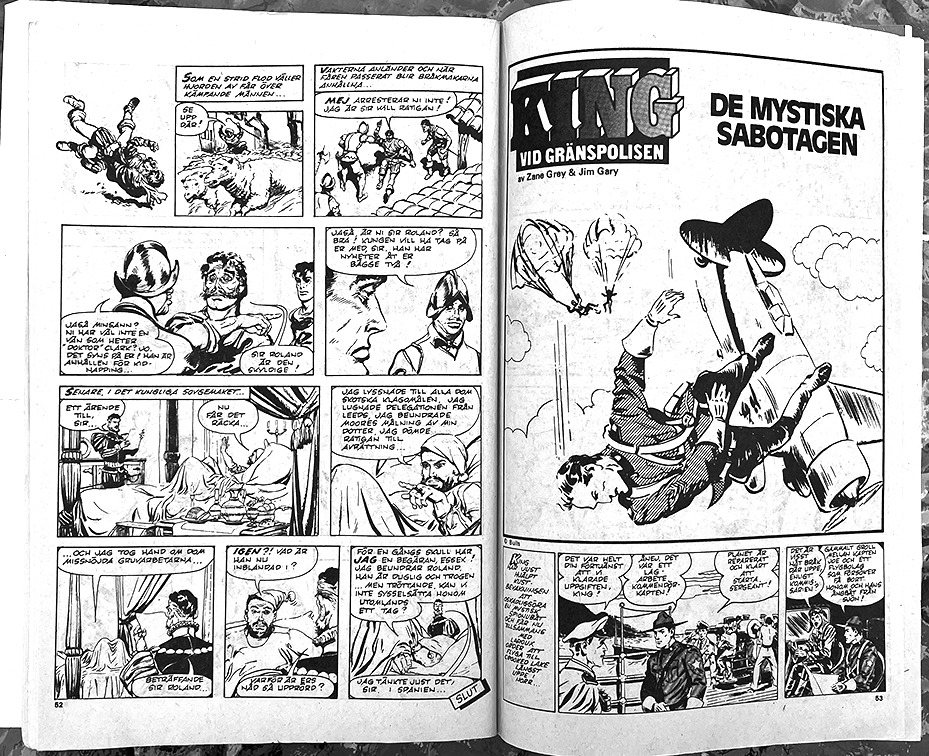
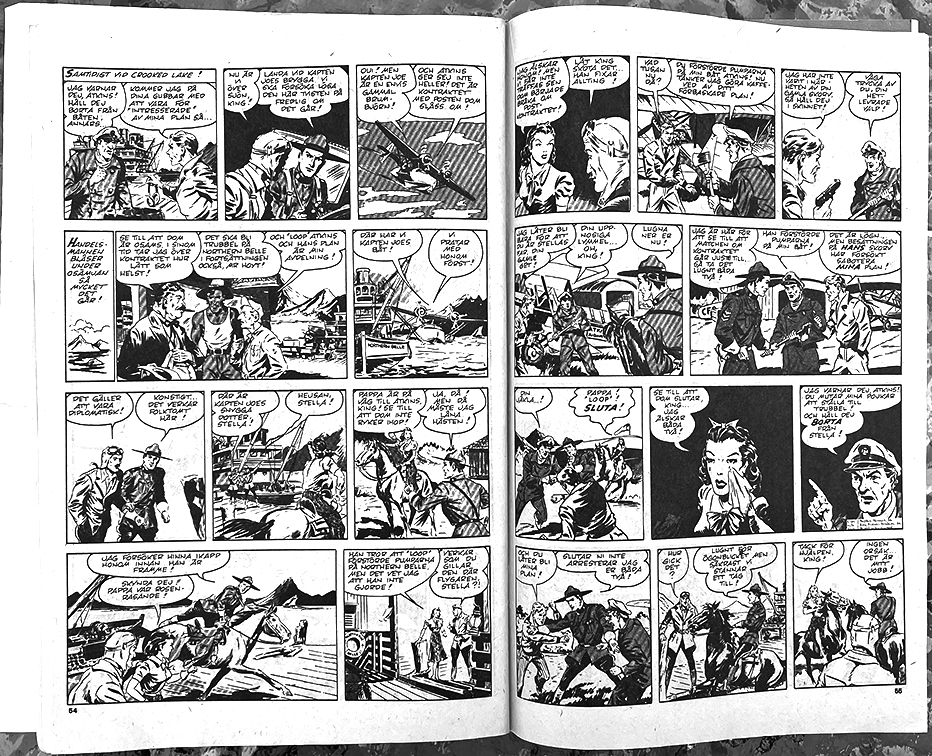
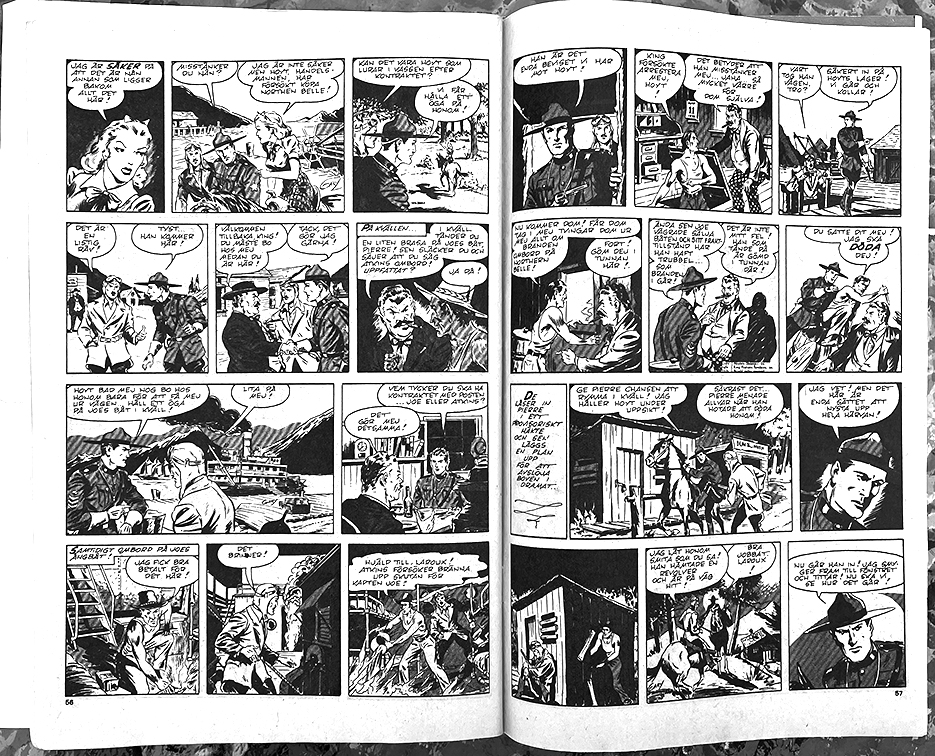
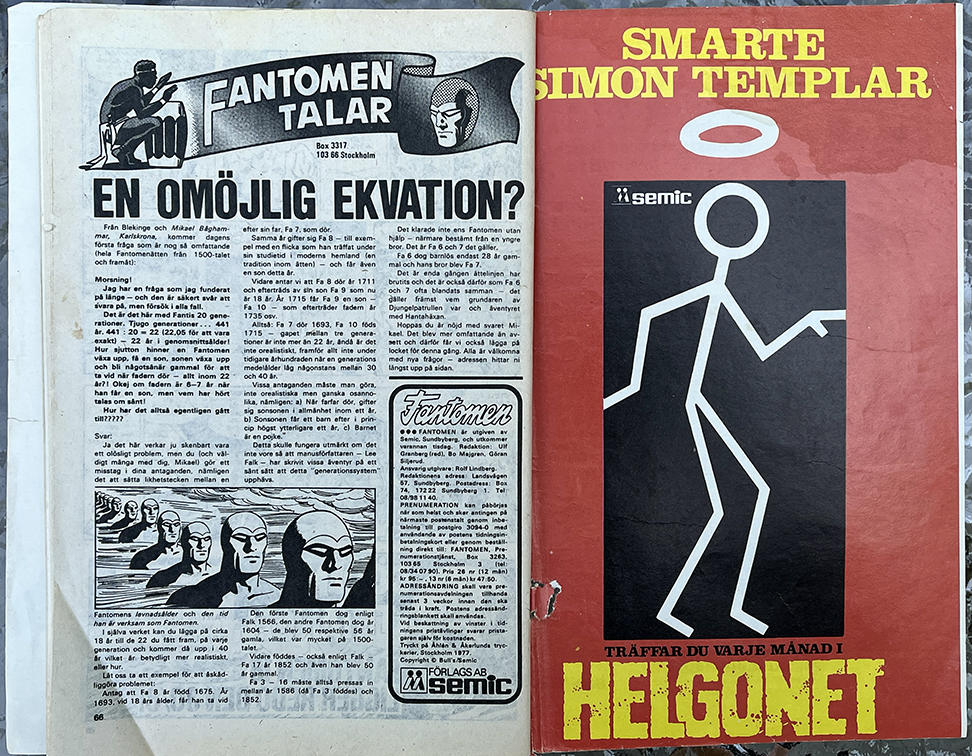
Stop me if you’ve heard this before, but I recently received a package in the mail from Roger, my blogger friend from Sweden. In addition to some “Falcon Stormfågeln” tear sheets from Allas Veckotidning magazine, It contained seven issues of the comic book Fantomen (featuring Lee Falk’s long running comic, THE PHANTOM). These issues of Fantomen were published in 1977, ran 70 pages, and had color covers and black and white interiors. In addition to the title feature, “Fantomen Nr. 17” included 13 pages of the Zane Gray/Jim Gary comic “King vid Gränspolisen” (KING OF THE ROYAL MOUNTED), and 15 pages of “Roland den Djärve” (KEVIN THE BOLD). “Roland” had previously appeared in Swedish TOM MIX comic books, published in the mid-1950s; Kreigh Collins’ work had first appeared in Allas Veckotidning as “Falcon Stormfågeln” about 11 months after the NEA versions ran in Sunday comic sections.
The inside front cover has a very cool ad for Serie Magisinet featuring Björn Borg, who had just achieved worldwide #1 ranking in tennis (I wonder if he’s reading 1977’s issue 13, which included MITZI McCOY?*)
About half the issue was devoted to THE PHANTOM, which debuted as a daily strip on February 17, 1936 (and continues to this day). A nice color poster was included, and luckily for me, it’s still attached and in perfect shape. The purpose of the poster is a mystery to me—perhaps it was intended to be used as a school schedule for the comic book reader.
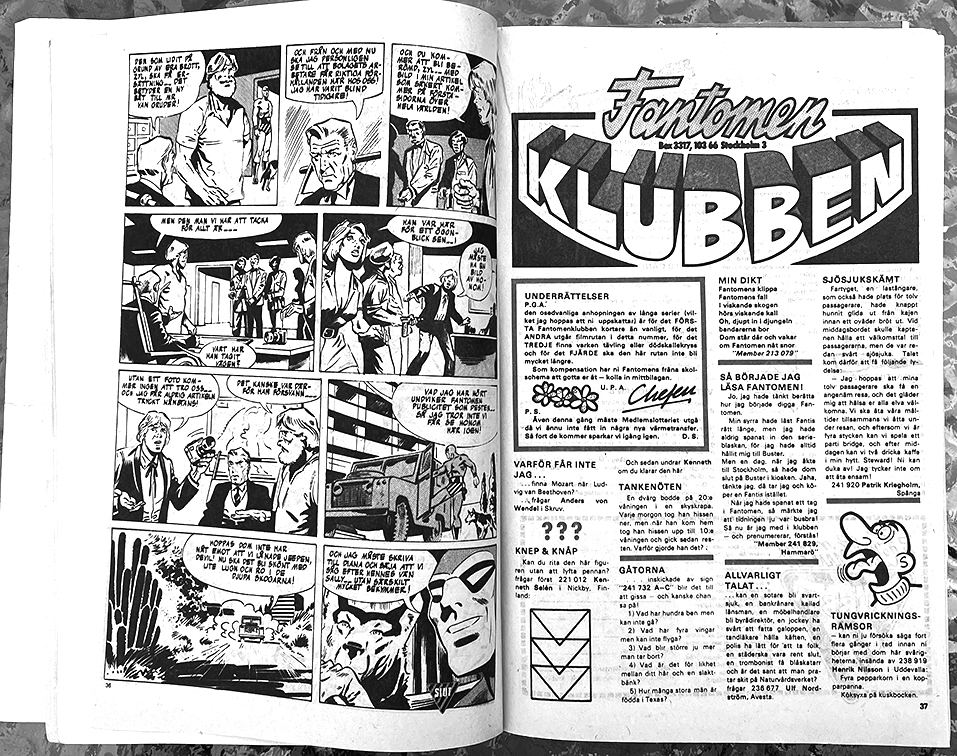
A two-page PHANTOM fan club section followed.
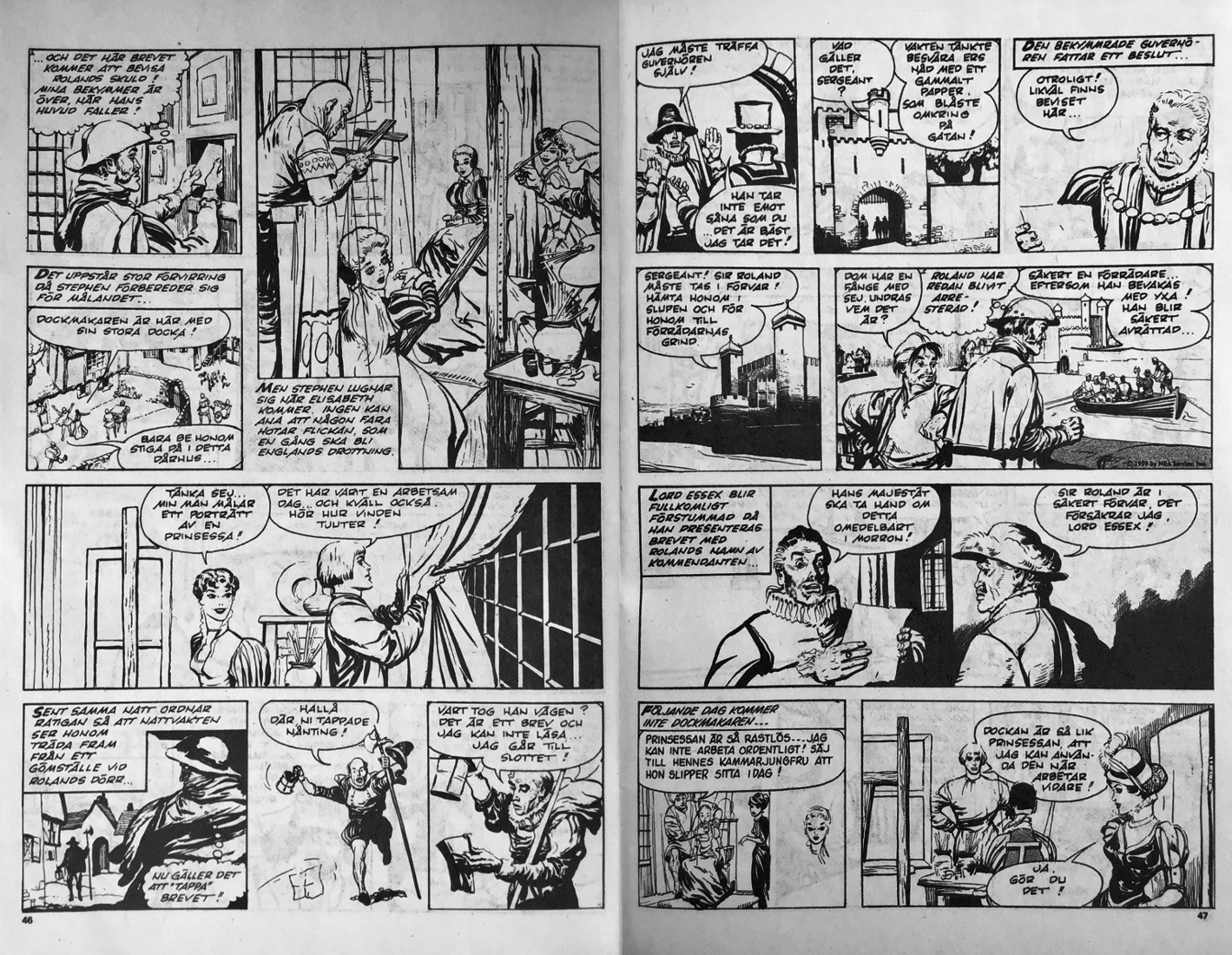
Next up was Roland. The story arc (Förrädaren, or “The Traitor”) is the Swedish version of the one that appeared on this blog over the past five weeks, featuring the no-good Sir Will Ratigan. (The following scans originally appeared on Roger’s fantastic blog).
Bringing up the rear of the issue was “King vid Gränspolisen” (KING OF THE ROYAL MOUNTED started its nearly two-decade long run in the Sunday funnies in 1935).
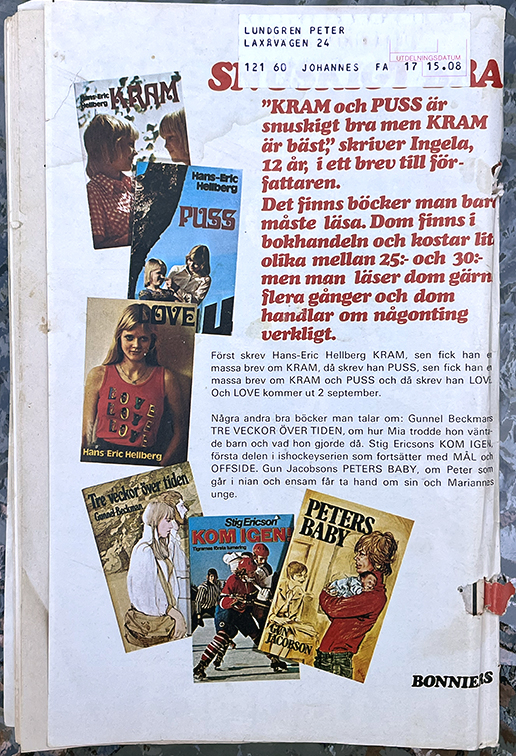
Facing an ad for “The Saint” on the inside back cover was a PHANTOM letters section, plus an ad for a juvenile book publisher on the back cover.
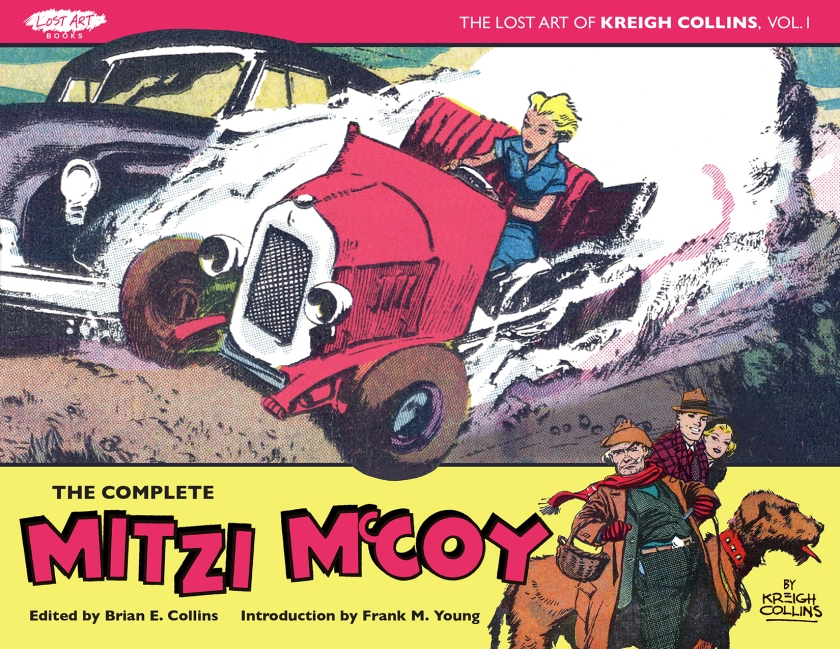
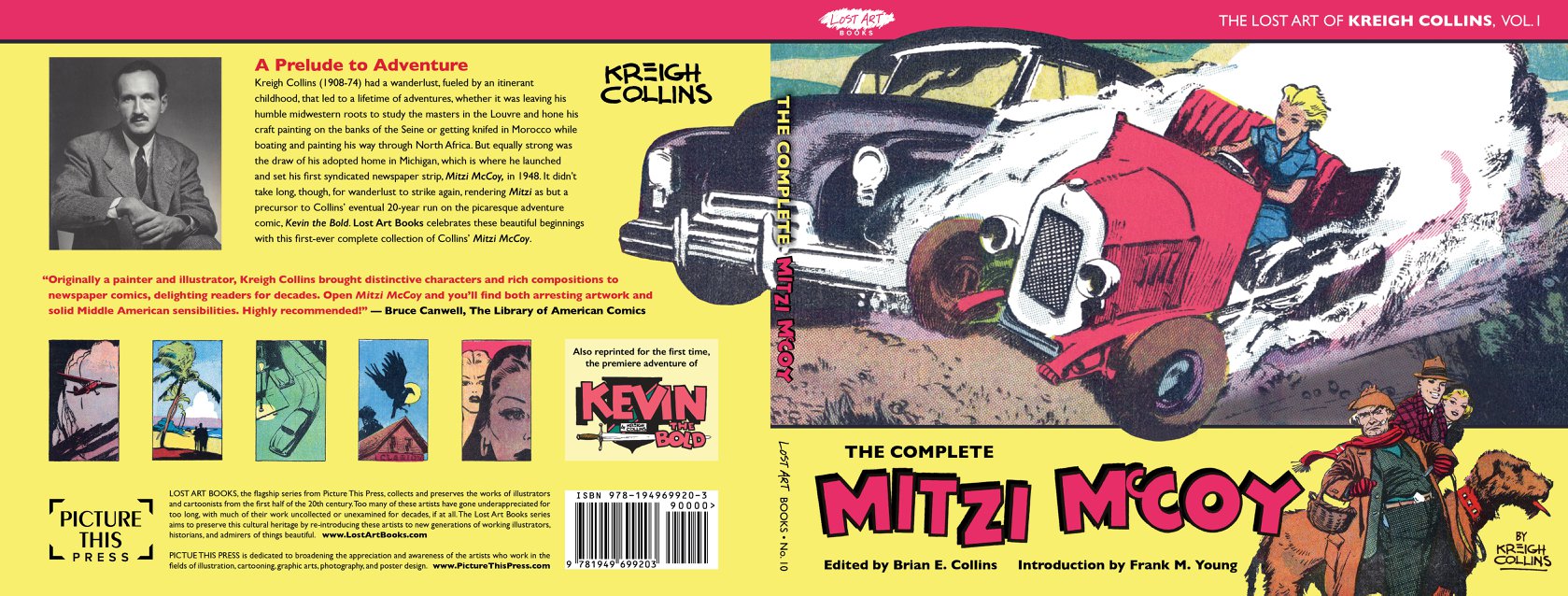
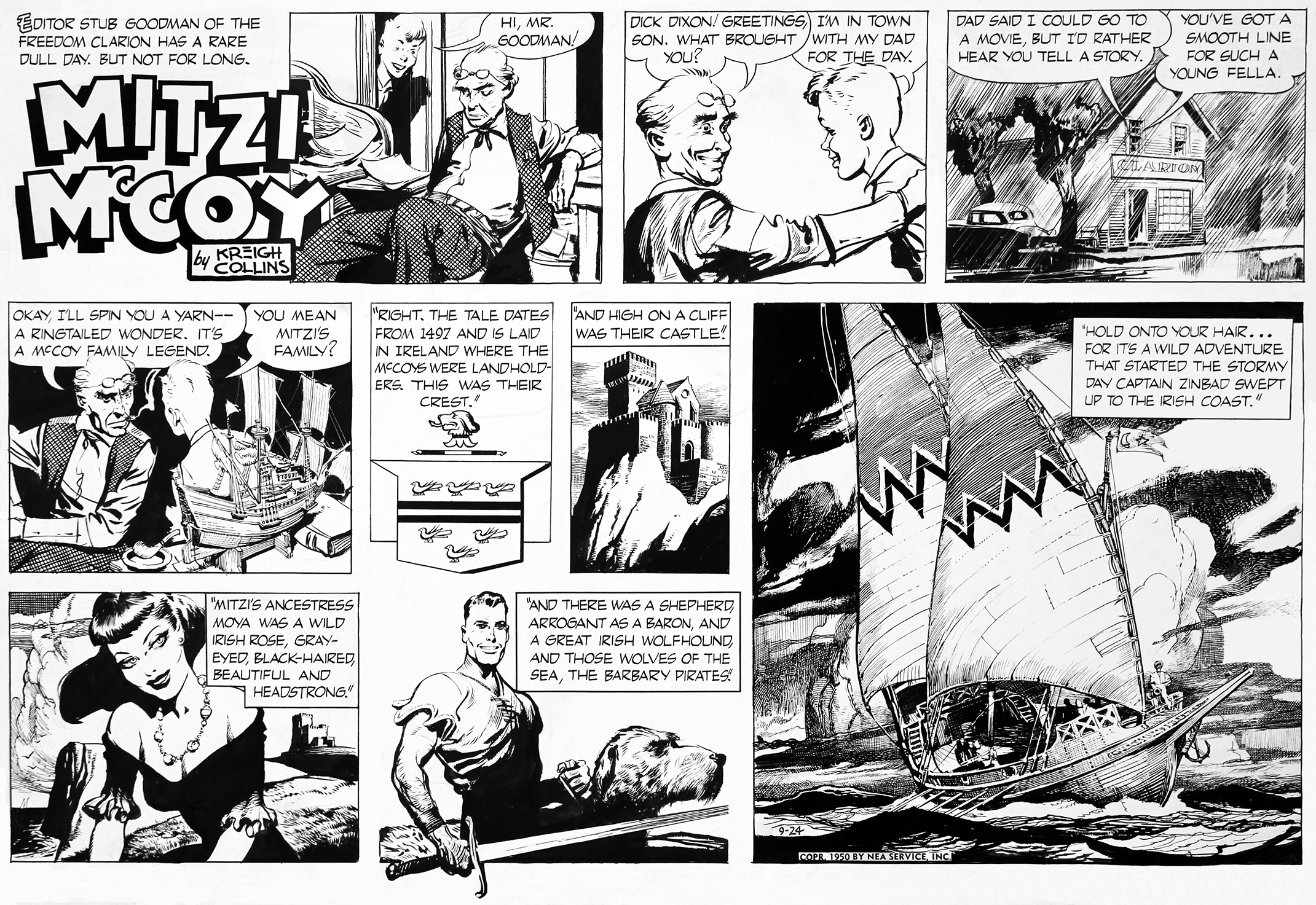
“The Lost Art of Kreigh Collins, the Complete Mitzi McCoy” features the entire run of Kreigh Collins’ first NEA feature, and is available for a limited time at a reduced price.
MITZI McCOY ran from 1948 to 1950 and showcased Kreigh Collins’ skill as an illustrator and storyteller. His picturesque landscapes, lovely character designs, and thrilling action sequences brimmed with detail and charm, and the strip’s ensemble cast rotated in and out of the spotlight taking turns as protagonists in the dozen story arcs collected in this volume. The last story collected in “The Complete Mitzi McCoy” is the narrative bridge that set Collins and his characters off on a new journey, beautifully told for the next couple of decades in the much-lauded adventure strip Kevin the Bold.
The collection includes an introduction by Eisner Award-winning author Frank M. Young, an Afterward by Ithaca College’s Ed Catto, and previously unpublished artwork and photos. Longtime comics artist Butch Guice also provides a new pin-up of the character Mitzi McCoy.
The book is available for $30ONLY $20! For domestic shipping, add $4; for international orders, please add $25 to cover first class shipping. To place an order, leave a comment below or email me at BrianEdwardCollins1[at]gmail.com, and I will give you PayPal or Venmo information. Thank you!
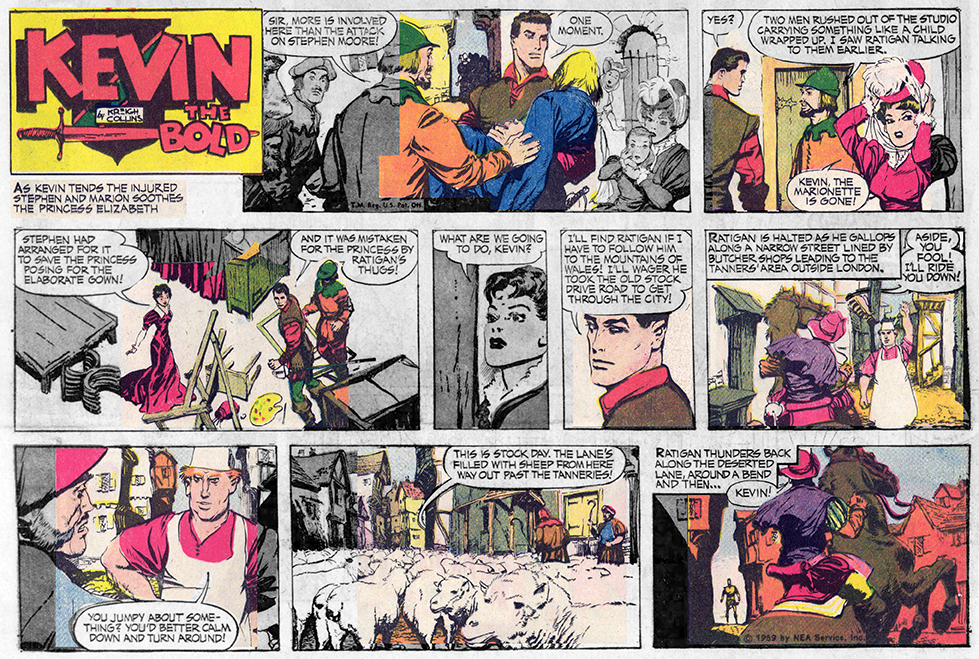
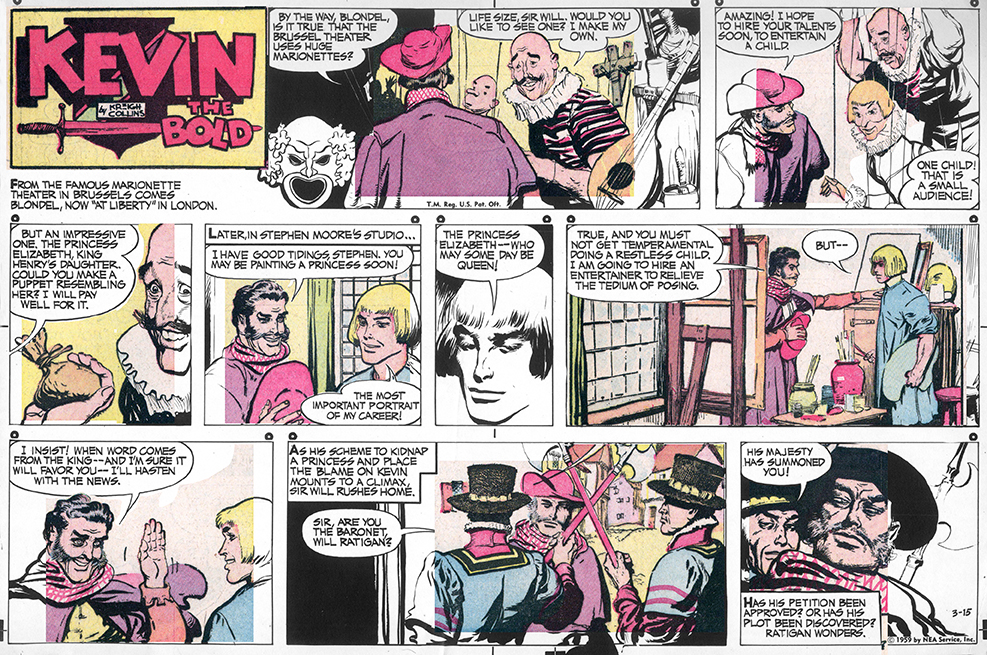
The story nears its conclusion, with the April 26 episode represented by a combination of a third-page and black and white half page found online. The third-page format really butchered Collins’ artwork—in the first panel, young Princess Elizabeth is cropped from the action, despite being mentioned in the introductory caption.
Blocked by a street full of livestock, Ratigan turns and finds his escape blocked again.
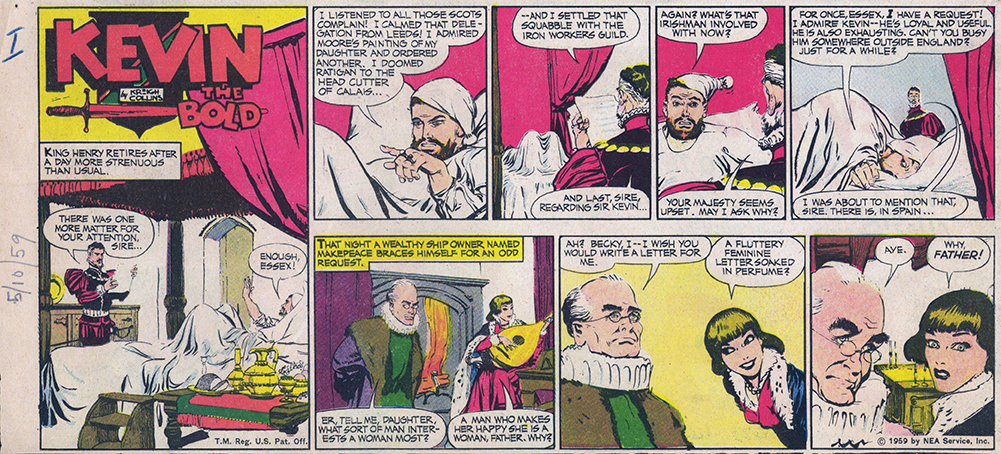
The story transitions in a light-hearted half page, one of ten halves in the 14-week story arc.
The merits of the half-page format are on full display compared to its third-page version. Next week, a look at this sequence from a different perspective.
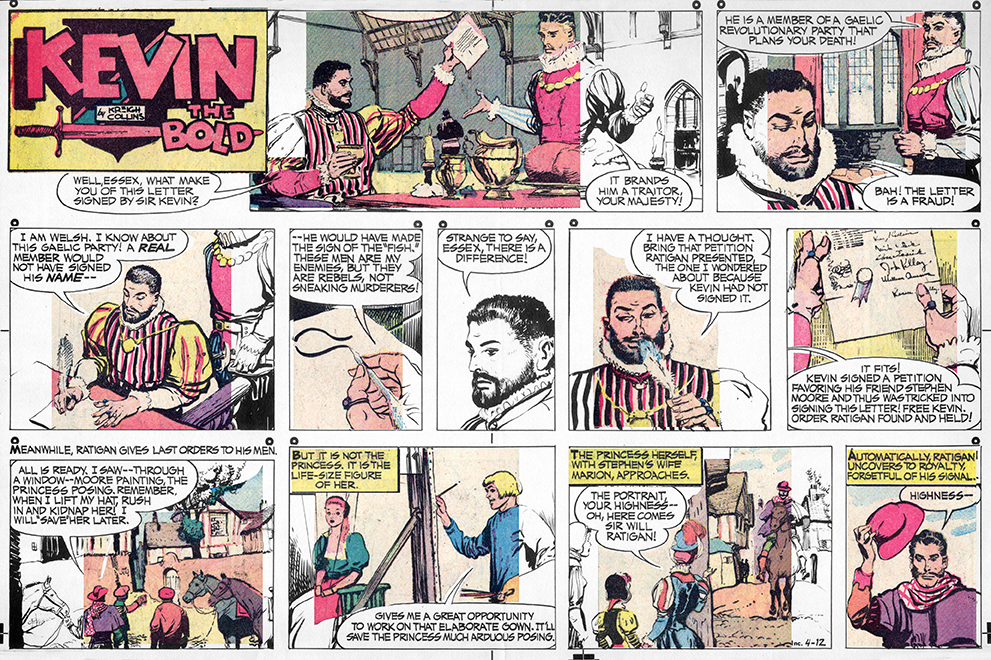
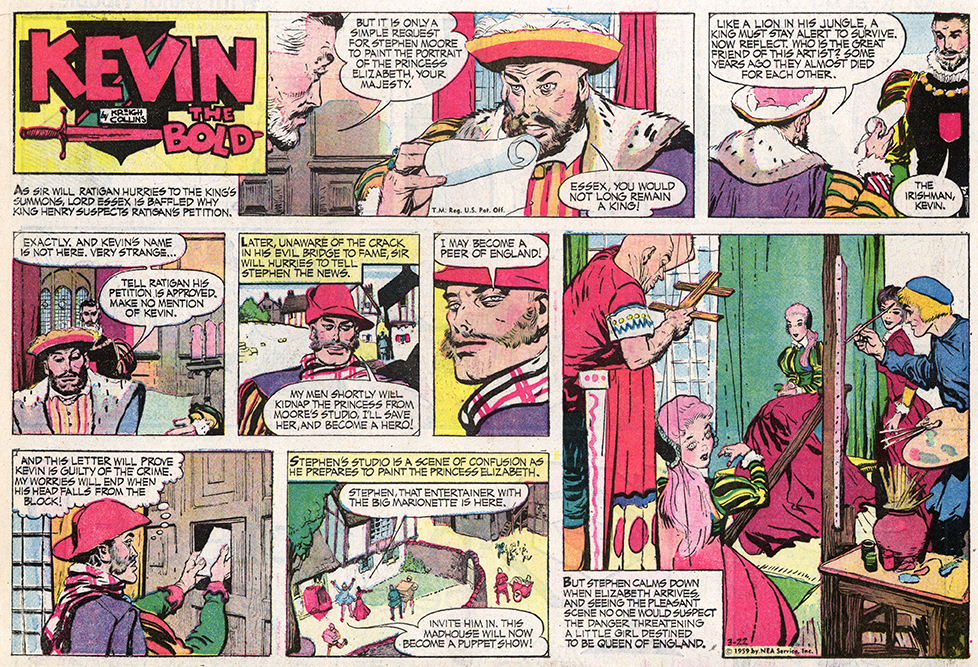
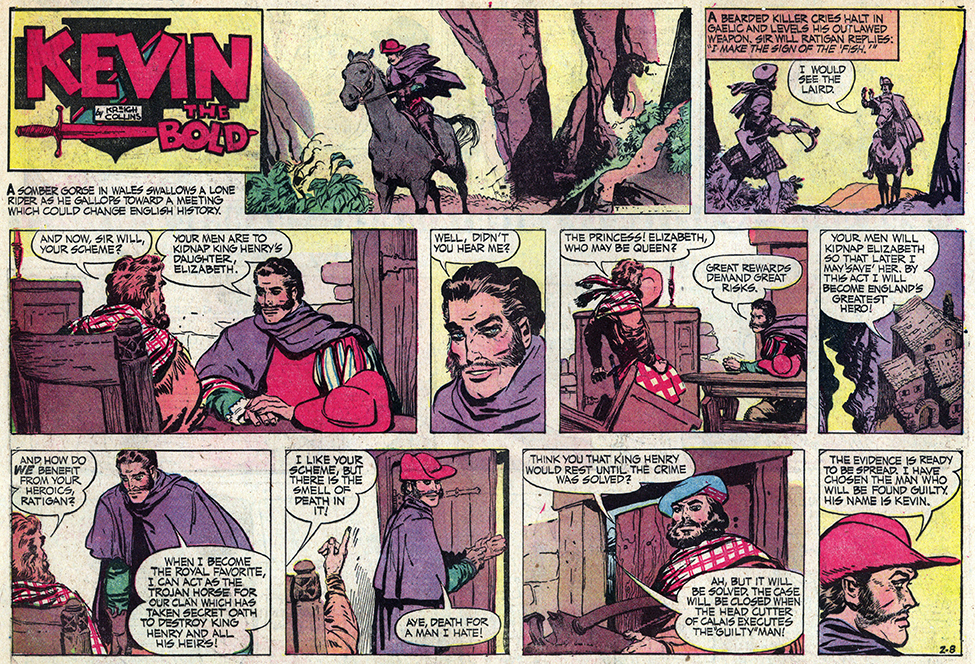
Knowing Kevin so well, King Henry is suspicious about the incriminating letter.
The last panel of the second tier has a unique composition, with the caption placed in the center instead of its usual spot in a corner. Meanwhile, Ratigan will soon have more agitation than listening to female chatter!
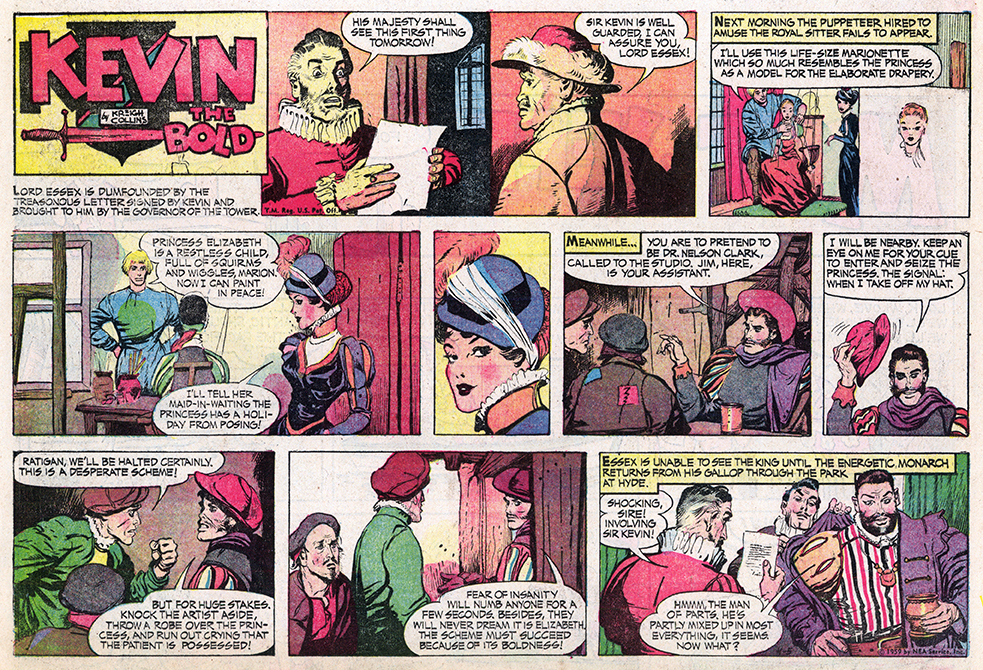
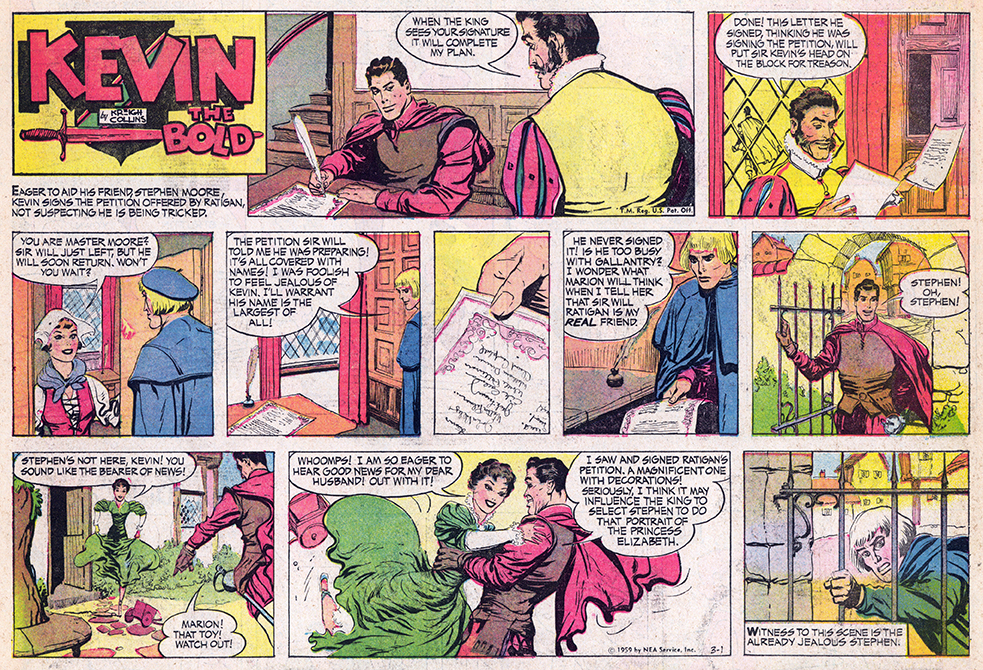
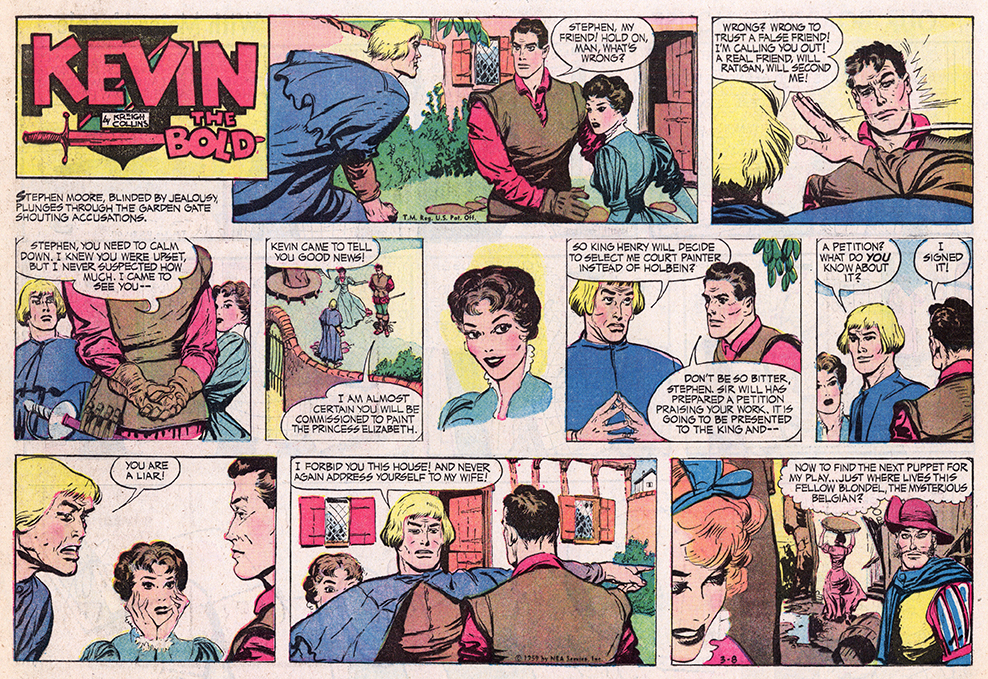
The following sequence, from early 1959, features a character named for one of Kreigh Collins’ friends. William Ratigan lived in Charlevoix, a town situated on an inland lake in northern Michigan that was a frequent port of call for Collins’ schooner Heather. Ratigan was was best known as the author of the book Great Lakes Shipwrecks and Survivals, published in 1960. In this chapter, Sir Will Ratigan is the villain in a plot against the monarchy of Henry VIII.
To achieve his ends, Ratigan plans to exploit the weaknesses of Stephen Moore (self doubt) and Kevin (altruism).
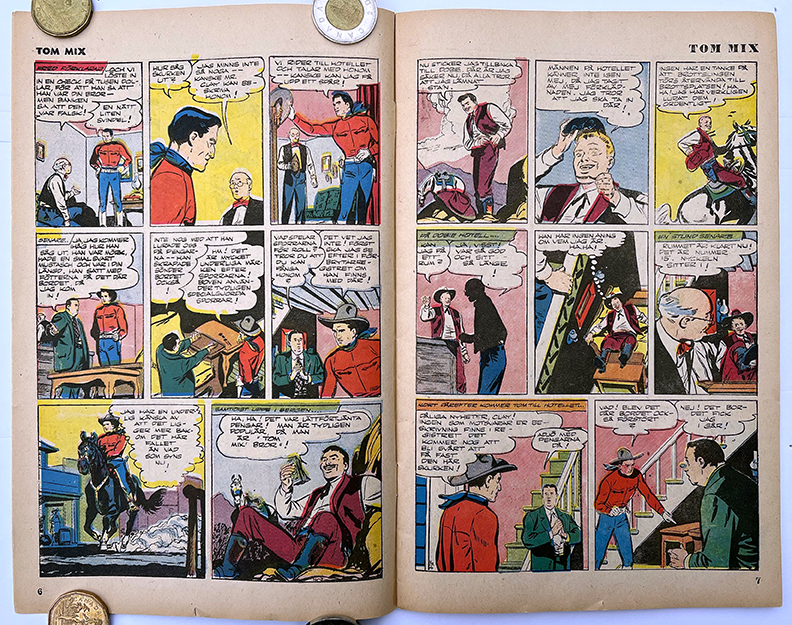
Released only a week after its predecessor, TOM MIX Nr. 3 featured a ROLAND DEN DJÄRVE-themed cover. The cover illustration was based on the evocative splash panel that introduced ROLAND back in TOM MIX Nr. 1; actually, the splash panel originally appeared as the last panel in the final episode of MITZI McCOY.
Positioned as usual on the inside front cover were two episodes of UGH, adorned with magic markers by a young Swedish artist (reminiscent of other collaborations I have seen). As usual, the body of the comic book was kicked off by a mock-up of a newspaper’s front page.
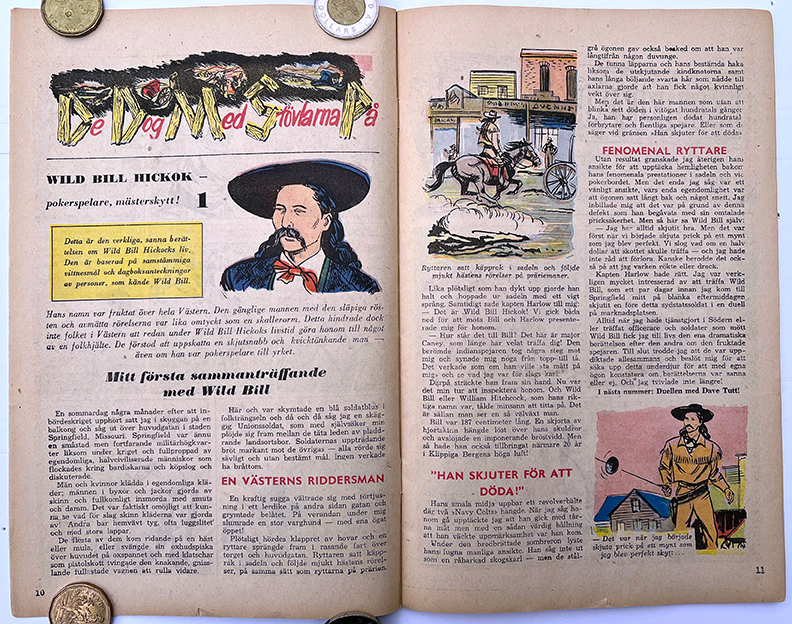
TOM MIX runs across three spreads, followed by the recurring feature De Dog Med Stövlama På (“They Died with their Boots On”), which profiled the old west gunfighter Wild Bill Hickok.
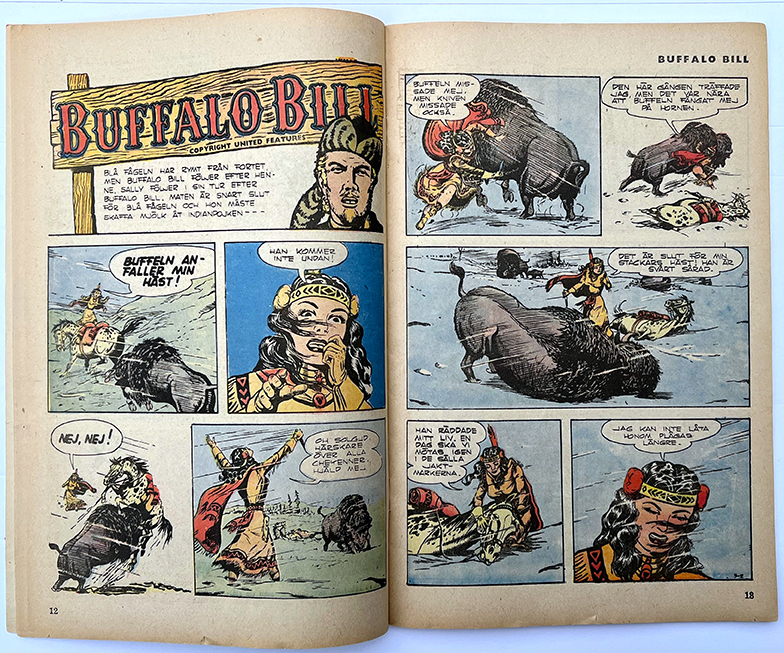
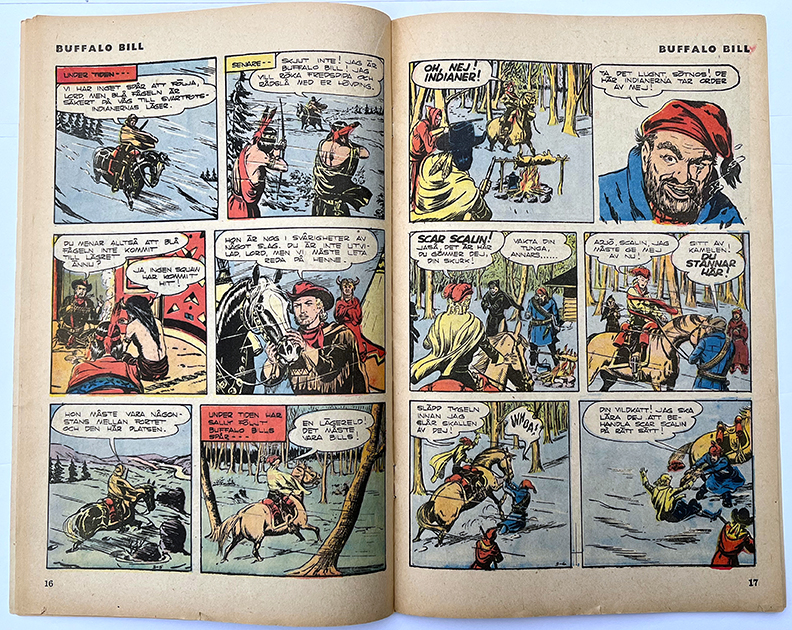
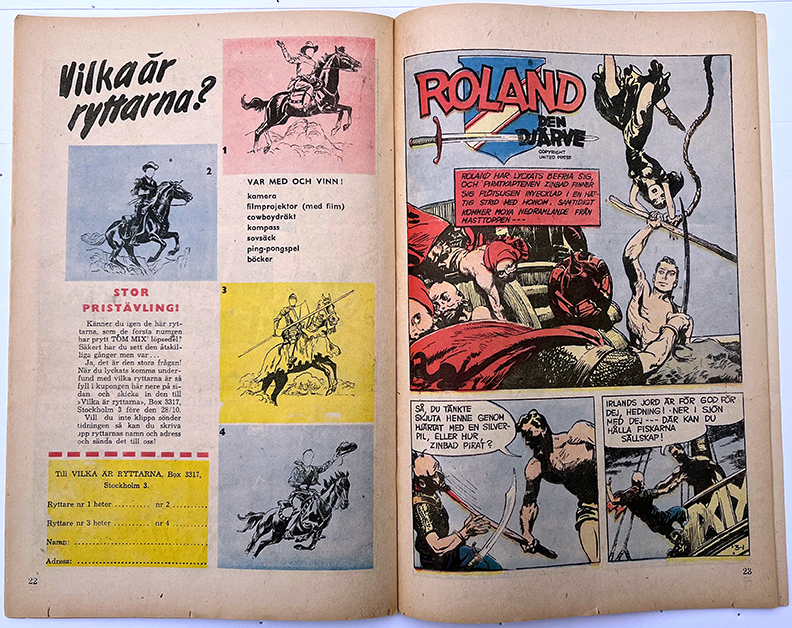
Nine pages of BUFFALO BILL followed, plus a promotion offering “a half million in Christmas money” to those who would sell Christmas magazines (“and make good money for Christmas”), and a contest to identify horsemen (I’m pretty sure Nr. 3 is Roland).
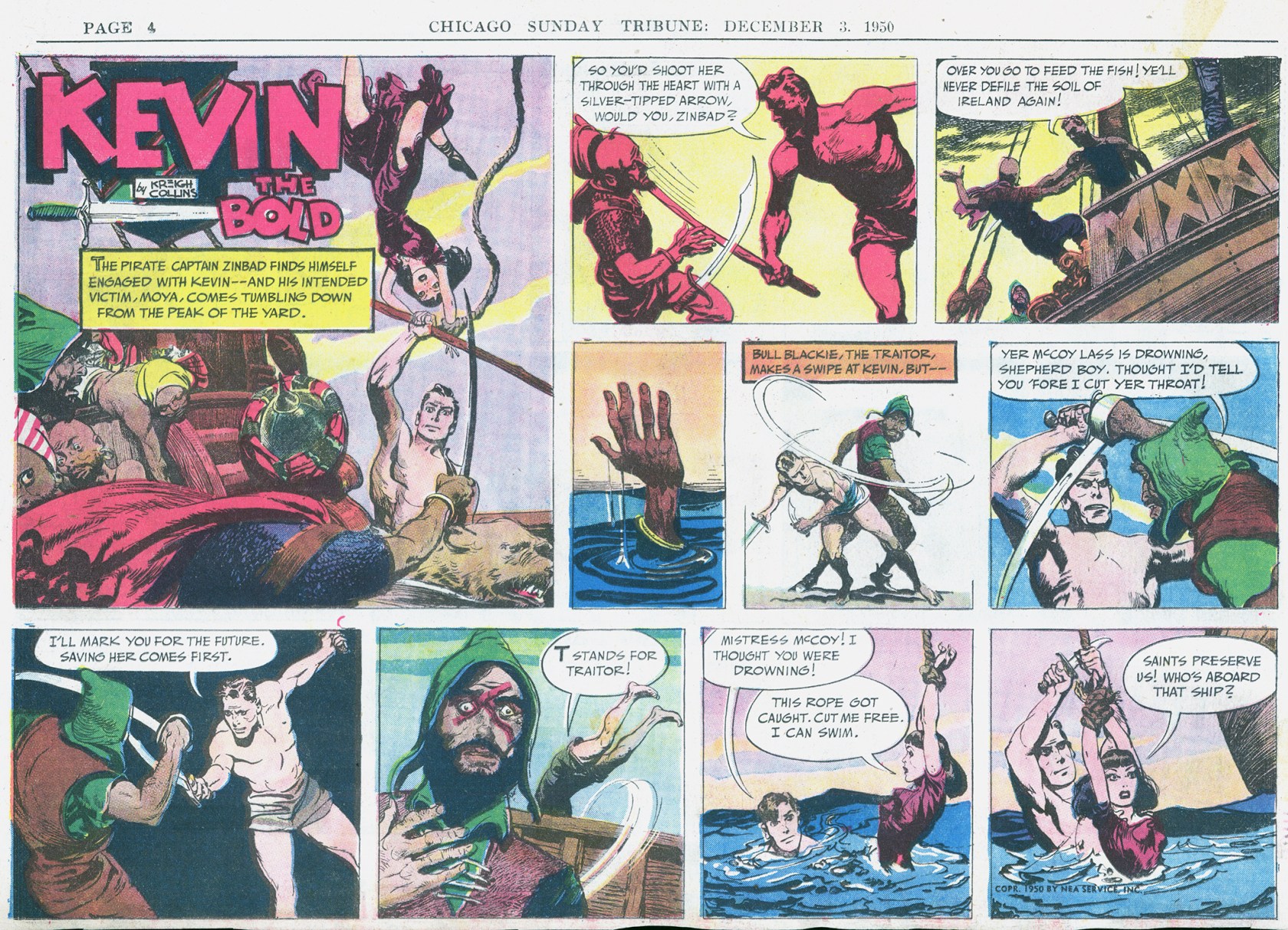
Next up was ROLAND DEN DJÄRVE. The action picks up where it left off in TOM MIX Nr. 2, with the episode that originally appeared on December 3, 1950. As usual, the comic book publisher created their own color separations, and a notable change is made to the color of Roland’s hair—he’s now a blond! (A detail I missed in the first two issues of the comic book. However, it’s not the first time Kevin was shown with flaxen locks).
An interesting modification to Kreigh Collins’ original artwork appeared in the fourth panel of page 24 (necessary due to the translation into Swedish). Before escaping, Roland marks Bull Blackie, using his sword to cut the letter “F” into his tormentor’s face. Diving overboard, he shouts, Du har förrädarnas märke “F” i ansiktet min vän! (“You have the mark of the traitor’s “F” on your face my friend!”). In the original version, Kevin carves a “T” in Bull Blackie’s face and leaves him with the more concise parting shot, “T stands for traitor!”
The savior of Castle McCoy, Roland is rewarded with a claymore and is knighted as Roland den Djärve. Soon, he is reunited with his mentor.
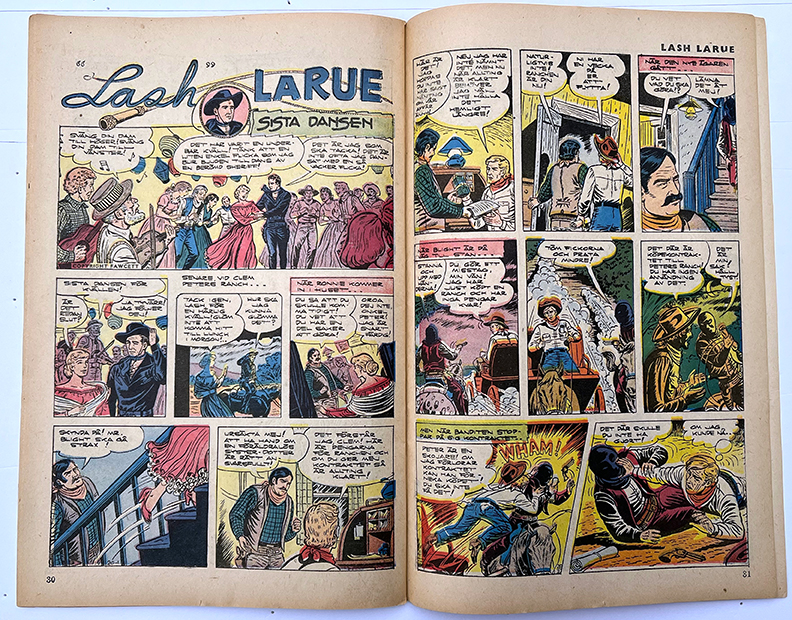
After the equivalent of four Sunday episodes—Kevin/Roland’s introductory chapter concludes. Following the third installment of the Roland contest, it’s time for LASH LaRUE.
On the inside back cover, Amerikas Upptäckare (“America’s Discoverer”) Christopher Columbus is given credit (though this is debatable). Nonetheless, Columbus’ portrait is featured on the back cover.

































 Kreigh’s Comics