

I recently acquired a copy of Revista Ferronales, a monthly magazine published by the Information Department of the National Railways of Mexico. Dated February, 1957, it is probably the heftiest magazine I’ve ever seen. The 132-page issue measures about 9″ x 11-5/8″ and weighs nearly a pound. Only its outside covers are printed using the four-color process, and the text pages are printed in two colors—black plus various spot colors. Despite its length, there are few ads inside.
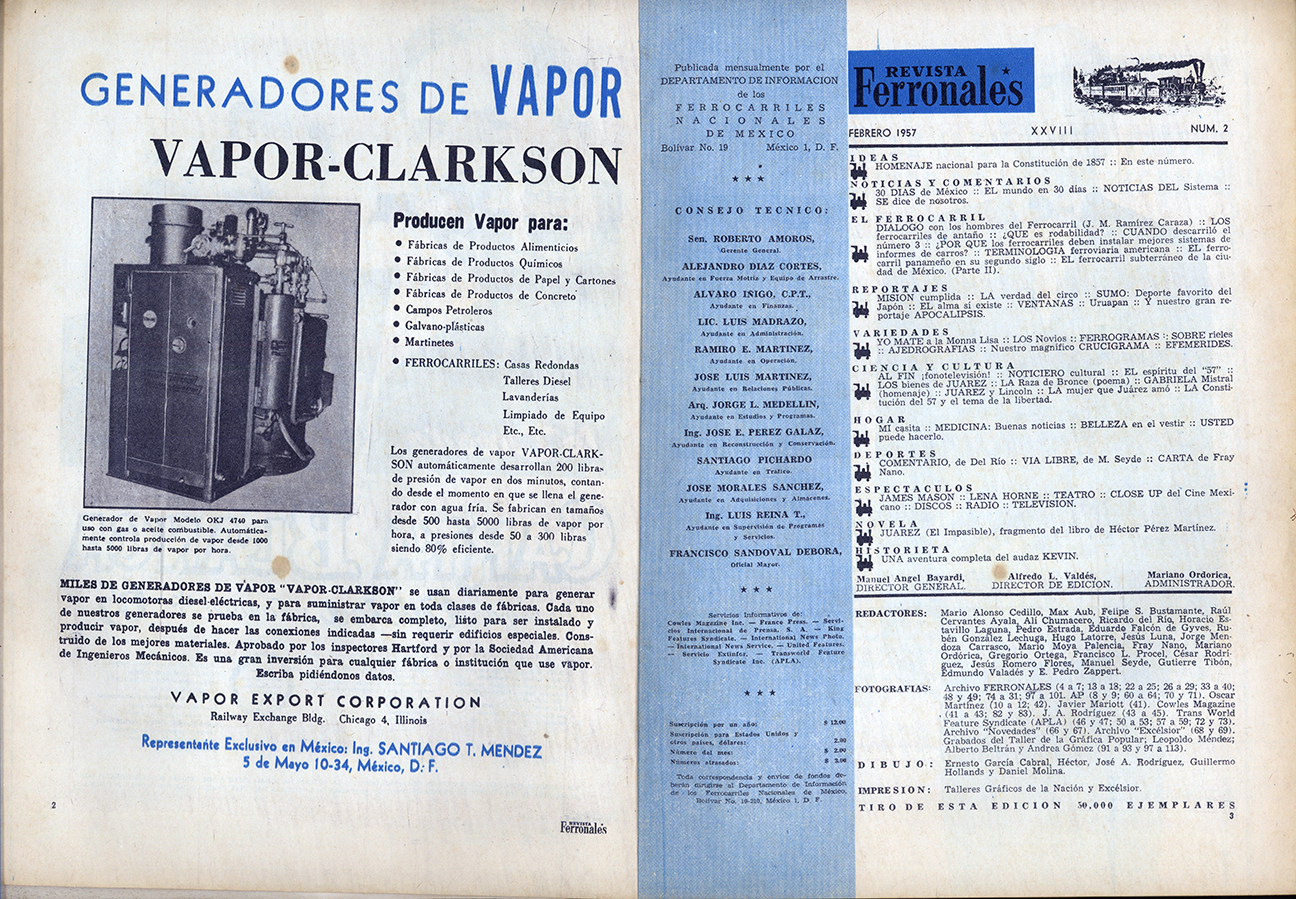
In addition to numerous articles on the railroad industry, it also features a very wide range of editorial content. Sections include Ideas, News and Comments, Reports, Variety, Science and Culture, Home, Sports, Shows, Books, and Historieta, (Cartoons).

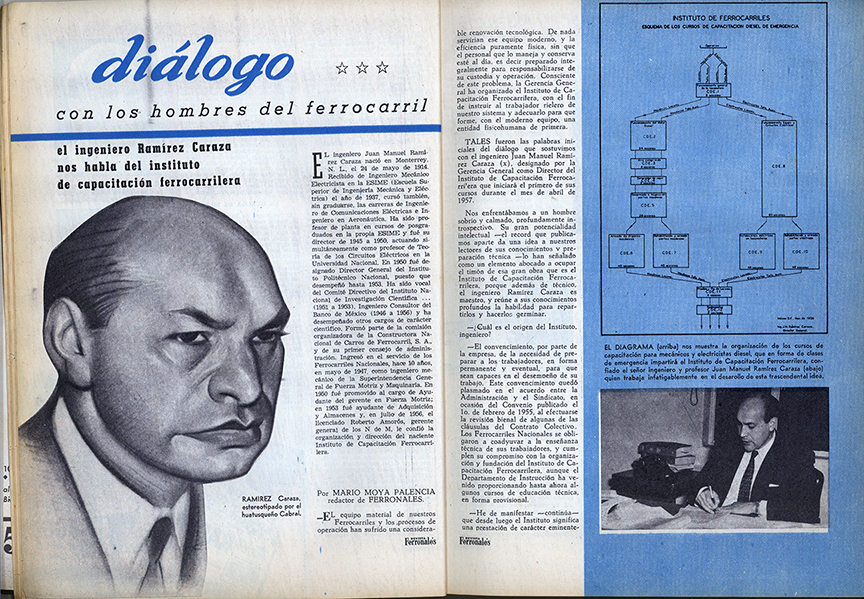

Having been published by an arm of the federal government, it’s basically a combination trade/general interest magazine with a patriotic spin.
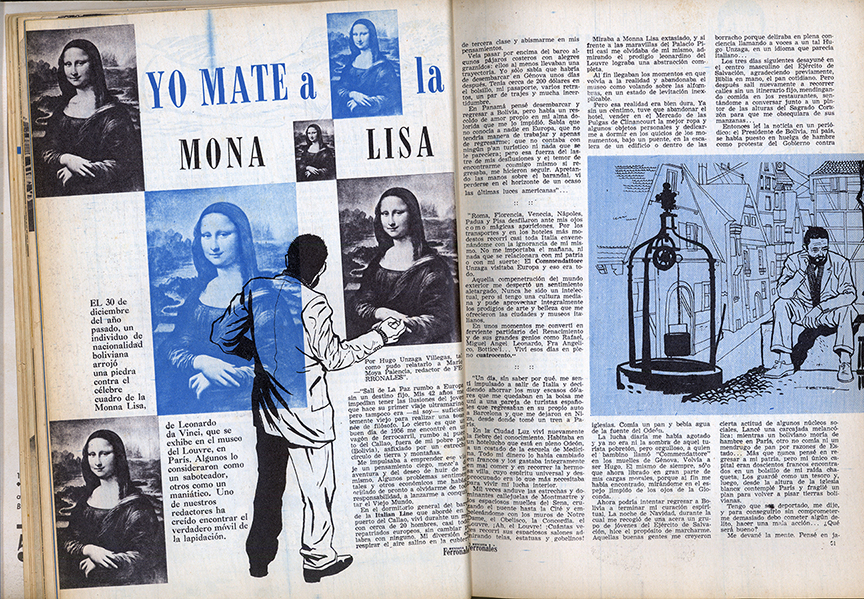
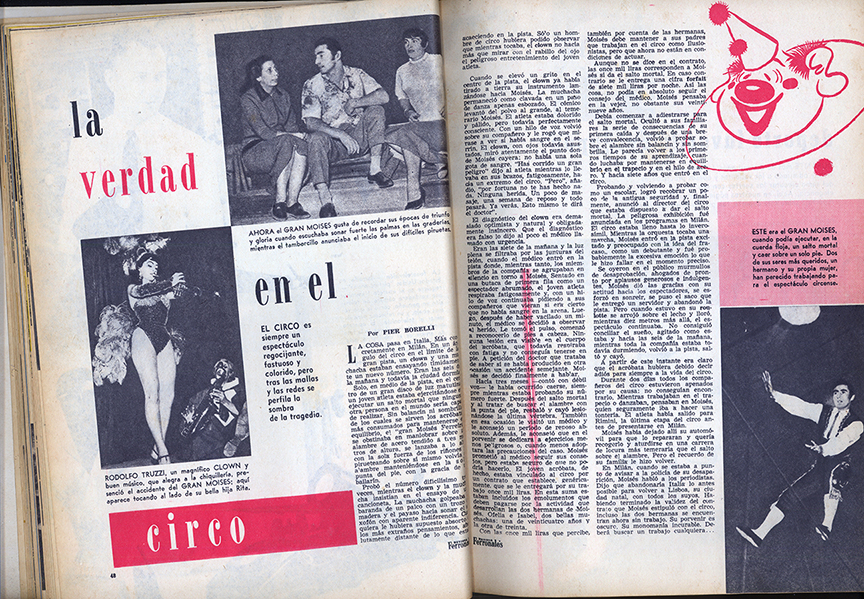
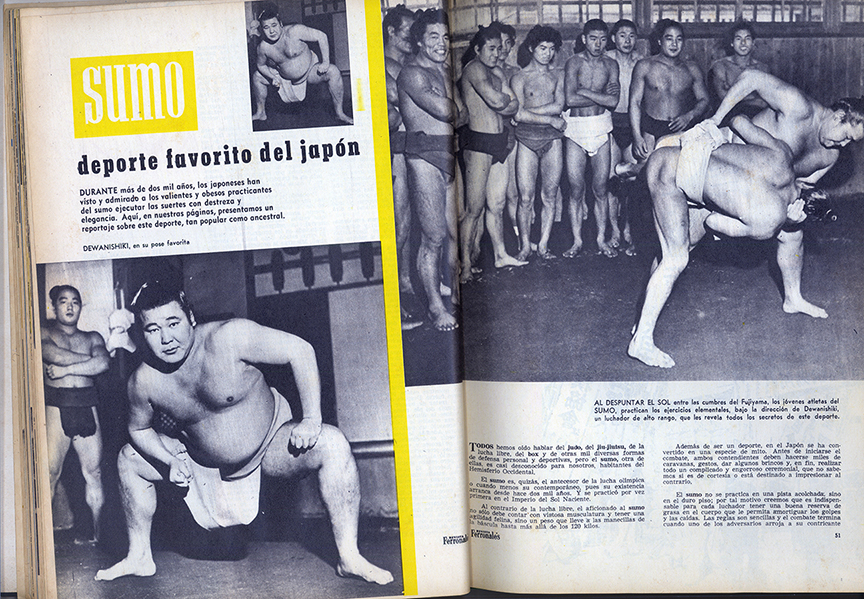
I find the layouts pretty interesting, and the editors get credit for the wide-ranging content. One feature is titled Yo Mate a la Mona Lisa (“I Killed the Mona Lisa”), and two others focus on the circus and Sumo wrestling.
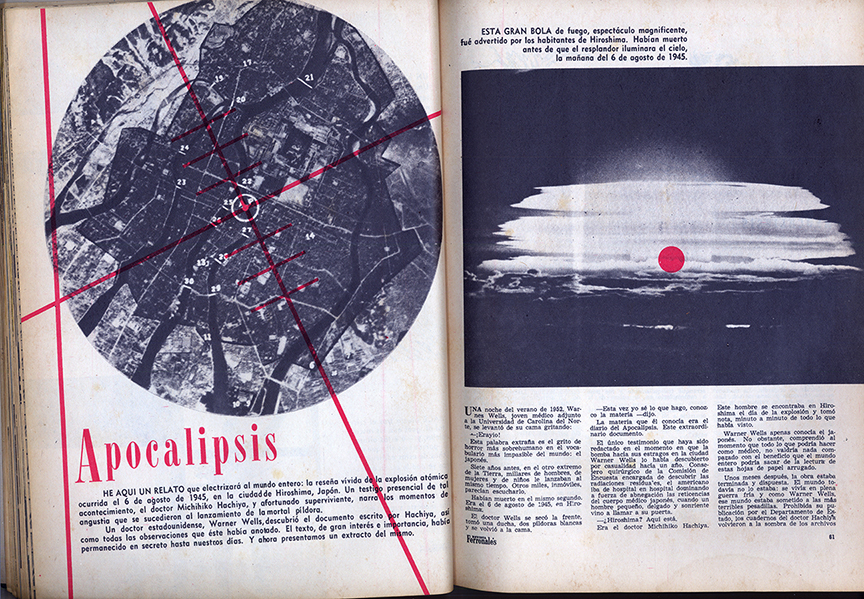

Also included was a rather shocking article, Apocalipsis (“Apocalypse”)—it’s about nuclear annihilation—perhaps due to Mexico’s proximity to the United States during the Cold War.
The back of the magazine contains general interest material, such as celebrity profiles (James Mason, Lene Horne), the kind of stuff typically found in consumer weeklies. Just as many people’s favorite part of a train is the caboose, I think the final section, Revista Ferronales (“Cartoons”) has the good stuff—Una aventura completa del Audaz KEVIN. (Despite my severely limited Spanish, even I can make that out).
Kriegh Collins’ syndicate, NEA, distributed Kevin el Audaz to Spanish-speaking markets, including those served by the newspapers El Diario and Havana, Cuba’s El Mundo.
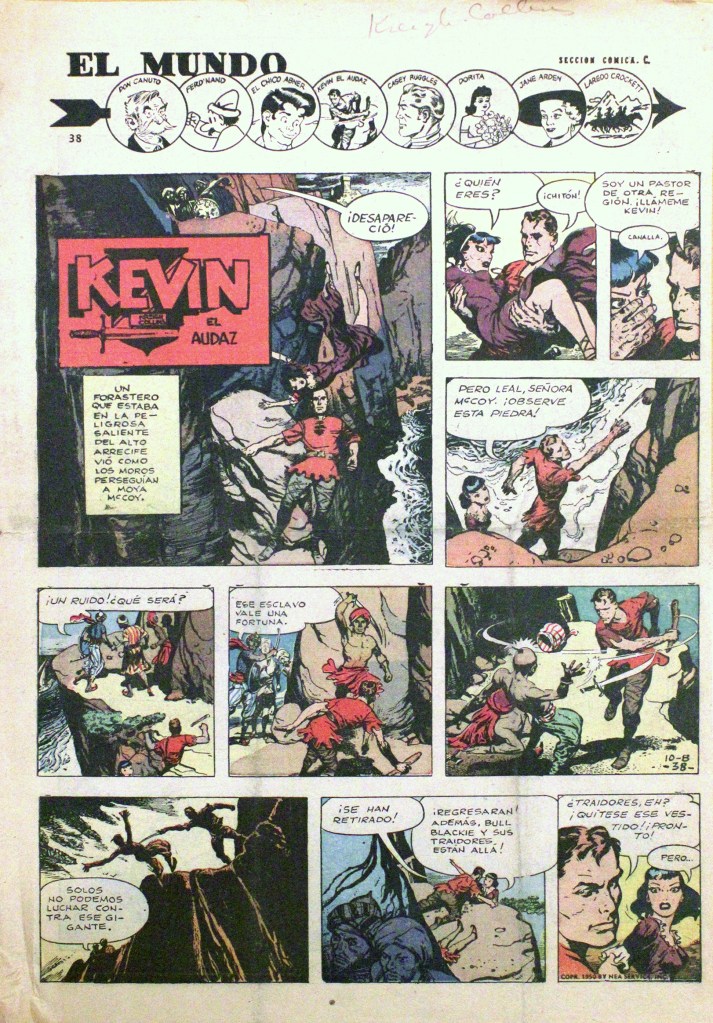
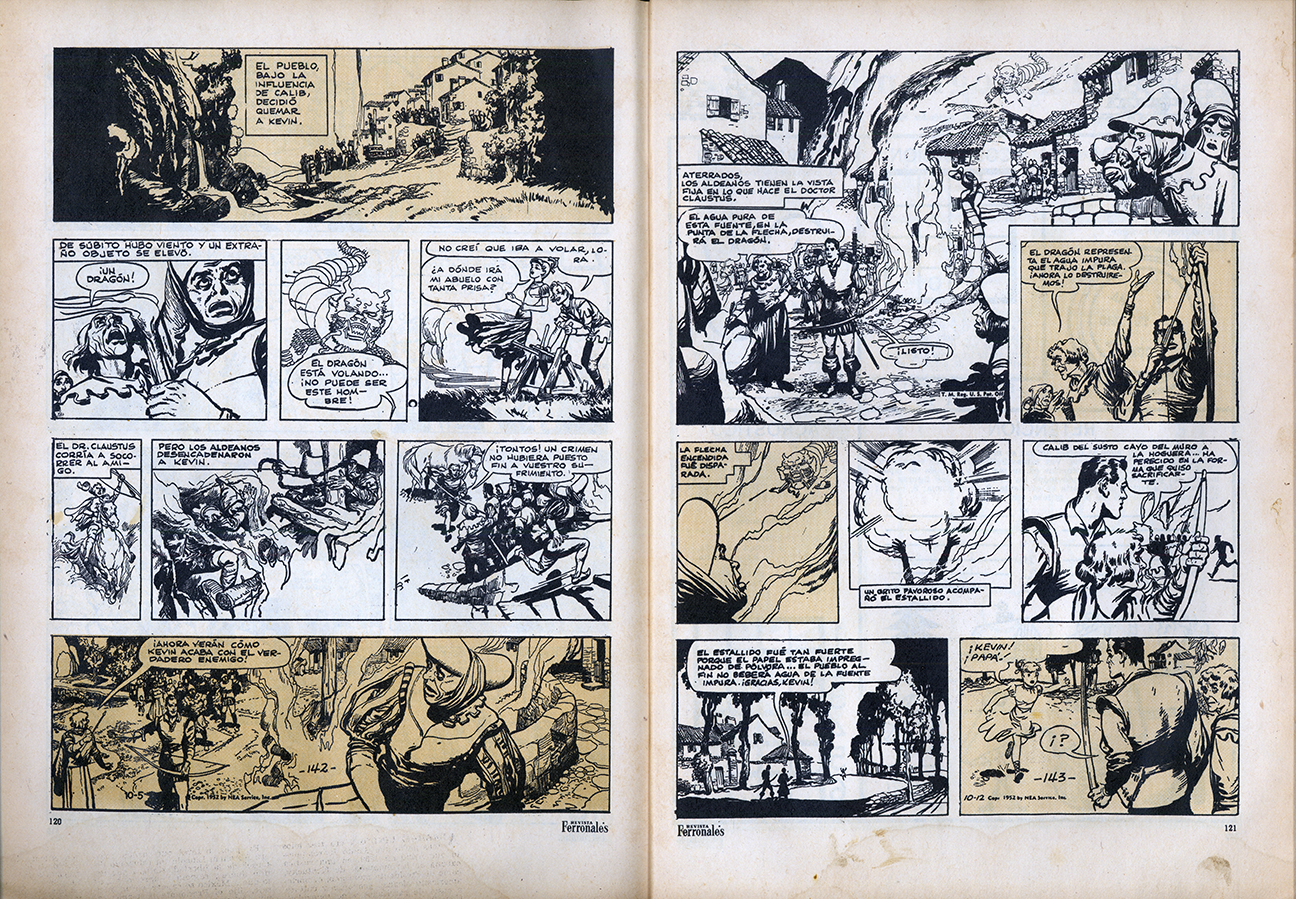
Spread over eight pages, Revista Ferronales features tabloid versions of the entirety of one of Kevin’s adventures, which featured Leonardo da Vinci. It was originally published in Sunday comics sections four-plus years earlier, in late 1952.

After the first episode, the comic strip’s logo was removed from the seven that followed, and the artwork was augmented (slightly) by the occasional addition of spot color tints.

While it wasn’t uncommon for foreign magazines to run serialized versions of KEVIN, this is the only instance of which I’m aware in which an entire story arc was featured in a single publication.

It’s unclear if this inclusion of KEVIN el AUDAZ was a one-off, of if the series was a regulare feature of the Mexican monthly. Perhaps some day I’ll know the answer, if I come across another issue of the esoteric publication.
Following KEVIN are several pages of puzzles, gag cartoons, a crossword puzzle and similar fare.

_____________________________________________________
For more information on the career of Kreigh Collins, visit his page on Facebook.
 Kreigh’s Comics